Africa
Why Philosophy for Children Matters in Nigeria -By Leo Igwe
Undergraduates, postgraduates, doctoral and postdoctoral candidates in philosophy and education should consider doing research and writing theses, and articles on philosophy for children. Students should consider becoming teachers and facilitators of P4C because P4C is an understudied, underresearched, and underexplored field of study that holds a lot of promise for child education and development in Nigeria.

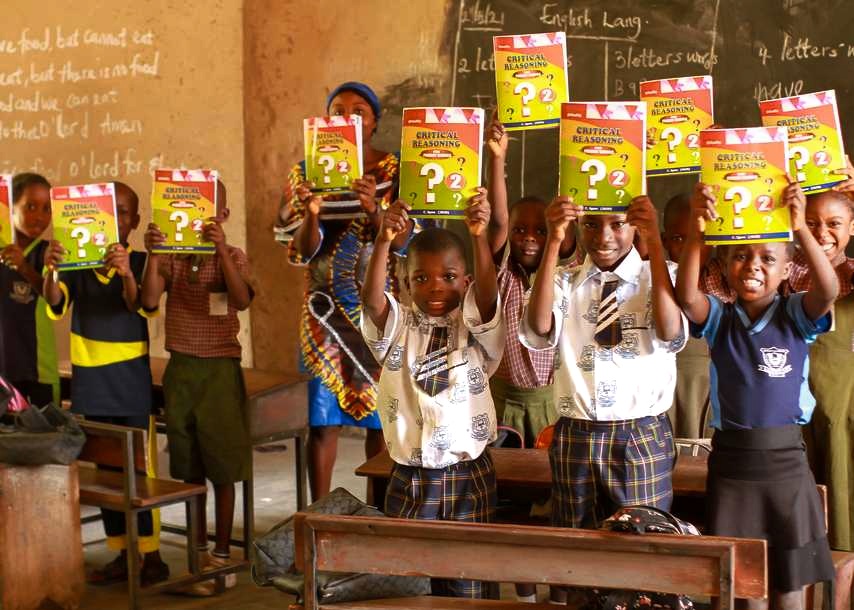
Until recently, I dismissed the idea of a philosophy for or with children because such an endeavor seemed not to be of any consequence. I thought children were too young, and intellectually immature to engage in philosophical inquiry. I thought philosophical endeavors were for adults, and ‘matured’ minds. I believed that philosophy was too abstract, and too dry for children to undertake, exercise, comprehend, or relate to. I studied philosophy for my first and second degrees. Even as an eighteen-year-old, I struggled to understand philosophical arguments, dialogues, and propositions. I was used to images of grey-haired adults, not infant philosophers in pensive and introspective moods. I had wondered: “Are children able to grapple with ultimate questions such as: why is there something rather than nothing? Why is there anything at all? Where do we come from? Where are we going? Does life have a purpose?”
So the idea of doing philosophy with children never resonated with me. I never found it attractive and worthwhile. It sounded like some unserious childish stuff. I regarded philosophy as a rigorous discipline, not a child’s play. Again I read about the case of Socrates, who got into serious trouble for his philosophical endeavors. He was found guilty of impiety, and of corrupting the youths.
But not too long ago I had a change of mind. I made a U-turn. I rediscovered doing philosophy with children. I noticed that philosophical thought had no age bracket and that the art of deep thinking and reflection was not only for adults. Philosophy starts with children. Every child embodies philosophical moments, and dispositions, the sentiments of curiosity, reflection, ratiocination, exploration, and other accessories. I realized that children philosophized and engaged in reasoned thinking and inquiry.
I rediscovered philosophy for, by, and with children not in the course of idle speculation, aimless wonder, and wander but in the quest to foster critical thinking in schools. During my master’s and doctoral programs, lecturers, mentors, and supervisors talked so much about critical thinking and analysis. They urged students to think critically and creatively about subjects, topics, and texts.
My supervisors nudged me several times to think critically about the literature, existing knowledge, and my data. And at different times I paused to ask: “What does it mean to think critically?” What does it mean to critically review the literature, a text, or a presentation? I wondered: “If critical thinking were so important why didn’t they teach it as a subject in schools?” In addition, I read that critical and creative thinking skills were among the most sought-after skills by employers of labor in this 21st century.
In 2017, I returned to Nigeria after my doctoral program and made it a point of duty to introduce the subjects of critical and creative reasoning in schools. Students should not be expected to think critically when they were not taught to do so; when there were no subjects, teachers, or programs devoted to inculcating critical thinking skills. I was looking for an effective way to pitch the argument for reasoning and thinking skills in schools, especially in primary and secondary schools.
Primary schools teach verbal and quantitative reasoning. These subjects help students understand how to form and use words, make sentences, number, and recognize shapes. But these mental habits are not enough. A separate and distinct subject is needed to inculcate critical sentiments and get children to question whatever they are taught. As a habit, students should interrogate what they read, learn, count, number, and draw. I was looking for a way to introduce a subject or discipline that fosters critical thought and reflective inquiry in schools, a subject that allows students to express and exercise their curiosity and inquisitiveness. Schools put so much emphasis on rote learning and memorization. They mainly use the “states-and-capitals” “A-for-Apple” approach to teaching and learning. Our school system made students think in terms of answers and solutions. Our schools needed a subject that rewarded children for posing and generating questions not answers, and for thinking in terms of questions.
I did not want a subject or discipline that was completely unknown, one that would be difficult to market or introduce. I wanted a subject that would be appealing and able to deliver these thinking skills and habits to Nigerian children. Simply put, I wanted a subject that would make critical thinking fun. That was how I rediscovered philosophy and reconnected with philosophy for children.
In the course of my research, I found out that philosophy for children was offered in schools across the world, in many parts of Europe, America, and Asia. Even school teachers in South Africa were doing philosophy with children. I was surprised that there were no schools that I knew that offered the course. Nigerian school managers introduce subjects when they notice such disciplines are taught in Western schools. I wondered why that did not happen in the case of philosophy for children. Maybe because of the assumed corrupting influence of philosophy?
Well, I discovered active networks of teachers, educators, and facilitators of philosophy for and with children including the International Council of Philosophical Inquiry with Children (ICPIC). ICPIC has members in over 64 countries. I joined the council and occasionally received updates on their upcoming events. I noted other national and regional associations like SAPERE in the UK, SOPHIA(Europe), and PLATO(the US). I wondered why Nigerian schools and teachers were not actively involved in the project of doing philosophy with and for children.
For those who may be thinking that I am trying to force this discipline on schools and our children. I am not. Doing philosophy with children aligns with our national policy on education. This document acknowledges the value of philosophical inquiry with and by children. Page ten of the National Policy on Education states that one of the goals of primary education is to foster scientific, critical, and reflective thinking. Unfortunately, we do not have the subjects, teachers, and materials to realize this objective. Philosophy for Children aims to fill this gap and address this need.
So it is pertinent that all stakeholders in education and academia encourage philosophy with children in schools. We need to improve the reasoning and argumentative skills of pupils and students. One of the ways to accomplish this goal is to promote the teaching of philosophy to children in schools and facilitate research in the field. Philosophy for children can be taught as a stand-alone subject like other subjects offered in school. It can also be taught as an infused subject. In this case, the topic of philosophy for children is integrated into the regular curriculum and other subjects.
Undergraduates, postgraduates, doctoral and postdoctoral candidates in philosophy and education should consider doing research and writing theses, and articles on philosophy for children. Students should consider becoming teachers and facilitators of P4C because P4C is an understudied, underresearched, and underexplored field of study that holds a lot of promise for child education and development in Nigeria.
Leo Igwe is a member of the International Council of Philosophical Inquiry with Children and director of the Critical Thinking Social Empowerment Foundation.