
Forgotten Dairies
2027: Enugu State, Between Modest Progress and the Urgency of Better Choices -By James Ezema
First, industrialization must move from concept to concrete reality. Enugu’s geographic advantage and historical commercial relevance should naturally position it as a hub for small and medium-scale industries. Yet, this requires more than rhetoric—it demands power solutions, logistics frameworks, and investor-friendly regulatory systems.

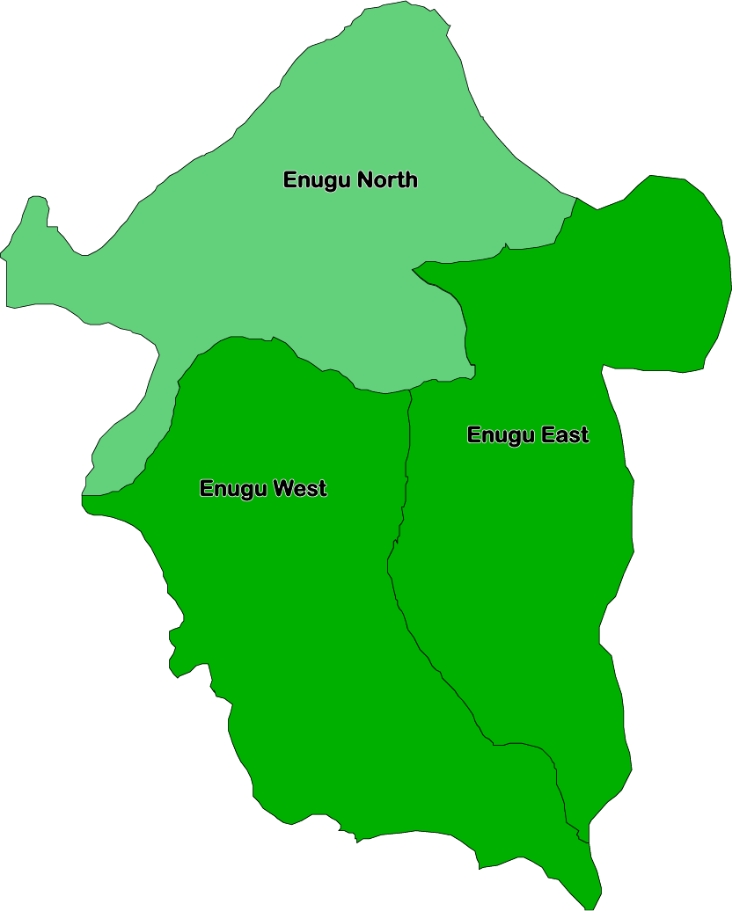
As the countdown to the 2027 governorship election gradually begins, the political atmosphere in Enugu State is, expectedly, gathering momentum. Beneath the surface of routine political alignments and subtle consultations lies a deeper, more consequential question: what kind of leadership does Enugu truly need in the face of Nigeria’s present economic realities?
It is important to begin with fairness. The incumbent administration has, within its capacity, attempted to reposition Enugu State from its long-standing identity as a civil service–dependent economy toward a more commercially viable structure.
Efforts in infrastructure renewal, urban aesthetics, and investment signaling have not gone unnoticed. There is evidence of intention—an effort to reimagine the state beyond its bureaucratic comfort zone.
However, governance is not merely about intention; it is ultimately measured by outcomes, sustainability, and the depth of impact on the average citizen. And it is here that the conversation must become more honest, more rigorous, and less sentimental.
The economic realities in Nigeria today are unforgiving. Inflationary pressures, declining purchasing power, rising unemployment, and a fragile subnational fiscal structure have collectively redefined what effective governance must look like. In this context, Enugu State cannot afford incrementalism dressed as transformation. It requires a governance model that is not only visionary but deeply practical—one that moves beyond policy optics into measurable economic productivity.
The truth is simple: Enugu State deserves the best in 2027.
Not just a continuation of effort, but a refinement of strategy. Not just ambition, but execution. Not just promises, but competence rooted in economic realism.
For too long, governance in many subnational entities has leaned toward what may be described as “make-believe administration”—a tendency to prioritize announcements over outcomes, projections over performance, and narratives over numbers. Enugu must decisively depart from this pattern. The next governor must understand that economic growth is not declared; it is engineered through deliberate policy choices, institutional discipline, and a relentless focus on productivity.
Critical sectors demand urgent, practical attention:
First, industrialization must move from concept to concrete reality. Enugu’s geographic advantage and historical commercial relevance should naturally position it as a hub for small and medium-scale industries. Yet, this requires more than rhetoric—it demands power solutions, logistics frameworks, and investor-friendly regulatory systems.
Second, agriculture must be treated as a business, not a subsistence fallback. Mechanization, value chain development, and agro-processing must become central to economic planning, not peripheral considerations.
Third, human capital development must align with market needs. Education and skills acquisition must be retooled to serve emerging industries rather than perpetuate outdated employment expectations.
These are not abstract ideas; they are practical imperatives.
But beyond policy, there is a democratic principle that must not be overlooked—the beauty of democracy lies in the plurality of choice. A vibrant democracy is not one where options are limited or pre-determined, but one where credible alternatives are presented, debated, and evaluated by the electorate.
Enugu State deserves this plurality.
It is therefore concerning that, at this critical juncture, many potential aspirants are still engaged in political hesitation—testing the waters, engaging in backdoor consultations, or waiting for “signals” rather than stepping forward with clarity and conviction.
This culture of political hide-and-seek does a disservice to the people.
Governorship is not a speculative venture; it is a public trust that demands early engagement, clear articulation of vision, and openness to scrutiny. Those who believe they have the competence, character, and capacity to lead Enugu State must come forward now—not later.
Let the contest begin early.
Let ideas clash.
Let visions be interrogated.
Let competence be tested in the court of public opinion.
Only through such openness can the electorate make informed choices. Only through such competition can the best candidate emerge—not by default, but by merit.
Enugu does not need a coronation in 2027; it needs intentional contest.
And that contest must be defined not by political godfatherism or elite consensus, but by the strength of ideas, the credibility of candidates, and the clarity of developmental blueprints.
Ultimately, governance is about people—the trader in Ogbete, the farmer in Nsukka, the artisan in Awgu, the young graduate seeking opportunity in Enugu metropolis. Their expectations are not abstract; they are immediate and practical. They want jobs, security, infrastructure, and a government that understands the difference between visibility and value.
As 2027 approaches, the message must be clear to all stakeholders:
To the incumbent structure—progress must be defended with evidence, not sentiment.
To aspiring leaders—ambiguity must give way to declaration.
To the electorate—engagement must replace apathy.
And to Enugu State itself—the future must be negotiated through choice, not chance.
The path forward is not complicated, but it requires courage: the courage to demand better, the courage to present alternatives, and the courage to choose wisely.
In the end, Enugu’s prosperity will not be determined by what is said in political circles, but by what is done in governance. And that is why 2027 must not just be another election year—it must be a defining moment.
Comrade James Ezema is a journalist, political strategist, and public affairs analyst. He serves as the National President of the Association of Bloggers and Journalists Against Fake News (ABJFN) and the National Vice-President (Investigation) of the Nigerian Guild of Investigative Journalists (NGIJ). He is also the National Director of Operations at the Citizens Rights and Empowerment Advocacy Initiative (CREMA Initiative) and Media Coordinator of the Movement for Credible Elections (MCE).
He can be reached via email at jamesezema@gmail.com or on WhatsApp at +234 8035823617.




















You must be logged in to post a comment Login