
Forgotten Dairies
The Girl Child Education As A Catalyst for National Development -By Oladeni Mojisola
In his autobiography, “Long Walk to Freedom”, Nelson Mandela offered a statement that has echoed across generations: “Education is the most powerful weapon which you can use to change the world.” Few truths have been more consistently validated by experience. The education of the girl child is not an act of charity. It is not a gesture of sympathy. It is a strategic investment in national progress and a moral commitment to human dignity. This this brings to memory, the African proverbial saying, “If you educate a man, you educate an individual. If you educate a woman, you educate a nation.”

There are the golden investments whose returns cannot be measured merely in currency or economic indices, because their benefits ripple through generations and quietly shape the destiny of nations. The education of the girl child belongs to that rare category. Whenever a girl is led into a classroom and entrusted with knowledge, a future is strengthened, a family is elevated, and a nation is enriched. Yet across many parts of the world, and particularly in developing countries, millions of girls continue to be denied this fundamental opportunity. According to UNESCO, more than 120 million girls worldwide remain out-of-school, while countless others face the constant threat of dropping out because of poverty, insecurity, child marriage, and cultural restrictions. Behind these figures are not numbers but helpless beings whose aspirations are being delayed and whose potential is being diminished. One cannot help but wonder what discoveries are being lost, what businesses are not being founded, and what communities are being deprived of leadership because a girl was denied the right to learn.
The relationship between education and poverty reduction has long been established by economists and development experts, and that relationship is quite visible in the lives of girls and women. Research conducted by the World Bank and other international institutions has shown that each additional year of secondary education can increase a girl’s future earnings by between 15 and 25 per cent. Consequently, household incomes are strengthened and economic vulnerability is reduced. More importantly, studies have revealed that women typically reinvest a reasonable per cent of their income into their families. Thus, the benefits of educating a girl are not confined to her alone because they are carried into the lives of her children and even her grandchildren. Poverty is therefore not merely confronted but gradually weakened across generations. When a girl is educated, the walls of deprivation are slowly dismantled brick by brick, and when millions of girls are educated, entire communities are lifted towards prosperity. The classroom then becomes more than a place of learning because it becomes a doorway through which families walk from hardship towards opportunity.
The impact of educating girls is also reflected in the health of nations, and the evidence supporting this connection is both extensive and compelling. UNESCO has reported that every additional year of maternal education can reduce the risk of child mortality by between 5 and 10 per cent. Furthermore, educated mothers are more likely to seek prenatal care, embrace vaccination programmes, understand nutritional requirements, and maintain healthier environments for their children. As a result, fewer children die from preventable illnesses and more families enjoy longer and healthier lives. In countries where female literacy rates are high, lower rates of maternal mortality and infant mortality are generally recorded. These outcomes should not surprise us because knowledge often precedes wise decisions, and wise decisions frequently produce healthier societies. When a girl learns, she does not merely acquire information from books. Rather, she acquires the capacity to make informed choices that affect the wellbeing of future generations. Through her education, disease is challenged, suffering is reduced, and hope is extended into homes that might otherwise remain trapped by ignorance and vulnerability.
Pertinent to mention is economic growth, which is often discussed in the language of investment portfolios and industrial output; this is also deeply connected to the education of girls. The World Bank estimates that limited educational opportunities for girls cost the global economy between 15 trillion and 30 trillion dollars in lost lifetime productivity and earnings. Such figures are staggering because they reveal the immense economic price of neglect. Whenever girls are prevented from reaching their educational potential, nations are deprived of skilled workers, innovative entrepreneurs, capable professionals, and productive citizens. Conversely, when educational barriers are removed, labour participation is expanded and economic activity is strengthened. New businesses are established, tax revenues are increased, and innovation is encouraged. The soft sound of a girl reading in a classroom today may ultimately become the voice of a doctor saving lives tomorrow, an engineer designing infrastructure, or an entrepreneur creating jobs. In this way, education and economic development move together like companions on the same journey, each strengthening the other and each contributing to the advancement of society.
Beyond economics and health lies another important benefit that receives less attention than it deserves. Educated women are more likely to participate actively in civic life. Greater engagement in voting, community leadership, and public service is often recorded among women who have received quality education. Consequently, institutions are held more accountable and governance becomes more responsive to the needs of citizens. The Nobel Prize-winning economist Amartya Sen observed, “Nothing is as important today in the political economy of development as an adequate recognition of political, economic, and social participation and leadership of women.” Those words deserve careful reflection because they point towards a truth repeatedly confirmed across societies. When girls are educated, they are not merely being prepared for employment. They are also being prepared for citizenship, leadership, and service. Their voices are strengthened, their confidence is nurtured, and their ability to contribute meaningfully to national conversations is enhanced. Through education, a more inclusive democracy is gradually built, and through inclusion, a more stable society is often achieved.
The education of girls also serves as one of the most effective and humane responses to population pressures and child marriage. Research consistently shows that educated girls tend to marry later and have fewer children while enjoying greater control over reproductive decisions. This reality benefits both families and nations because resources can be invested more effectively in healthcare, education, and social development. Child marriage, which continues to affect millions of girls globally, is significantly reduced when educational opportunities are available and accessible. Every additional year spent in school decreases the likelihood of early marriage and increases the likelihood of future economic independence. In addition, education equips girls with knowledge about their rights and provides them with the confidence to challenge exploitation and abuse. Therefore, the classroom becomes a shield as well as a ladder. It protects while it empowers, and it nurtures while it elevates. Through education, cycles of dependency are interrupted and pathways towards dignity are opened.
Yet despite these overwhelming benefits, formidable barriers continue to stand in the way of many girls. Poverty still compels struggling families to choose which child will attend school, and girls are often the first to be sacrificed upon the altar of financial hardship. Cultural expectations in some communities continue to place domestic responsibilities above educational aspirations. In other places, long distances to school and concerns about safety discourage attendance. A shortage of female teachers frequently deprives young girls of mentors with whom they can identify, while inadequate sanitation facilities contribute to absenteeism and school dropout rates during adolescence. Conflict and displacement have further deepened the crisis because girls are disproportionately affected whenever communities are uprooted by violence. These barriers are not inevitable. They are products of human decisions and human neglect, and because they have been created by society, they can also be dismantled by society. The challenge before us is therefore not a lack of solutions but a shortage of collective resolve.
In his autobiography, “Long Walk to Freedom”, Nelson Mandela offered a statement that has echoed across generations: “Education is the most powerful weapon which you can use to change the world.” Few truths have been more consistently validated by experience. The education of the girl child is not an act of charity. It is not a gesture of sympathy. It is a strategic investment in national progress and a moral commitment to human dignity. This this brings to memory, the African proverbial saying, “If you educate a man, you educate an individual. If you educate a woman, you educate a nation.” No nation can attain its full potential while half of its population is denied the opportunity to flourish. Therefore, governments must strengthen educational policies, communities must challenge harmful assumptions, and families must embrace the transformative power of learning. The future doctor, scientist, legislator, entrepreneur, and educator may today be sitting quietly in a village or urban neighbourhood waiting for a chance. National development will not begin in conference halls alone. It will begin when every girl is given the opportunity to sit in a classroom, open a book, and discover the limitless possibilities within her own mind.
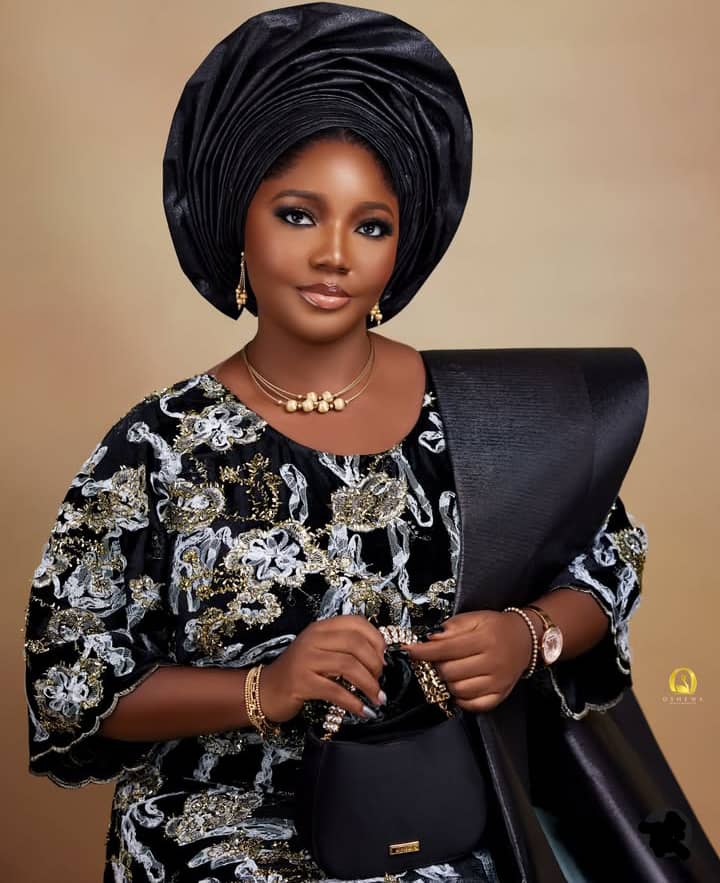
Oladeni Mojisola is a public affairs analyst and the CEO of House of Moh Fabrics





















You must be logged in to post a comment Login