
Forgotten Dairies
Who Lost the Power Game Over Shettima’s 2027 Ticket? -By Oluwafemi Popoola
One powerful bloc within the establishment reportedly preferred a northern Christian. Their list included the Chief of Defence Staff, General Christopher Musa, former Speaker Yakubu Dogara and the Secretary to the Government of the Federation. Their calculation was straightforward: neutralise religious criticism and widen the APC’s electoral reach.

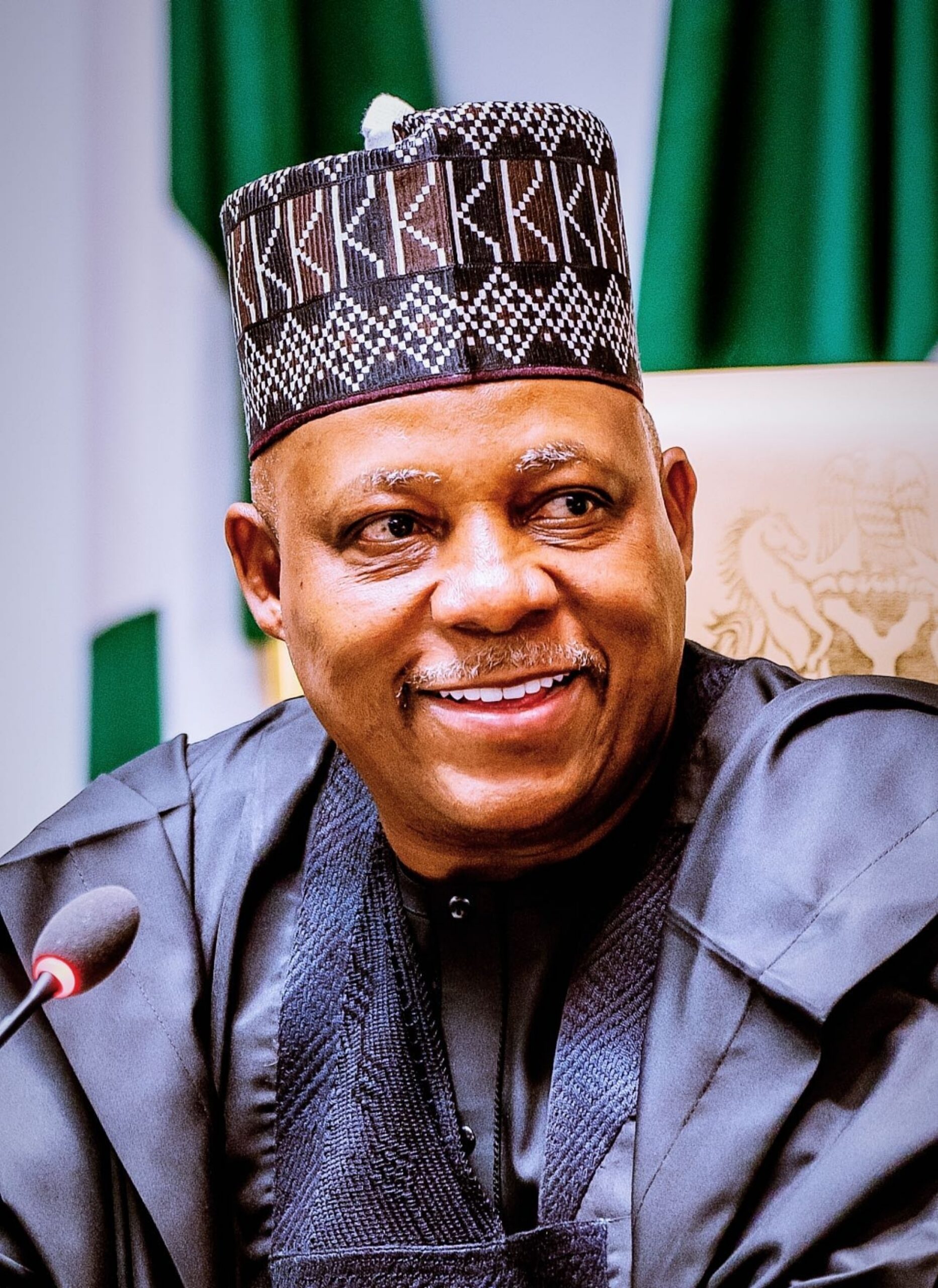
Politics is a strange game. Sometimes the person everyone expects to lose ends up surviving, while those already measuring the curtains in the new office are left packing away speeches they never got to deliver. It is one of the oldest unwritten rules of power: never celebrate a vacancy until the occupant has actually left. In Nigeria, however, that lesson is often learned the hard way.
For months, Abuja resembled a political stock exchange where the value of Shettima’s ticket appeared to fluctuate by the day. Every new rumour was treated like breaking news. Every denial fuelled another round of speculation. If rumours were votes, Shettima would have been removed several times over. Television studios debated his fate, newspaper columns analysed his supposed replacement and political gladiators quietly marketed their preferred alternatives. It became fashionable to discuss not whether he would go, but who would replace him.
When rumours refuse to die, there is usually a measure of truth keeping them alive. So when the moment of truth arrived, Tinubu chose continuity over disruption, retaining Shettima and bringing an end to one of the biggest political debates within the ruling All Progressives Congress (APC).
The decision came shortly after the APC National Executive Committee endorsed President Tinubu as the party’s sole presidential candidate for the 2027 election. By confirming Shettima as his running mate, the President settled months of uncertainty and effectively closed the chapter on a controversy that had generated countless media reports, political analyses and behind-the-scenes lobbying. Sometimes, the biggest political statement is the one that preserves the status quo.
The decision immediately revived another timeless lesson in politics: power is rarely about making everyone happy. More often than not, it is about ensuring that nobody becomes powerful enough to make your life difficult. The speculation surrounding Shettima’s fate was never a product of idle gossip. It was rooted in serious political calculations. The Muslim-Muslim ticket that propelled Tinubu to victory in 2023 remained one of the most controversial decisions of that election. While the APC defended it on the grounds of competence and political strategy, critics argued that it ignored Nigeria’s delicate religious diversity. Three years later, many believed 2027 offered an opportunity to recalibrate the equation by replacing Shettima with a northern Christian capable of broadening the party’s appeal across religious divides.
On the surface, the argument appeared compelling. A Christian from Northern Nigeria would have addressed one of the loudest criticisms levelled against the APC ticket in 2023. It could have strengthened the President’s appeal among Christian voters in both the North and the South while presenting a more religiously balanced image. But politics rarely rewards the most obvious calculation.
Behind the public debate existed another struggle altogether. It is one driven not by religion alone but by succession, influence, regional interests and competing ambitions within the APC itself. Those familiar with developments inside the ruling party insist that several influential blocs believed Shettima should no longer remain on the ticket. Ironically, their biggest problem was not agreeing that he should go. Their biggest problem was agreeing on who should replace him.
One powerful bloc within the establishment reportedly preferred a northern Christian. Their list included the Chief of Defence Staff, General Christopher Musa, former Speaker Yakubu Dogara and the Secretary to the Government of the Federation. Their calculation was straightforward: neutralise religious criticism and widen the APC’s electoral reach.
Another influential camp viewed the matter through an entirely different lens. Comprising some of the President’s trusted northern political allies, including advisers, governors and respected former governors, their eyes were already fixed on 2031. For them, the vice presidency represented an investment in the next presidential succession. They wanted one of their own positioned for the future.
A third bloc reportedly pushed for former Zamfara State Governor, Senator Abdulazeez Yari. Backed by influential senators, political heavyweights and governors from the North-West, they believed Yari possessed the political machinery capable of consolidating the APC’s fortunes in one of Nigeria’s most strategic voting regions. Three blocs. Three ambitions. Three candidates. That was where the arithmetic became impossible.
Every group wanted change, but none was prepared to support the other group’s preferred choice. Every candidate came with loyal supporters and determined opponents. What should have been a straightforward succession plan gradually transformed into a contest of competing interests. In the end, removing Shettima became politically more expensive than retaining him.
So retaining Shettima, to President Tinubu, was not merely about rewarding loyalty; it was also about refusing to take sides in an internal struggle that had no obvious winner. Choosing any one of the proposed replacements would inevitably have strengthened one faction while alienating two others. Such a decision could have introduced avoidable fractures into the APC barely two years before another presidential election.
There was also the matter of Shettima himself. Throughout the administration, the Vice President has projected remarkable restraint. Even when his preferred governorship candidate failed to emerge in Borno State, there was no public rebellion, no calculated media offensive and no attempt to undermine the President’s authority. In a political environment where loyalty often has an expiration date, that consistency became one of Shettima’s greatest political assets.
Stanley Nkwocha, Senior Special Assistant to the President on Media and Communications in the Office of the Vice President, captured this argument in his article, 2027: Tinubu-Shettima And The Politics Of Loyalty, Capacity, Continuity. His central message was simple: some decisions derive their greatest strength from ending uncertainty. Tinubu’s decision belongs in that category.
There was also the broader electoral calculation. Many political observers believe President Tinubu remained convinced that replacing his running mate would offer limited electoral benefit while creating substantial political risks. With opposition parties still navigating complex alliances and leadership calculations, the President may have concluded that altering a ticket which secured victory in 2023 would amount to solving a problem that did not yet exist.
Political pundits argue that by retaining Shettima, Tinubu may have helped the APC avoid what could have become a major internal crisis. Rather than ignite a succession battle within influential power centres, the President opted for continuity, preserving existing relationships while postponing the inevitable contest over 2031.
That decision, however, does not eliminate the questions that will shape the 2027 election. Can the Muslim-Muslim ticket once again attract the overwhelming support it received in 2023? Will Northern Muslim voters remain as enthusiastic as they were four years earlier? Will concerns about religious inclusiveness once again become a defining campaign issue? And how will the opposition respond as new alliances emerge around figures such as Atiku Abubakar, Peter Obi and Rabiu Musa Kwankwaso?
Those questions remain unanswered. But one reality is now beyond dispute. The debate over Tinubu’s running mate has ended. The conspiracy theories have exhausted themselves. The succession calculations have merely been postponed. For President Tinubu, retaining Kashim Shettima was an exercise in political management. Faced with competing ambitions, irreconcilable interests and multiple power centres pulling in different directions, he chose the only option capable of denying every faction total victory while denying himself an unnecessary crisis.
Whether that calculation ultimately delivers another electoral victory will be determined not by today’s political calculations but by the verdict Nigerians deliver in 2027.
Oluwafemi Popoola is a Nigerian journalist, media strategist, and columnist. He can be reached via bromeo2013@gmail.com




















You must be logged in to post a comment Login