
Forgotten Dairies
Agwọ Lòrò Ibe Ya and Other Lessons: Remembering Sir Warrior -By Patrick Iwelunmor
Grief, when it comes, does not always announce itself loudly. Sometimes it settles quietly. In the weight of a song. In the pause before a familiar voice. In the echo that lingers just a little longer than expected. There will be tears. There should be. But there is also gratitude. There is always gratitude.

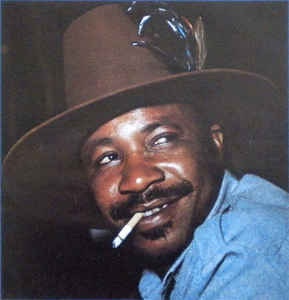
There is a way some songs find you, unannounced, almost casually, and then refuse to leave. They arrive quietly, almost without permission, and before you can name what is happening, they have settled. You hear them once, perhaps in a bus, perhaps from a neighbour’s radio, perhaps in the soft crackle of an old cassette player, and suddenly they are no longer just songs. They become companions. They stay. They return. That is how many of us first encountered Sir Warrior. Long before we understood the full weight of his words, we felt them. We felt them, and we kept them.
As children, we moved gently to the rhythm, unaware that we were absorbing something deeper than melody. We danced, not knowing. We listened, not yet hearing. As adults, we began to hear the warning beneath the sound. We returned, and this time, we understood. Somewhere between those two moments, the music changed, not because the songs changed, but because we did. Because we did. By June 2, 2026, it will be exactly twenty-seven years since his passing, yet his music and the lessons it carries remain as vivid and as insistent as ever. They remain. They endure.
There is a proverb in Igbo land, “Agwọ loro ibe ya, ọdụ ya afụtala ya ọnụ.” The image is simple, but it does not leave you. It lingers. It returns. Simply translated as, “The snake that swallowed its fellow snake, only for the tail to betray it.” In the years following the Nigerian Civil War, when Igbo highlife became both refuge and reflection, Sir Warrior took that proverb and gave it rhythm, gave it memory, gave it voice. Within the Oriental Brothers International Band, he emerged as one of the defining custodians of a sound that did more than entertain. It explained life. It stayed with you. It waited for you to grow into it. His music did not rush the listener. It lingered. It unfolded. It returned, again and again, much like the experiences it sought to interpret.
Agwọ Lòrò Ibe Ya is not merely a song to be heard. It is a song that waits. It waits, and then it finds you again. It lingers at the edge of thought and returns, often uninvited, in moments of quiet reckoning. It reminds you, without accusation, that actions have consequences, that betrayal rarely ends where it begins, and that what is done in darkness has a way of finding light. It reminds you, and it does not argue. In its patient and almost restrained manner, it speaks of moral continuity, the unsettling truth that life keeps account even when we pretend it does not. Even when we pretend.
If that song teaches consequence, Nakwa Echeki leans gently into caution, offering a different but related wisdom. Softer, yes, but no less firm. It asks for pause in a world that rarely pauses. It asks for thought before action, for restraint before regret. It asks quietly, but it asks again. The message is simple, almost disarmingly so, yet it carries the quiet authority of lived experience. One does not need to be persuaded. Life persuades. Life confirms.
Then comes Ebele Onye Uwa, and the tone shifts inward, towards something more fragile, something more easily broken. The image of the calabash appears, ordinary and easily overlooked, yet in his telling it becomes sacred. It becomes everything. In Igbo thought, what appears small often carries profound meaning, and what is easily broken is often what we hold most dear. “Ebele chi m nyerem n’elụwa, mama m sị m we kùtà mmiri, ndị ụwa akụwala ya ooo.” The cry stretches. It lingers. It refuses to end. The calabash given by God, entrusted with care, was shattered by the world. It is difficult not to hear in it the echo of loss, personal and collective, the quiet devastation of trust undone. It breaks, and we feel it break.
If Ebele Onye Uwa dwells in grief, Hapụm Mebiri turns towards coexistence, offering a plea that feels at once intimate and universal. Live, and let us live. In a society often marked by rivalry and unspoken tension, the simplicity of that message becomes its strength. It does not reach for grand resolutions. It does not insist loudly. Instead, it insists quietly, persistently, on space, on dignity, on the possibility of peace.
Obi Nwanne completes the circle, gathering what the others have scattered, calling us back to ourselves and to one another. Where the earlier songs warn, caution, and mourn, this one restores. It restores, and it reassures. It returns the listener to people, to kinship, to the enduring value of human connection. In the story of Mazi Osunmanu, the song assumes a human shape. His business collapses, and many assume that is the end. They assume, and they move on. Yet against expectation, he rises again. He rises, and he prospers. In telling it, Sir Warrior offers a quiet but enduring lesson that the downfall of a man is not the end of his life. Not the end.
There is, in that story, a steady insistence on resilience, a reminder that renewal remains possible even after loss. Possible, even then. It is a truth that travels easily across boundaries. Indeed, it still feels almost miraculous that someone like me, an Onicha Ugbo boy from Delta State, found himself speaking in the cadences of Owerri and Mbaise simply through a deep and abiding devotion to this music. Through listening. Through returning.
Taken together, these songs form more than a catalogue of musical achievements. They suggest a philosophy of life itself, consequence in our actions, wisdom in restraint, pain in loss, and hope in community. Sir Warrior did not present these ideas as doctrine to be memorised. He wove them into melody and allowed listeners to arrive at them gradually, to return to them, often at different stages of life, with deeper understanding. To return, and to hear differently.
It is perhaps no surprise that such depth did not emerge in isolation. Beyond the stage and the studio, Sir Warrior was a man who sought wisdom deliberately, who placed himself in the company of elders, who listened before he spoke and learned before he taught. Among those whose counsel he cherished was Nathaniel Ejiogu, a foremost educationist and exceptional music lover, whose influence extended beyond the classroom into the shaping of minds and public life. He was the father of Kema Chikwe, and father-in-law to Anthony Ukpabi Asika, who served as Administrator of East Central State during one of the most delicate periods in Nigeria’s history. In him, Sir Warrior and the original Oriental Brothers found a fountain of wisdom not merely a figure of learning. He was a great mentor whose imprint can be felt, quietly but unmistakably, in the philosophical depth of Sir Warrior’s music.
When Nathaniel Ejiogu passed on in 1972, the loss was not distant. It was felt. It was personal. It was the quiet severing of a source of counsel that had shaped thought and deepened understanding. For Sir Warrior, this was not merely the passing of an elder; it was the departure of a voice that had helped him make sense of the world he would later interpret in song. And so, with the Oriental Brothers International Band, he turned grief into music, as he so often did.
In Chi Awu Otu, the voice does not simply sing; it calls, it breaks, it returns, as though unwilling to accept the finality of loss. “Nathaniel Ejiogu… Nathaniel Ejiogu nnem… Onye ọma maa mma… Ihe ọnwụ enwe enyi meere anyị… Ala Owerri…” The lament stretches, then settles, then rises again. It is not hurried. It refuses to be. In that refusal lies its truth. Grief is given space, memory is given voice, and in singing, he preserves what death has taken.
He also cherished the guidance of Eze Benard Enweremmadu, invoking him as Omepuru onye oraga. The one who stands up for those in distress. The one who comes when things fall apart. The one who stands when others step back. And in these relationships, one begins to see, not just the music, but the man behind it.
The voice is gone. The hands are still. But the music remains. It remains, and it returns. You hear it somewhere, unexpectedly, and once again, you are called back, not only to the song, but to yourself. To who you were. To who you have become. He is gone. But not gone. Not entirely. And so we return, once more, to agwọ loro ibe ya. The image remains. The lesson remains. And in remembering it, we remember Sir Warrior, not only as a musician, but as a custodian of wisdom who understood that melody could carry truth in ways words alone sometimes cannot.
Grief, when it comes, does not always announce itself loudly. Sometimes it settles quietly. In the weight of a song. In the pause before a familiar voice. In the echo that lingers just a little longer than expected. There will be tears. There should be. But there is also gratitude. There is always gratitude.
He is gone. Yet he remains. Ezebuiro Obinna lives forever in our hearts!
























You must be logged in to post a comment Login