Forgotten Dairies
A Look At Atiku Abubakar’s Presidential Campaign Manifesto 2027 -By Hajia Hadiza Mohammed
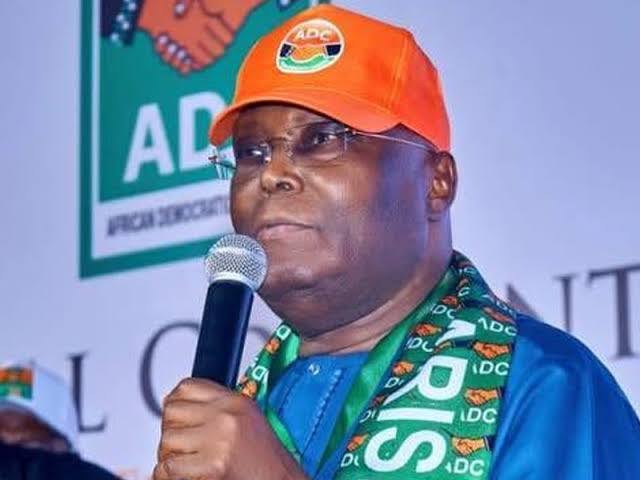
Atiku as an accomplished business mogul, entrepreneur and investor wants to build a prosperous economy by expanding local production, privatize the ailing refineries and encourage commerce. In the area of security, he intends to motivate and equip the armed forces to fight insecurity and establish the state police for rural policing. He intends to spearhead reforms in education and social services. On power devolution, the ADC presidential flag bearer plans to deploy more resources and responsibilities to the subnational governments through constitutional restructuring.

Nigerians play what I call crude politics. Politics of primordial ethnic sentiments and religious bigotry. The political landscape is as crude as the politicians are unscrupulous and the electorate nonchalant about their rights and civic obligation. Politicians do whatever pleases them and are never held accountable for their deeds. Parties are not appraised on their programs and ideologies and the individual candidates are never judged on their characters and manifestos. And so the politicians don’t care about manifesto development; some don’t even know the contents of the manifesto that they hired people to prepare for them. All they care is how engage thugs and hooligans to snatch ballot boxes for them. This is the sad reality of the Nigerian situation that has made it impossible for the citizens to get good government.
Most times, the campaign manifesto is presented by candidates seeking elective positions perfunctorily; not necessarily because they want to implement what is contained therein. In 2015, the number two item in the All Progressives Congress (APC) manifesto is: to restructure the nation. But, when the party came to power, it vehemently resisted the call by Atiku Abubakar, the nation’s former vice-president and other well-meaning to restructure the nation.
And in 2023, Tinubu’s Renewed Hope Manifesto which many believe was a parody of M.K.O Abiola’s Hope Agenda 93 contained clauses about growing the economy, providing security, devolution of power and economic empowerment. But, today the country is going through hard times occasioned by poor and discriminatory policies of the regime that promised hope.
Evidently, the last three years have been the worst in the history of this nation. The country is in a state of decay as every aspect of the nation’s life is in turmoil. The economy is in shambles with mounting national debt, run-away inflation, rising youth unemployment, decaying economic and social infrastructure. Local production is declining as companies operate below their installed capacity while multinationals are divesting and leaving the country in droves. Nigeria remains the poverty capital of the world with over 70% of the people multi-dimensionally poor. The fallout of the mismanagement of the economy is increase in crime and social vices. Insecurity and terrorism has become part of national life. Banditry and kidnaping for ransom have become the order of the day.
The government at the center is inept, corrupt, myopic and exclusionist. National unity is threatened by the government’s divisive and anti-people policies. The nation’s hard-worn democracy is gravely threatened by the dictatorial tendencies of Asiwaju Bola Ahmed Tinubu, the man occupying the seat of power at Aso Rock; who is bent on retaining power by every means necessary. He has invested national resources in propaganda, laundering his battered image and in fighting to suppress advocacy and opposition. The result is tension, frustration and agitation.
Clearly, all these are because Tinubu came to power without national agenda but personal agenda because he believed it was his turn to rule Nigeria. Tinubu’s appointments since coming to power shows that he is not interested in national development. The composition of his 2027 Presidential Campaign Council shows that he is not prepared to play according to the rules. And his campaign manifesto obviously shows that he hasn’t the slightest idea about what the needs of the country are.
And it is on the basis of this that I wish to look closely at the 2027 Presidential Campaign manifesto of Atiku Abubakar, the presidential candidate of the African Democratic Congress (ADC). Generally, campaign manifesto should reflect the candidates understanding of the problems and challenges facing the people that he intends to represent as well as the means and strategies to tackle them. It may also contain the potentials and opportunities and how to leverage on them to serve the people better.
Just as his 2023 manifesto was, his current campaign manifesto highlighted the critical issues affecting the nation at present. His 2023 campaign manifesto entitled: My Covenant with Nigerians centers on a comprehensive five-point development agenda aimed at national reform and economic recovery. The Wazirin Adamawa 5-point agenda were: to restore Nigeria’s unity, build a strong economy by expanding domestic production and export promotion, supporting the MSMEs and promoting private-sector-led market; enhance national security, spearhead educational reform and devolving power and resources. And his key policy directions were local government autonomy, economic liberalization and re-opening of land borders to boost regional trans-border trade while upgrading our port facilities.
Atiku’s 2027 Campaign manifesto focuses on a broad policy roadmap aimed at economic recovery, security overhaul and true federalism. Atiku aims to form an inclusive government that will cut across ethnic and regional blocs in order restore national unity that is battered under the current regime. Atiku as an accomplished business mogul, entrepreneur and investor wants to build a prosperous economy by expanding local production, privatize the ailing refineries and encourage commerce. In the area of security, he intends to motivate and equip the armed forces to fight insecurity and establish the state police for rural policing. He intends to spearhead reforms in education and social services. On power devolution, the ADC presidential flag bearer plans to deploy more resources and responsibilities to the subnational governments through constitutional restructuring.
The key policy thrust includes: reinstating a production-focused fuel subsidy tied to domestic refining rather than imported fuel to lower transport and food cost. In the first 100 days in office, Atiku plans to launch N10 billion economic stimulus package to support small businesses and job creation. Atiku plans to reopen closed land borders to boost regional trade and lower food prices. Atiku will implement the Supreme Court judgment on Local Government Autonomy; ensuring that all funds due to Local Councils reach them directly, and are used for grassroots development. Expect better Primary Healthcare, roads and water, in your Community.
Clearly, the summary of Atiku Abubakar’s manifesto and plans indicate that he knew what the country needs at this time and he is poised to provide them if given the opportunity to lead the nation.
To be continued.
Hajia Hadiza Mohammed
An actress, social activist, politician
London, UK