Opinion
A Picture from Bamenda That Explained Everything –By Matthew Ma
The photograph serves as a powerful critique of both religious and political institutions, prompting us to confront a profound question that often goes unaddressed in policy discussions: When was the last time we witnessed our leaders openly embrace vulnerability, rather than sidestepping it in favor of a more polished façade?

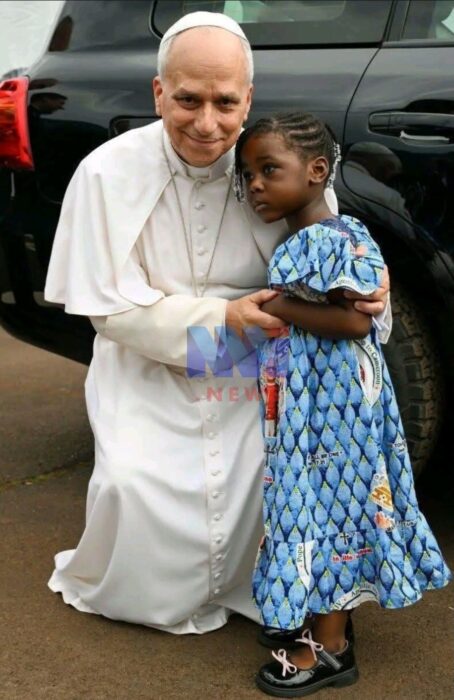
In a world often characterized by grand speeches and carefully crafted public personas, a genuine moment in Bamenda, Cameroon, recently captured my attention. A striking photograph—depicting Pope Leo XIV bending down to embrace a young girl—quietly emerged as one of the most poignant reflections of his visit to the city. Despite the lack of formal policy announcements or grand proclamations during his visit, this brief human interaction conveyed a profound message that many leaders struggle to articulate: a small, defenseless child finds solace and safety in the warm, protective embrace of a globally recognized religious figure. This singular act of compassion transcends mere physical proximity; it symbolizes a deep connection between innocence and guidance. In the simplicity of their embrace lies a powerful commentary on the type of leadership the world so desperately longs for today.
First, the photograph serves to redefine our understanding of authority. Traditionally, authority is conveyed through distance—often illustrated by the physical space between leaders and the communities they serve. This is particularly evident in Nigeria, where leaders maintain a position of elevation, both literally and figuratively, creating a barrier that separates them from the people. However, in Bamenda, this conventional distance was dramatically diminished. In a striking display of humility, the Pope did not maintain his elevated status or remain emotionally aloof; instead, he took a step down, both physically and metaphorically, to come closer to those he was visiting. By kneeling or bending down to be at eye level with the child, he communicated a profound and powerful truth: authentic leadership transcends mere visibility or authoritative presence; it is fundamentally about being present with others, particularly in their moments of vulnerability and need. This act of reaching out and connecting on a personal level not only humanizes leadership but also reinforces the idea that true authority is grounded in empathy, compassion, and shared experience. It is a reminder that leadership is not just about making decisions from a distance, but about engaging with and uplifting the community.
Second, the image powerfully conveys the profound language of compassion amidst the turmoil of a fractured world. Bamenda, like many other communities worldwide, has endured periods of heightened tension, pervasive uncertainty, and the silent suffering of its ordinary inhabitants. In environments rife with conflict and distress, grand proclamations and lofty declarations often fall flat, sounding hollow to those who endure hardship daily. However, the simple act of a human touch—such as a warm embrace—can restore a sense of dignity that words alone often fail to provide. This act of kindness delivers a potent message to the overlooked and forgotten that they are acknowledged and seen. For Bamendans grappling with pain and heartache, it reassures them that they are not alone in their struggles and that support is available in their moments of need. Such gestures of care transcend verbal communication, creating connections that remind individuals of their inherent worth and the shared humanity that binds us all.
Third, the photograph serves as a powerful critique of both religious and political institutions, prompting us to confront a profound question that often goes unaddressed in policy discussions: When was the last time we witnessed our leaders openly embrace vulnerability, rather than sidestepping it in favor of a more polished facade? The child captured in that moment symbolizes far more than just her individual experience; she embodies the struggles of the marginalized, the displaced, and those whose voices often go unheard in societal discourse. In this context, the Pope’s response to the image—immediate, compassionate, and strikingly authentic—sets a new benchmark for what we should expect from leadership. His unfiltered demeanor reflects a level of empathy that challenges leaders across various sectors to reconsider how they engage with the human experience. This moment serves not only as a reminder of the importance of vulnerability in leadership but also as a call to action for those in positions of power to connect with the people they serve on a deeper emotional level.
Fourth, there is also a profound symbolic significance in the way children interact with the world around them. Children inherently embody a sense of trust untainted by ulterior motives or calculations. When this pure, instinctive trust is reciprocated with warmth, compassion, and genuine care, it serves as a subtle yet powerful reaffirmation of faith—not just in matters of religion, but also in the broader fabric of humanity. In a society frequently characterized by skepticism, fear, and division, the importance of such affirmations cannot be overstated. They remind us of our shared human connections and the potential for kindness that can transcend the barriers we often erect between ourselves. This process of nurturing trust and warmth among the youngest members of our society is of great significance in fostering a more united and understanding world.
Critics might categorize these poignant moments as mere optics, suggesting they are meticulously staged or orchestrated for public consumption. However, even if we were to accept this viewpoint, it raises a more troubling question: why do so few leaders, whether their displays are genuine or contrived, choose to convey compassion so convincingly? The infrequency of these powerful images is exactly what imbues them with significance and impact. The lack of consistent empathy among those in power raises important questions about the values and priorities of leadership today. Why does compassion seem to take a backseat in the public personas of many leaders, and what does this say about their connection to the people they serve? The rarity with which we witness true empathy not only highlights its importance but also serves as a stark reminder of what is often lacking in contemporary governance.
The Bamenda photograph transcends mere viral imagery, serving instead as a profound reflection on leadership in its many forms. It holds up a mirror to society, portraying not only the aspirations of effective leadership but also highlighting the frequent shortcomings and failures that accompany it. This powerful image reminds us that, beyond the complexities of doctrine, the intricacies of political landscapes, and the sometimes rigid frameworks of institutional structures, lies a fundamental and universal truth. At our core, individuals yearn for recognition, connection, and an inherent sense of worth. When people feel seen, touched, and valued, it fosters a deeper sense of community and belonging, reminding us of the emotional and human aspects that should underpin all leadership.
The visual interaction between Pope Leo XIV and the child serves as a poignant reminder that authority cannot be measured merely by a leader’s physical position or emotional detachment from the community they represent. Instead, authentic leadership is fundamentally about the leader’s readiness to approach those they serve with an open heart and attentive ear, demonstrating real concern for their needs and experiences. This photograph resonates with me on a profound level, transcending mere words and capturing the essence of effective leadership—qualities such as compassion, genuine connection, and an unwavering dedication to the welfare of others. It powerfully illustrates that leadership is not just about making decisions from a distance or maintaining a formal demeanor; it is also about the small, everyday moments of warmth and connection that can profoundly influence lives. In our fast-paced world, this image serves as a compelling reminder that the unguarded instances of tenderness and empathy between individuals often leave the most enduring impressions in people’s hearts and minds. It challenges us to reflect on our own leadership styles and to prioritize relationships over authority, emphasizing that these simple gestures of kindness can create meaningful change and foster a deeper sense of community.
What lessons should Nigerian leaders take away from this? In that poignant moment of embrace shared between Pope Leo XIV and a child, we witness a powerful encapsulation of leadership philosophy that transcends borders and cultures. This image, resonating deeply within the Nigerian context, sets forth a standard that is both elegantly simple and significantly demanding. True leadership is not established through an array of prestigious titles, impressive motorcades, or carefully crafted public pronouncements. Instead, it is defined by the genuine willingness to engage with the populace, particularly those who are most vulnerable and marginalized, and to respond with heartfelt compassion and care. The symbolic act of the Pope and the child serves as a profound reminder that authentic authority is grounded in service to others. Empathy, in this light, is not merely an optional attribute to enhance power; it is the very cornerstone upon which effective leadership is built. In a nation like Nigeria, where the dynamics of power often appear distant from the daily struggles of its citizens, this lesson is particularly vital.
For Nigeria to progress with a sense of integrity and unity, it is imperative that its leaders—whether in politics, faith, or public service—take to heart the importance of replacing physical and emotional distance with genuine presence. They must transition from mere rhetoric to decisive action and cultivate a culture that prioritizes compassion over indifference. In that fleeting yet impactful moment in Bamenda, a clear and undeniable truth emerged: the future does not belong to those who govern from lofty heights, removed from the realities of the people, but to those who are committed to kneeling, truly listening, and selflessly serving their communities. It is through such humility and dedication that sustainable progress can be achieved, fostering a cohesive society that thrives on mutual respect and understanding.
Rev. Ma, S.J., is a Jesuit priest and a public policy analyst. He currently writes from Abuja, Nigeria.