National Issues
A Reflection on ‘Zanga Zanga’ and ‘Nigeria Jagajaga’, by Isaac Asabor

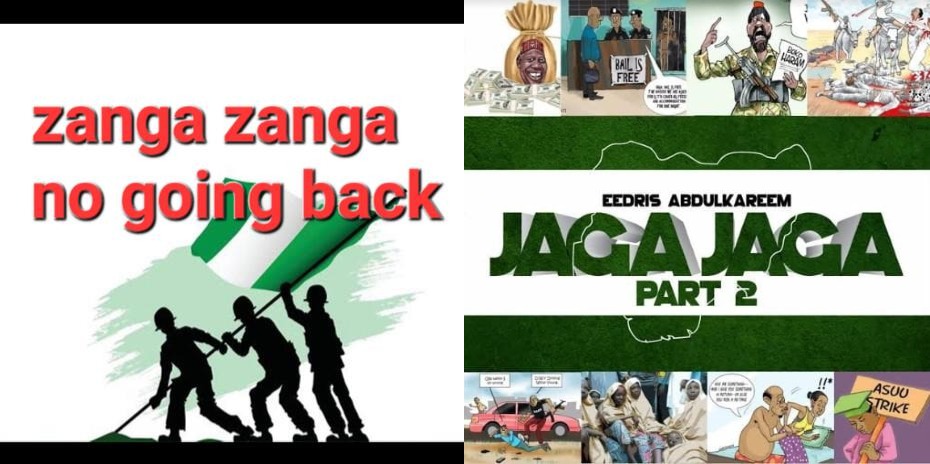
In the annals of Nigeria’s socio-political history, certain terms have emerged as symbols of the collective frustrations, aspirations, and resilience of its people. Today, as we navigate the turbulent waters of our national life, two phrases stand out, “Zanga Zanga” and “Nigeria Jagajaga”. These expressions encapsulate the prevailing sentiments of chaos, disillusionment, and the enduring quest for good governance that characterize the current era.
The term “Zanga Zanga” is a colloquial expression often used to describe protests, upheavals, and widespread demonstrations. It signifies the raw energy of the masses, particularly the youth, who have taken to the streets in recent years to demand accountability, justice, and a better future. This phrase embodies the spirit of defiance and the refusal to accept the status quo, no matter how entrenched it may be.
“Nigeria Jagajaga,” on the other hand, is a phrase popularized by the legendary Nigerian musician, Eedris Abdulkareem in his 2004 hit song of the same name. The phrase translates loosely to “Nigeria is in disarray” or “Nigeria is messed up,” and it struck a chord with many Nigerians who felt that the country’s potential was being squandered by poor leadership, corruption, and systemic failure. Nearly two decades later, the phrase still resonates, perhaps even more profoundly, as the challenges facing the nation seem to have intensified.
Nigeria’s youth, who make up a significant portion of the population, have grown increasingly disillusioned with the state of the nation. High unemployment rates, poor infrastructure, insecurity, and a lack of opportunities have fueled a sense of hopelessness. However, rather than resigning themselves to a bleak future, many young Nigerians have embraced the spirit of “Zanga Zanga” by taking an active role in demanding change.
From the #EndSARS movement, which called for an end to police brutality, to ongoing protests against bad governance and economic hardship, the youth have shown that they are unwilling to remain silent in the face of injustice. Social media has become a powerful tool in their arsenal, amplifying their voices and connecting them with like-minded individuals across the globe.
The “Zanga Zanga” era is characterized by a heightened awareness of civic rights and responsibilities. It is a time when the youth are not only challenging the old order but also seeking to redefine what it means to be Nigerian in the 21st century. They are demanding transparency, accountability, and a government that truly serves the people.
Despite the vibrant activism of the youth, the phrase “Nigeria Jagajaga” remains a stark reminder of the entrenched issues that continue to plague the country. Corruption remains endemic, with public funds often siphoned off by those in power. Insecurity has reached alarming levels, with insurgencies, banditry, and communal clashes leaving many regions in a state of perpetual fear. The economy, while showing signs of growth, has not translated into tangible benefits for the majority of Nigerians, who continue to struggle with poverty and inflation.
The disarray captured by “Nigeria Jagajaga” is evident in the crumbling infrastructure, inadequate healthcare system, and failing educational institutions. These issues are not new, but they have become more pronounced, leading to a growing sense of despair among the populace.
The juxtaposition of “Zanga Zanga” and “Nigeria Jagajaga” highlights the duality of the current era. On one hand, there is a deep-seated frustration with the state of the nation; on the other, there is an unyielding determination to effect change. This era presents an opportunity to channel the energy of the youth into constructive action that can help address the systemic issues plaguing the country.
For meaningful change to occur, there must be a concerted effort to bridge the gap between the government and the governed. Leaders must be willing to listen to the voices of the people, particularly the youth, and take decisive steps to address their concerns. This includes implementing policies that promote economic growth, create jobs, and ensure security for all Nigerians.
Moreover, the spirit of “Zanga Zanga” must be sustained beyond protests. It must translate into increased political participation, with more young people running for office, voting, and holding their leaders accountable. Civil society organizations and the media also have a crucial role to play in keeping the government in check and advocating for the rights of the people.
Without a doubt, the era of “Zanga Zanga” and “Nigeria Jagajaga” is a defining moment in the nation’s history. It is a time of great challenges but also of great potential. The phrases themselves serve as a call to action, urging every Nigerian to contribute to the rebuilding of the nation. While the road ahead may be difficult, the collective will of the people, especially the youth, can pave the way for a better, and more prosperous Nigeria.