Forgotten Dairies
Allocation Of N135bn For Post Election Litigations: A Lack Of Tenderheartedness Towards Nigerian Citizens -By Sadiq Shuaibu Dajin & Muhammad Bashir Abdulhafiz
Until this is done, the ₦135 billion will not stand as an achievement to peace or the rule of law. It will stand as an achievement to a government that, in its pursuit of self-preservation, lost touch with the tender heart of the nation it was elected to serve. This is a condemnable principle in any democracy, and history will judge this moment harshly.

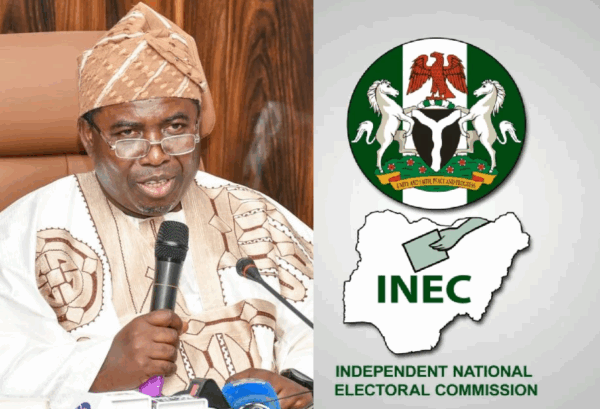
We denounce unequivocally the decision of the federal government of Nigeria to allocate the staggering sum of One Hundred and Thirty Five Billion Naira for post election legal battles. It is an act that is not merely a policy error, it is a sincere and unmistakable demonstration of mercilessness by those entrusted with the nation’s purse and the people’s welfare.
Let us be clear about what this number represents. In a nation where the minimum wage remains a source of national agony, where the price of a bag of rice can destabilize a family’s entire month, and where citizens queue for hours to buy fuel they can barely afford, the government has found the headroom to set aside ₦135 billion for lawyers. It is a sum so vast, so disconnected from the daily pain of the street, that it feels like a deliberate provocation.
The official defense of this allocation might be framed as an attempt to maintain peace. Some might argue that in a volatile political climate, channeling grievances into courtrooms rather than the streets is an act of ‘tenderheartedness’. They might say it prevents chaos. But this is a flawed and dangerous logic. It is a bandage soaked in gold placed on a wound that the government itself inflicted.
True compassion for Nigerian citizens does not begin at the Supreme Court. It begins at the polling unit. The need for such a colossal legal war chest is not a natural disaster; it is a man-made consequence of flawed electoral processes. When elections are conducted with transparency, when the votes count truly, the number of litigations drops drastically. Therefore, allocating ₦135 billion to fight court cases is an admission of failure. It is an admission that the process is so broken, so riddled with mistrust, that the government must stockpile a financial supply to defend the outcome.
What is more tenderhearted? Spending money to ensure a clean, undisputed election, or spending money to hire Senior Advocates to argue about a messy one? The answer should be obvious to any leader with a conscience. The current approach suggests the government is more interested in winning the aftermath than in getting it right the first time.
To understand the depth of this lack of tenderheartedness, we must translate this abstract figure into the language of the common man. Let us do the arithmetic of neglect:
– Healthcare: ₦135 billion could revitalize and equip over a hundred Primary Healthcare Centres across the federation, ensuring that pregnant women do not die in childbirth for lack of a bed or a drip. It could fund a significant portion of the Basic Health Care Provision Fund, saving countless lives from preventable diseases. Instead, that money is reserved for legal briefs and appearances.
– Education: This sum could address the infrastructural decay in our unity schools and tertiary institutions. It could provide bursaries and loans for students whose parents have been crushed by the current economic reality. It could keep the doors of our universities open instead of perpetually shut by industrial actions born of government neglect. Instead, it will pay for motions and counter-motions in court.
– Food Security: With hunger stalking the land as a direct result of policy shifts, ₦135 billion could be a massive injection into agricultural support, providing subsidized inputs to farmers, improving rural roads to move food to the city, and stabilizing the price of bread. Instead, it is invested for post election warfare.
When a father cannot afford school fees and a mother cannot afford medicine, and the government calmly sets aside billions to settle political scores in court, the message is loud and clear: The survival of the political class is more important than the survival of the citizen.
This allocation sets a frightening precedent. It suggests that governance is not about providing services but about managing conflict after the fact. It transforms the judiciary from a temple of justice into a high-stakes casino for the political elite. It tells the Nigerian people, ‘We will spend whatever it takes to keep ourselves in power, even if you go hungry while we do it’.
This is not democracy. It is the commodification of power. It is a system where the state’s resources are deployed not to lift people out of poverty, but to insulate the government from accountability.
Advice to Those in Authority.
To the President, the Minister of Finance, the Attorney General of the Federation, and the leadership of the National Assembly, we offer this simple and heartfelt advice:
Firstly, reconsider and Reallocate Immediately. A budget is a moral document. It shows what a government values. Right now, this budget shows you value legal victory over human dignity. I urge you to reduce that allocation drastically. Divert the bulk of that ₦135 billion into the social safety nets that Nigerians are crying for. Let the world see that you hear the cries of hungry citizens more than the arguments of the courtroom.
Secondly, invest in the Cure, Not the Bandage. The best way to avoid post election litigation is to conduct an election that nobody wants to challenge. Instead of saving money for lawyers, invest in technology and training for the Independent National Electoral Commission (INEC). Empower the judiciary to handle electoral disputes swiftly and cheaply. Build a system where the result is so credible that the idea of spending ₦135 billion on litigation becomes absurd.
Thirdly, practice True Tenderheartedness. Being tenderhearted means feeling the pain of the people you lead. It means visiting a hospital and seeing the lack of beds before approving a budget for legal fees. It means looking at a plate of garri and understanding its new, unaffordable price before signing off on a billion naira contract for a Senior Advocate. Let your policies reflect empathy, not just political expediency.
Lastly, embrace Proportionality. Even if some funds are necessary for legal defense, the amount must be proportional to the nation’s other needs. ₦135 billion is not proportional. It is excessive. Scale it back. Show restraint. Show that you understand the value of a Naira in the life of a Nigerian trader, farmer, or student.
Until this is done, the ₦135 billion will not stand as an achievement to peace or the rule of law. It will stand as an achievement to a government that, in its pursuit of self-preservation, lost touch with the tender heart of the nation it was elected to serve. This is a condemnable principle in any democracy, and history will judge this moment harshly.