Africa
Alumni Treasure And National Transformation -By Abiodun Komolafe
Many out-of-school children roam the ungoverned areas in the North, and it’s these children who are being recruited by Boko Haram and ISWAP to wreak havoc in the country. To combat terrorism, education is key. Tinubu must take bold action to address this issue. Although some believe he’s being careful with the North, the president has a responsibility to leave a lasting legacy.

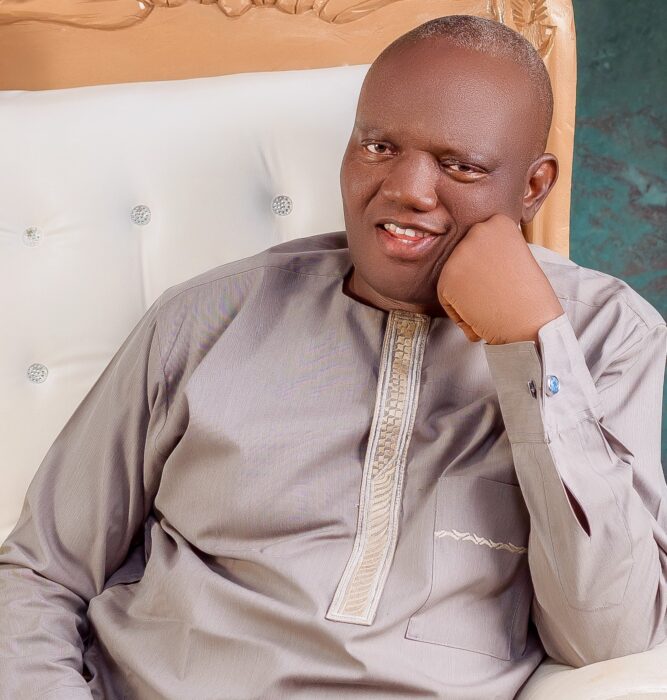
Ayo Aluko-Olokun, a veteran journalist and communication consultant, was recently elected as the National President of St. Patrick’s Grammar School, Ibadan, Oyo State (SPACO) Alumni Association. A member of the 1975/1980 set, Aluko-Olokun, formerly known as Ayodele Aluko in his secondary school days, took over from Dayo Mobereola, now Managing Director of the Nigerian Maritime Administration and Safety Agency (NIMASA).
Under Aluko’s leadership, the SPACO Alumni Association has pledged to undertake several initiatives, including launching the SPACO Alumni Library Day, spearheading a book donation drive, securing sponsors for a multi-sports complex, and deploying a strategy to sponsor teachers across various subjects. The ultimate goal is to improve the academic performance of students and restore the glory of St. Patrick’s Grammar School within five years.
Indeed, alumni associations play a vital role in national development, fostering lifelong bonds and supporting academic excellence. In response to dwindling government funds and growing educational demands, alumni bodies are mobilizing to give back to their alma maters, contributing to national transformation.
Take, for example, Ijebu-Jesa Grammar School (IJGS), Ijebu-Jesa, Osun State Alumni Association has initiated various legacy projects to give back to its alma mater. Through these efforts, different alumni sets are making a lasting impact by undertaking specific projects that benefit future generations. Yours sincerely is a member of the 1980/85 Set. Led by prominent members, including Akinyemi Adu, Olusola Owojuyigbe, Dehinde Orioke, Julius Olagunju, Olufemi Fasoyin, Toyin Adegoke (nee Oni), Comfort Onajide (nee Ojumu) and Afolabi Arojojoye, our ‘Class of ’85’ has undertaken several projects to enhance the school’s facilities and provide better opportunities for current students.
Ilesa Grammar School proudly boasts a rich legacy of distinguished alumni, including Wole Olanipekun SAN, Justice Bolarinwa Babalakin and Obi Daramola. Through the Alumni Association, these accomplished individuals have made significant contributions, including facility renovations, educational resources, scholarships and mentorship programs, shaping the school’s legacy and ensuring its continued success.
The Government College Ibadan Old Boys Association (GCIOBA), led by Wale Babalakin, has also taken over the management of Government College, Ibadan, following its handover by the government. This development entrusts the esteemed institution’s management to its own alumni association.
Properly utilized, alumni can form a bedrock of norms, cultures and traditions that guide and guard a nation. Britain and France, for instance, demonstrate the significant role alumni play in developed countries. In both nations, alumni have provided a foundation of “cultural hegemony,” which serves as a cornerstone for their continued progress.
In the UK, for example, the government, parliament, public and private sectors are largely driven by the cultural norms and intellectual foundations laid by universities such as Cambridge, Oxford and the London School of Economics. Although the UK has over a hundred other universities, these three institutions have played a pivotal role in the country’s development, yielding numerous positive benefits.
In France, the École Nationale d’Administration (ENA) and Sciences Po (The Institute of Political Science) are the driving forces behind public and private life. Regardless of the ruling political party or coalition, their influence is pervasive. France has benefited from their cultural norms, traditions and the knowledge they impart to their students. However, admission to these prestigious institutions is highly competitive.
Like their British counterparts, these institutions select only the best and brightest African applicants, grooming them for public service and saving governments millions on consultants and recruitment agencies. There are valuable lessons here for Nigeria, a country that once had a similar framework but has since discarded it, with predictably disastrous consequences.
India offers another example from the developing world. When Pandit Nehru, India’s first post-independence Prime Minister, established the Indian Institute of Technology in 1950, it seemed premature given the country’s poverty and underdevelopment. However, history has vindicated Nehru’s vision, as the institute’s alumni now dominate the technology space, leading top global companies like Apple, Google and Microsoft, often as Chief Executives.
The Indian Institute of Technology is so renowned that American companies have established satellite campuses in Bangalore over the last 25 years, transforming it into a thriving technology hub. Despite this, they have struggled to attract enough graduates, as many are reluctant to leave India. This scenario exemplifies the proverb “If Mohammed does not come to the mountain, the mountain will come to Mohammed.”
Nigeria could have replicated this model by developing the Yaba College of Technology and other institutions, creating feeder schools at primary and secondary levels. This approach could have also been applied to the country’s unity schools and institutions founded by religious groups.
In an earlier era, institutions like King’s College, CMS Grammar School, Lagos, and Barewa College, Zaria, would have ranked among the world’s top 100 secondary schools. The high calibre of their graduates enabled them to secure admission into prestigious universities such as Oxford and Cambridge. The records and facts supporting this claim are readily available.
The decline in quality of Nigeria’s internationally acclaimed institutions has coincided with its decline and subsequent underperformance. This is undeniable! Dear fatherland is haunted by the specter of inadequate institutions, for nations are built on strong institutions, not strong men. The “great man theory” of history, which attributes a nation’s success to individual leaders, has long been discredited.
Maybe that’s where governments should turn – encouraging alumni participation in their alma maters’ affairs. The alumni of primary and secondary schools, who will fill the tertiary institutions, are crucial to the success of “Operation Rebuild.” This initiative aims to rebuild primary institutions and restore their former glory. To achieve this, the government should allocate at least N100 billion to rebuild unity schools, working collaboratively with alumni groups. While the alumni have made commendable efforts in rebuilding their institutions, they cannot succeed alone.
The alumni of CMS in Lagos, Nigeria’s oldest grammar school, are raising $2 million to build a state-of-the-art Information Technology and Artificial Intelligence (AI) Centre. This initiative aims to prepare students for the future, and the government should partner with alumni associations to replicate such projects nationwide. Failure to do so would demonstrate a lack of interest in the future, which is already here.
India, Malaysia and Brazil have demonstrated that alumni associations play a critical role in achieving sustainable development. Nigeria must recognize the importance of alumni associations in driving development. Projects and palliatives alone are insufficient; instead, it is the ethos, norms and principles of alumni groupings, combined with the benefits of their educational experiences, that propel a country toward greatness and sustainable development.
By the way, it’s disheartening to note that the nomadic schools established by the Goodluck Jonathan administration in the North have largely been abandoned. However, given the current conflicts between Fulani and Hausa communities, President Bola Tinubu should revisit these schools and work towards making them functional again. Fortunately, the newly-created Livestock Ministry plans to build livestock settlements nationwide. When locating these settlements, the government should ensure they’re built near the schools to provide children with easy access to education.
Many out-of-school children roam the ungoverned areas in the North, and it’s these children who are being recruited by Boko Haram and ISWAP to wreak havoc in the country. To combat terrorism, education is key. Tinubu must take bold action to address this issue. Although some believe he’s being careful with the North, the president has a responsibility to leave a lasting legacy.
To address the issue of out-of-school children, we need schools with qualified teachers. This requires the government to implement effective policies that are adaptable and dynamic, rather than static and obsolete. China’s regulated society serves as a good example of how effective governance can drive positive change.
Here’s to Ayodele Aluko and others like him, may they challenge and transform the systems they are entering!
May the Lamb of God, who takes away the sin of the world, grant us peace in Nigeria!
*Komolafe wrote in from O20, Okenisa Street, Ijebu-Jesa, Osun State (ijebujesa@yahoo.co.uk)