Africa
BBNaija, NLNG Prizes, and the Question of National Priorities -By Zayd Ibn Isah
It is noble to hold our leaders accountable, but we must extend that accountability inward. We are not merely the governed. We are the future governors. And the values we nurture today will determine the kind of nation we lead tomorrow.

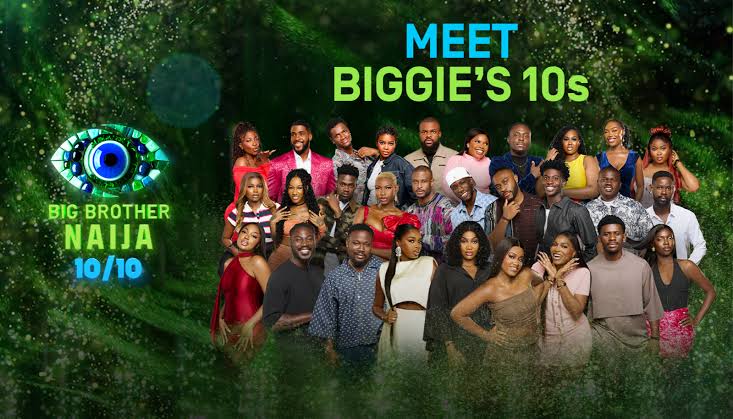
When Olubunmi Familoni won the $100,000 Nigerian Prize for Literature last year with his children’s book The Road Does Not End, I was deeply disappointed that he didn’t even trend on social media. Had he been a Big Brother Naija winner, he would have dominated headlines, trended across platforms, and brands would be falling over themselves to offer him endorsements. He might even have been given an appointment by his state governor as SSA on Entertainment, because our leaders understand us very well. They know what we value and where our priorities lie.
In the midst of that disappointment, I wrote an article titled “Nigerians and Our Priorities”, which was published by Daily Trust and other outlets. Nearly a year later, I feel compelled to revisit the topic, because nothing has changed. We still hold the entertainment industry in higher esteem than other sectors. That’s why when many of us criticised Mr. President for hosting the Super Falcons and their coaching staff at the Presidential Villa, where he showered them with cash gifts, houses, and national honours for, of course, bringing glory to Nigeria by winning the African Women’s Cup of Nations in Morocco for a record tenth time, I was surprised by the backlash. Is it not the same footballers most of us are praying our children become, so they can make generational wealth?
We Nigerians are fascinating as a people. This is because we are often quick to hold our leaders accountable while ignoring our own shortcomings.
Today, unless you are in the entertainment industry, your chances of being recognised and celebrated at home as a creative writer or scientific inventor are slim. Most of the writers and inventors we know and celebrate today are only recognised because they are globally acclaimed. Take, for instance, the Nigerian Prize for Science and the Nigerian Prize for Literature, two of the continent’s most prestigious awards, each worth $100,000.
Despite the enormous cash rewards attached to these academic and literary prizes, the awards as a whole hardly generate a fraction of the buzz that surrounds a single season of BBNaija among Nigerians, especially the youths. In particular, the Nigerian Prize for Literature is an annual award sponsored by NLNG, established in 2004. It operates on a four-year cycle, rotating through four genres: prose fiction, poetry, drama, and children’s literature. Prose fiction usually generates more interest than the other three genres, so there’s a lot of buzz in literary circles surrounding this year’s longlist.
The longlist for this year features acclaimed writers like Abubakar Adam Ibrahim, Chigozie Obioma, Yewande Omotoso, Uwem Akpan, Michael Afenfia, and Chika Unigwe. These are all authors whose works have received global praise, although not as much as the likes of Prof. Wole Soyinka, Chinua Achebe, and Chimamanda Ngozi Adichie. Still, it is disappointing how as a society we have failed to fully celebrate their importance. It is also amusing how such formidable writers would have to double their hustles if they were to want a seat at the table with Big Brother Naija housemates and other entertainment figures.
I can never fully wrap my mind around the fact that these remarkable writers have contributed far more to Nigeria’s creative history than BBNaija housemates—all to barely known outside literary circles. It is even more annoying when you consider how some BBNaija housemates immediately become folk legends after entering Biggie’s house to dance, eat, parade in near nudity, and even indulge in sexual acts under the full view of cameras.
As we often say in pidgin, “This life no just balance at all.”
If you’ve been following the trends on X (Twitter), you would have noticed that since this year’s BBNaija housemates entered the house, their names have been trending nonstop. And volunteers are already campaigning for votes for their favourites to win.
At this point, we must ask: Why do we, as a people, invest such disproportionate attention in fleeting entertainment spectacles like BBNaija, where religious immorality and social irresponsibility are the order of the day, while ignoring initiatives that actually contribute to our intellectual, cultural, and national development? Isn’t this, too, a form of misplaced priority?
In “Nigerians and Their Priorities”, I made a similar argument. Permit me to paraphrase here:
“Our society places more emphasis on celebrity culture, political drama, and viral content than on intellectual achievement. Familoni’s brilliant portrayal of Nigerian life and culture deserved to be a national conversation. Yet, how many Nigerians have even heard of his book, let alone read it?”
We live in a time when the sensational is preferred over the substantial, the trending over the timeless. From politics to pop culture, we elevate the fleeting while ignoring the foundational. Why is it that as a country, we seem to prioritise fleeting trends over lasting influence, and the sensational over the substantial? Why do political scandals, social media trends, and celebrity culture often dominate our conversations, while achievements in literature, science, sports and other fields often fly low under our collective radar?
It is even more tragic when you realize that many Nigerians do not read, and rarely even see the act of reading as a leisurely activity. Even in universities, undergraduates only read to pass exams and make grades. Outside of that academic context, there’s little interest in literature. And if one doesn’t care for books at all, he or she would care less about the people who write them in the first place. Little wonder we end up producing educated illiterates as thousands of graduates emerge from our universities.
So again, I ask: What are our national priorities? And are, they aligned with the future we claim to desire? For decades our literary output as a nation has been the one thing which has consistently placed Nigeria in a good light. Now, we cannot afford to neglect this great literary heritage and nurture shallow things instead.
It is noble to hold our leaders accountable, but we must extend that accountability inward. We are not merely the governed. We are the future governors. And the values we nurture today will determine the kind of nation we lead tomorrow.
Zayd Ibn Isah can be reached at lawcadet1@gmail.com