Africa
Beyond Elite Interests: Reclaiming the Nigerian Police for Justice and Accountability -By Daniel Nduka Okonkwo
A high-ranking police officer, particularly the IGP, is expected to provide strategic leadership, ensure national security, and uphold the highest standards of integrity and professionalism. The office bridges government and law enforcement, encompassing responsibilities from policy formulation to operational command. At that level, one must be a reformer who modernizes the Force, a leader who inspires confidence within the ranks, and a steward of public safety who exercises authority with fairness and restraint.

The Nigerian Police must never become a tool in the hands of the elites. The Inspector-General of Police (IGP) must resist the temptation to preside over a Force that serves the powerful while neglecting the people. Instead, he should use the years remaining in service to change the narrative. Policing must never become oppression. The IGP must lead with courage, confronting injustice, enforcing accountability, and transforming the Nigeria Police Force (NPF) into a true guardian of human rights. Leadership is not exploitation; it is responsibility. Only through principled reform can the Force stand as a beacon of justice rather than a shadow of fear.
History offers a stark warning: those who cannot remember the past are condemned to repeat it. The IGP must resist serving political elites at the expense of the citizenry. To do otherwise is to invite enmity, betray the oath of office, and erode the foundation of justice. Authority wielded as an instrument of oppression turns a public servant into a tool of domination. In a democracy, that is a perilous path.
At this level, the IGP is not merely a custodian of authority. The office demands reform-minded stewardship, modernizing policing systems, boosting morale within the ranks, and restoring public trust. To mistake the position for personal power is to diminish it, reducing a solemn responsibility to a vehicle of influence rather than a sacred duty to the people and a guardianship of justice.
In Nigeria, those in positions of authority too often neglect the fundamental responsibility of equipping and supporting those entrusted with difficult duties. Leadership ought to reflect the timeless principle that he who sends a child to catch a rat must provide water to wash his hands. Yet, in practice, some leaders exploit, discard, and replace subordinates with little regard for their sacrifices.
Nowhere is this tension more evident than in the office of the Inspector-General of Police (IGP), one of the most transient yet consequential positions in Nigeria’s security architecture. Individuals come and go, but the Nigeria Police Force remains a permanent pillar of national stability.
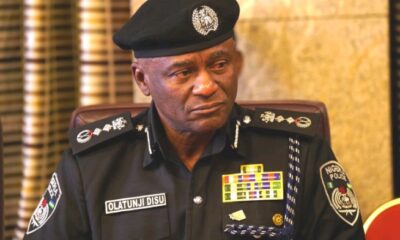
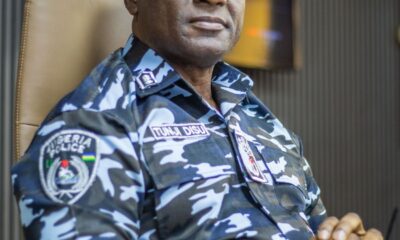
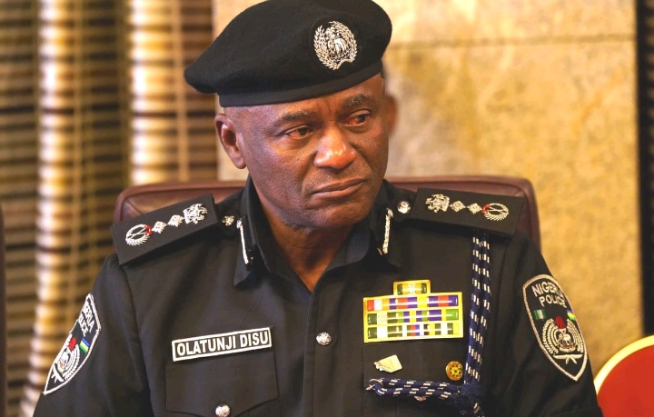
Olatunji Rilwan Disu assumed office as Inspector-General of Police following the retirement of Kayode Adeolu Egbetokun, who completed his tenure as the 23rd indigenous head of the Force on February 24, 2026. Disu’s appointment by Bola Ahmed Tinubu came at a moment of heightened public scrutiny. Activist and former presidential candidate Omoyele Sowore had repeatedly questioned Egbetokun’s continued stay in office, arguing that the police chief ought to have stepped down upon attaining the mandatory retirement age of 60. The debate emphasizes a broader national anxiety about accountability at the highest levels of law enforcement.
The Nigeria Police Force faces deeply interconnected challenges: systemic corruption, extortion at checkpoints, and persistent human rights violations, including unlawful detention and extrajudicial killings. These crises are not isolated failings but symptoms of structural decay. Severe underfunding, lack of modern equipment, inadequate forensic capacity, poor welfare packages, and delayed salaries have weakened operational effectiveness and eroded morale. In such an environment, bribery becomes normalized, misconduct goes unpunished, and public confidence steadily declines.
The scars of the disbanded Special Anti-Robbery Squad, SARS, remain fresh. High-profile cases of brutality culminated in nationwide protests under the banner of EndSARS, a movement that drew global attention to the excesses of rogue policing units and the culture of impunity that sustained them. Although SARS was officially dissolved, many Nigerians remain unconvinced that meaningful structural reform has followed.
Compounding the institutional crisis are broader societal pressures. Leadership, after all, emerges from society itself. Those who rise to the apex reflect the values, weaknesses, and contradictions of the system below. Unemployment and widespread poverty increase citizens’ vulnerability to bribery and extortion, while the selective application of the rule of law shields powerful elites from accountability. This dynamic reinforces a culture of impunity in which the powerful rarely face consequences and ordinary citizens bear the brunt of enforcement.
A high-ranking police officer, particularly the IGP, is expected to provide strategic leadership, ensure national security, and uphold the highest standards of integrity and professionalism. The office bridges government and law enforcement, encompassing responsibilities from policy formulation to operational command. At that level, one must be a reformer who modernizes the Force, a leader who inspires confidence within the ranks, and a steward of public safety who exercises authority with fairness and restraint.
As Nigeria stands at yet another exigency in its policing history, the burden of expectation rests heavily on the shoulders of its new leadership. The office will outlast its occupant. What will endure is either the legacy of reform or the cost of its absence.
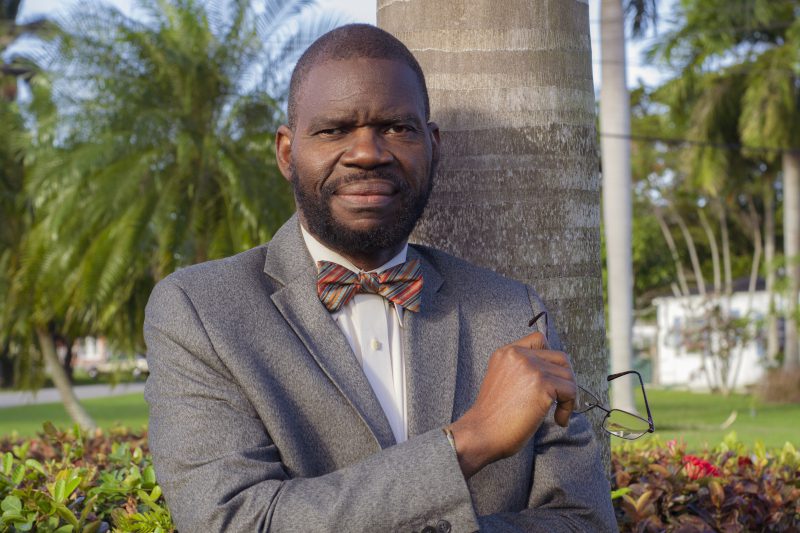
Daniel Nduka Okonkwo is a Nigerian investigative journalist and publisher of Profiles International Human Rights Advocate, as well as a policy analyst whose work focuses on governance, institutional accountability, and political power. He is also a human rights advocate and journalist. His reporting and analysis have appeared in Sahara Reporters, African Defence Forum, Daily Intel Newspapers, Opinion Nigeria, African Angle, and other international media platforms. He writes from Nigeria and can be reached at dan.okonkwo.73@gmail.com.