
Forgotten Dairies
The Existence of an Agreement Between Indonesia and America in International Trade -By Faiz Ardian Hilmy
As a country rich in agricultural and textile products, Indonesia benefits from easier cross-border trade and increased opportunities for foreign direct investment. Legal certainty and trade preferences resulting from this agreement enhance foreign investor confidence. The United States and other countries are more inclined to invest in Indonesia to take advantage of tariff benefits and market access, thereby encouraging job creation and technology transfer.

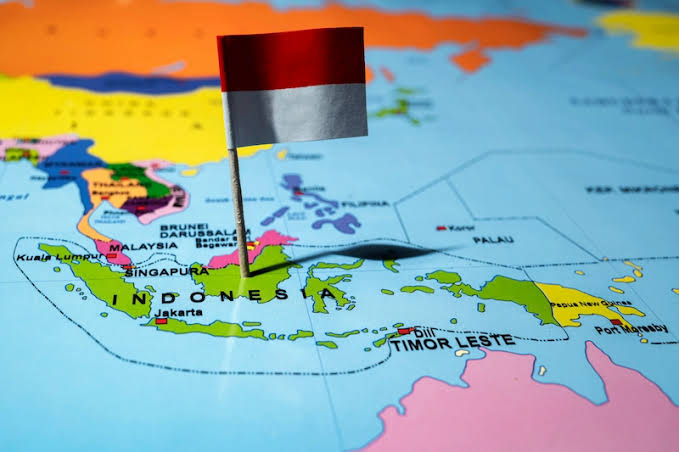
International trade is a form of free trade that involves export and import activities, where such trade occurs among several countries by selling their goods to other countries with the aim of obtaining greater profits than those gained in their own domestic markets. However, this activity is inseparable from the objectives of international trade, namely maintaining price stability and balance in international trade. Free trade, such as international trade, allows a country to concentrate on producing goods in which it has a comparative advantage. These activities not only affect the export–import sector but also have a significant impact on economic growth.
One of the current issues in Indonesia is the trade agreement between Indonesia and the United States known as the Agreement on Reciprocal Trade (ART). This official agreement was signed in Washington, D.C., on February 19, 2026, by President Prabowo Subianto of Indonesia and President Donald Trump of the United States.
The agreement between the two countries opens their respective markets to one another. Under the terms of the agreement, Indonesia commits to eliminating import duties up to 0 percent on more than 99 percent of products originating from the United States, allowing almost all U.S. goods to enter the Indonesian market without import tariffs. On the other hand, the United States applies a reciprocal tariff of 19 percent on Indonesian products in general. Nevertheless, several leading Indonesian export products receive special treatment in the form of exemptions.
These products include palm oil, coffee, cocoa, rubber, and several types of textiles. Specifically for the textile and apparel sector, the United States provides facilities through a Tariff-Rate Quota (TRQ) mechanism, which is a specific quota scheme that allows a certain volume of Indonesian textile exports to enter the U.S. market at a 0 percent tariff.
Indonesia and the United States also agreed to eliminate tariffs on digital products such as software, cloud-based services, and other digital content, allowing digital transactions to take place without customs duties. This agreement also ensures equal treatment for U.S.-based electronic payment service companies, enabling them to operate in Indonesia under fair and non-discriminatory conditions, as applied to other business actors.
With the increasing volume of Indonesian exports to the United States, this agreement can expand market access and create growth in employment opportunities. This represents an important step in bilateral economic relations that combines export opportunities with domestic implementation challenges.
The impacts generated by the agreement between Indonesia and the United States also strengthen the trend of shifting from a multilateral trading system toward bilateral arrangements. This condition has the potential to reduce the effectiveness of the most-favoured nation principle, which is the foundation of the World Trade Organization (WTO), as certain countries receive preferential treatment not enjoyed by other WTO members.
The provision of special tariffs and market access granted to Indonesia results in a decline in competitiveness of products from other developing countries in the United States market. This impact is also felt by U.S. partner countries that compete with Indonesia as suppliers, due to the special rights granted by the United States to Indonesia.
The agreement between Indonesia and the United States should increase Indonesia’s market presence in the United States, considering that Indonesia produces a wide range of products, yet its domestic products are still relatively unknown in international markets. This agreement aims to enhance Indonesia’s export and import access, as stipulated in the tariff provisions contained therein. Furthermore, the agreement encourages Indonesia to become an important part of international supply chains, particularly in the manufacturing sector, strategic minerals, and technology-based industries. This integration improves national production efficiency and strengthens Indonesia’s position within the global economic network.
In addition to economic benefits, this agreement enhances Indonesia’s role as an influential country in the Asia-Pacific region. Strategic cooperation with the United States strengthens Indonesia’s position in international diplomacy without abandoning its principle of a free and active foreign policy. Through this bilateral agreement, Indonesia gains a stronger position in international trade negotiations. Indonesia acts not only as a recipient of global policies but also as an active actor capable of safeguarding its national interests within the global trading system.
As a country rich in agricultural and textile products, Indonesia benefits from easier cross-border trade and increased opportunities for foreign direct investment. Legal certainty and trade preferences resulting from this agreement enhance foreign investor confidence. The United States and other countries are more inclined to invest in Indonesia to take advantage of tariff benefits and market access, thereby encouraging job creation and technology transfer.
This agreement also provides legal certainty between the two countries. From the perspective of international law, the agreement offers legal certainty through clear regulations concerning the rights and obligations of the parties. Such certainty reduces the risk of trade disputes and strengthens the protection of Indonesian business actors in international markets.
Faiz Ardian Hilmy, Universitas 1 Agustus 1945 Surabaya





















You must be logged in to post a comment Login