Forgotten Dairies
Cyril Ramaphosa’s Phala Phala Crisis: Political Siege, Impeachment Pressure, and the Uncertain Future of His Presidency -By Daniel Nduka Okonkwo
As impeachment discussions intensify, South Africa now finds itself at a critical moment. The outcome of the Phala Phala saga may not only determine the political survival of President Cyril Ramaphosa but also shape public confidence in the country’s democratic institutions.

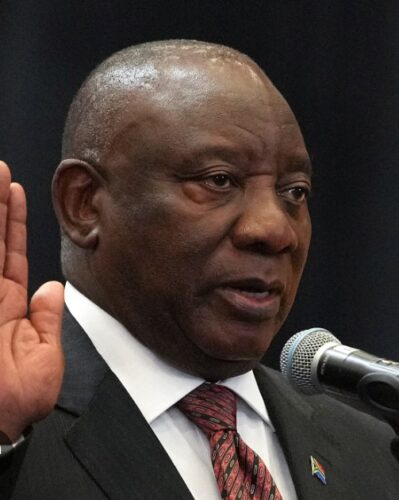
The world is grappling with multiple crises: the ongoing war between Ukraine and Russia, escalating tensions involving the United States, Israel, and Iran, Nigeria’s struggle with insecurity and inflation, and South Africa’s continuing social and political tensions. Against this mise-en-scène, allegations of serious corruption involving South African President Cyril Ramaphosa have intensified scrutiny of his leadership. With impeachment discussions gaining momentum in some political circles, Ramaphosa faces growing political pressure as debates over accountability and governance continue to shape the country’s political stage
The Phala Phala scandal has raised serious constitutional and legal questions about President Cyril Ramaphosa’s conduct. At the heart of the controversy is the alleged concealment of large sums of undeclared foreign currency at his Limpopo game farm, which may contravene the Currency and Exchanges Act of 1933 and the Financial Intelligence Centre Act of 2001, both of which require proper declaration of foreign funds. Furthermore, the failure to report the burglary to the South African Police Service could amount to a breach of the Prevention and Combating of Corrupt Activities Act of 2004, which obliges public officials to act transparently in matters involving potential corruption or criminality.
President Ramaphosa has remained under intense scrutiny regarding the theft of millions of US dollars allegedly hidden at his Phala Phala game farm. The incident sparked widespread public debate over how the foreign currency was acquired, why such large sums were reportedly kept on private property, and whether proper legal procedures were followed after the burglary occurred.
Beyond statutory law, the President is bound by the Constitution of South Africa, which demands that the head of state uphold the rule of law and act in good faith. An independent Section 89 panel previously found prima facie evidence that Ramaphosa may have violated Section 96(2) of the Constitution, which prohibits members of the Cabinet from acting in a manner inconsistent with their office or exposing themselves to conflicts of interest. By allegedly engaging in a cover-up and failing to disclose the origin and handling of the funds, Ramaphosa has been accused by critics of undermining the integrity of the presidency and breaching his constitutional oath.
The controversy stems from a 2020 burglary at the President’s Phala Phala farm in Limpopo Province, where thieves allegedly stole large quantities of foreign currency hidden inside furniture. The matter escalated into a national political scandal after former intelligence official Arthur Fraser laid criminal complaints against the President, accusing him of concealment and abuse of state resources in handling the aftermath of the theft.
An independent Section 89 panel chaired by former Chief Justice Sandile Ngcobo concluded that there was prima facie evidence suggesting the President may have committed serious misconduct and constitutional violations. However, in late 2022, the governing African National Congress used its parliamentary majority to block the adoption of the report during a National Assembly vote, effectively halting the impeachment process at the time.
South Africa’s Constitutional Court has now dramatically revived the controversy by ruling that Parliament acted unlawfully when it blocked an impeachment inquiry into President Ramaphosa. The apex court held that the National Assembly’s handling of the Section 89 report was irrational and inconsistent with constitutional accountability obligations.
Chief Justice Mandisa Maya declared that Parliament’s rules granted lawmakers excessive discretion to shield the President from scrutiny, thereby undermining constitutional oversight mechanisms. The court ordered that the independent panel’s findings be properly referred to an impeachment committee, reopening one of the most politically sensitive investigations in modern South African history.
The ruling has intensified political pressure on Ramaphosa and reignited calls for accountability across the country’s political spectrum. The opposition Economic Freedom Fighters has publicly demanded that the President step down immediately while insisting that Parliament establish an impeachment committee without delay.
Under Section 89 of the South African Constitution, any member of the National Assembly may initiate proceedings to remove the President from office. The Constitution permits removal on three primary grounds: serious violation of the Constitution or the law, serious misconduct, or inability to perform the functions of office.
The impeachment process begins with an independent panel assessment to determine whether prima facie evidence exists. If such evidence is found, Parliament may establish an impeachment committee tasked with conducting investigations, hearing testimony, examining evidence, and preparing findings for the National Assembly.
Following the committee’s report, lawmakers debate the findings before a final vote is taken. A two-thirds majority in the 400-member National Assembly is required to remove the President from office. If the President is removed, he immediately forfeits the office and its associated benefits and may subsequently face criminal prosecution depending on the outcome of related investigations.
The political environment confronting Ramaphosa today differs significantly from that of 2022. The African National Congress no longer commands the overwhelming parliamentary dominance it once enjoyed. Following the 2024 general elections, the ANC lost its outright majority and was compelled to govern through a broad coalition arrangement involving several parties, including the Democratic Alliance.
This shift has introduced new uncertainty into the impeachment process. Coalition politics means the ANC can no longer rely solely on numerical dominance to suppress politically damaging inquiries. Opposition parties are expected to push aggressively for transparency, while coalition partners may weigh political stability against accountability concerns.
The Democratic Alliance and other opposition parties have indicated that they will participate in the impeachment proceedings without prejudging the outcome. Nevertheless, the reopening of the inquiry threatens to deepen divisions within South Africa’s already fragile political scene.
The Presidency has responded cautiously to the Constitutional Court ruling, affirming President Ramaphosa’s respect for the Constitution and the rule of law. Officials have maintained that the President remains committed to cooperating with lawful institutional processes while continuing to govern the country.
Yet the implications of the Phala Phala scandal extend far beyond one individual. The case has evolved into a defining test of South Africa’s constitutional democracy, the independence of its institutions, and the willingness of Parliament to hold even the highest office accountable.
For supporters of constitutional governance, the court’s intervention represents a powerful reaffirmation that no public official is above the law. For Ramaphosa’s opponents, it presents an opportunity to weaken or potentially remove a President whose administration has faced growing criticism over economic stagnation, unemployment, corruption, and social instability.
As impeachment discussions intensify, South Africa now finds itself at a critical moment. The outcome of the Phala Phala saga may not only determine the political survival of President Cyril Ramaphosa but also shape public confidence in the country’s democratic institutions.
A Warning to African Leaders That Power Without Accountability Ultimately Erodes Public Trust and Democratic Stability.
Daniel Nduka Okonkwo is a Nigerian investigative journalist, publisher of Profiles International Human Rights Advocate, and a policy analyst whose work focuses on governance, institutional accountability, and political power. He is also a human rights activist and advocate, with a strong commitment to justice and transparency.
His reporting and analysis have been featured in Sahara Reporters, African Defence Forum, Daily Intel Newspapers, Opinion Nigeria, African Angle, NewsBreak (local.newsbreak.com), Vanguard Newspaper, Daily Trust Newspapers, and other international media platforms.
He writes from Nigeria and can be reached at dan.okonkwo.73@gmail.com.