National Issues
Dangote Refinery: Who Wants The Goose That Lays Golden Eggs Dead?, by Isaac Asabor

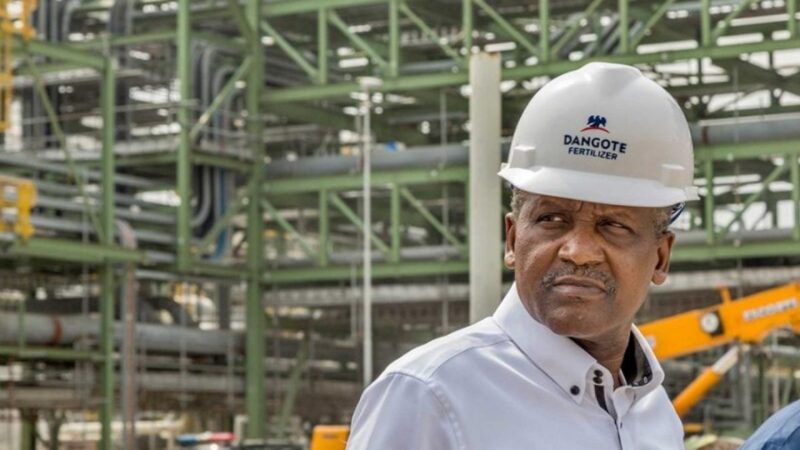
The Dangote Refinery, Africa’s largest refinery and the world’s largest single-train facility, stands as a monumental achievement for Nigeria and the continent. It is a beacon of industrial progress, economic potential, and a bold statement that Africa can be a global player in energy production. However, despite its promise of delivering substantial economic benefits, there appears to be a silent, yet concerted, effort by some forces to undermine this colossal investment. The question that arises is: “who would want to see the metaphorical goose that lays golden eggs dead?”
The Dangote Refinery, located in the Lekki Free Trade Zone in Lagos, is designed to refine 650,000 barrels of crude oil per day. This will significantly reduce Nigeria’s reliance on imported petroleum products, potentially saving the country billions of dollars in foreign exchange. Furthermore, the refinery is expected to create thousands of jobs, boost local industries, and contribute to the country’s GDP. For a country that has long struggled with oil dependency and fluctuating global oil prices, this refinery could be the game-changer needed to stabilize and diversify the economy.
The metaphor of the “Goose that lays golden eggs” is apt for describing the Dangote Refinery. The refinery has the potential to not only satisfy Nigeria’s domestic fuel demand but also to transform the country into a net exporter of refined petroleum products. The downstream value chain that would spring up around the refinery is anticipated to generate vast economic opportunities, from petrochemicals to fertilizer production. In essence, the refinery could be the cornerstone of a new industrial revolution in Nigeria.
Despite these promising prospects, the Dangote Refinery faces significant challenges that could jeopardize its success. There are whispers of powerful interests, both local and international, who may feel threatened by the potential shift in market dynamics that the refinery represents. Nigeria’s current petroleum importers and foreign refineries that supply the Nigerian market stand to lose a considerable market share if the refinery reaches its full operational capacity.
Moreover, the refinery’s success could disrupt the status quo of Nigeria’s oil sector, where corruption and inefficiency have long been endemic. The Petroleum Industry Act (PIA) and other regulatory frameworks are intended to provide a transparent and efficient oil and gas sector, but resistance to change is a persistent challenge. Those benefiting from the old ways may not welcome the transparency and efficiency that the Dangote Refinery promises.
Again, the question, “Who Wants the Goose Dead?” remains a difficult question to be correctly answered as not a few Nigerians are conjecturing about the forces that may want to see the refinery fail. In fact, there is this popular thinking that the forces that want the refinery dead may be some powerful personalities who are likely motivated by self-interest. But no one seems to have answered the question correctly except God who remains the only omniscience God.
Conjecturing from the perspective of forces of foreign competitors, not a few people are bandying the opinion that refineries in Europe and other regions that currently supply Nigeria with refined petroleum products may fear losing one of their most lucrative markets. They could potentially lobby against the refinery or influence policies that make it harder for the refinery to operate smoothly.
In a similar vein, specifically when looked at from the prism of local oil marketers and importers, there is a school of thought that are conjecturing that the established network of petroleum importers in Nigeria, who profit handsomely from the importation of refined products, might view the Dangote Refinery as a direct threat to their businesses. They could potentially work to sabotage the refinery’s operations through political or economic means.
Also, when looked at from political interests belvedere, not a few Nigerians are figuring out that there may be political actors who do not want to see the Dangote Refinery succeed because of the shift in power dynamics it could create. The rationale for the foregoing assumption cannot be faulted as in Nigeria, politics often intertwines with business. This is as a successful refinery could weaken the grip of those who currently control the importation and distribution of petroleum products.
Therefore, for the Dangote Refinery to achieve its full potential, it will need robust support from the Nigerian government and the public. Policies that protect and encourage local production, coupled with stringent measures against sabotage, will be crucial. Moreover, transparency and adherence to the rule of law in the oil and gas sector will be vital in ensuring that the refinery can operate without undue interference.
The Nigerian government must recognize that the success of the Dangote Refinery is not just a win for the Dangote Group but a victory for Nigeria as a whole. The benefits of having a self-sufficient petroleum industry are too significant to be sacrificed at the altar of short-term gains or entrenched interests.
The Dangote Refinery is more than just a refinery; it symbolizes the potential for Nigeria to rise above its challenges and chart a new course toward economic prosperity. However, for this vision to be realized, the metaphorical goose that lays golden eggs must be protected from those who would want it dead. The stakes are high, and the future of Nigeria’s energy sector may very well depend on the success of this ambitious project. Who, then, would want this goose dead? Only those who stand to lose from the golden eggs it promises to lay.
In the end, the success of the Dangote Refinery should be a collective goal for all Nigerians, as its benefits will reverberate throughout the nation, creating a legacy of economic independence and industrial strength.