
Africa
Echoes of Silence: How Selective Loyalty Is Killing Justice -By Abdulsamad Danji Abdulqadir
Selective loyalty often speaks loudest through silence. When wrongdoing is exposed, many people no longer ask whether the act is just or unjust; they first ask who is involved. If the person belongs to their political camp, ethnic group, or institution, criticism becomes weak and defensive. In that moment, justice is replaced by allegiance.

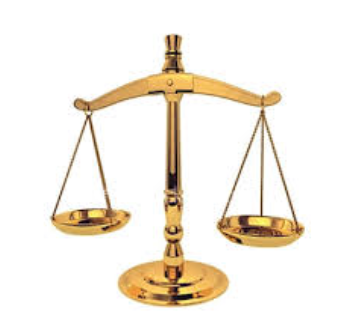
Justice does not collapse in a day. It dies slowly in the quiet moments when people see what is wrong but choose silence because the offender is a friend, a leader, a classmate, or a member of their group. That silence, repeated over time, becomes a culture. And that culture is what we now call selective loyalty.
In many societies today, truth is no longer defended on the basis of facts or moral principles. Instead, it is filtered through personal relationships and emotional attachments. People no longer ask, Is this right? They ask, Who did it? If the answer is someone they admire, the wrong becomes explainable. If it is someone they dislike, the same wrong becomes unforgivable.This is the foundation of hypocrisy.
Selective loyalty has created a dangerous moral double standard. One rule exists for friends and allies, and another for opponents. This behaviour is visible in politics, where supporters defend every action of their preferred leaders, regardless of its impact on society. It is visible on campuses, where students shield their peers from accountability in cases of misconduct. It is visible on social media, where facts are ignored in favour of group sentiment.
Selective loyalty often speaks loudest through silence. When wrongdoing is exposed, many people no longer ask whether the act is just or unjust; they first ask who is involved. If the person belongs to their political camp, ethnic group, or institution, criticism becomes weak and defensive. In that moment, justice is replaced by allegiance.
The controversy surrounding Sambo Dasuki illustrates this pattern. Allegations that funds meant for national security were mismanaged should have produced a unified national demand for accountability. Instead, public reaction became divided along partisan lines. The debate shifted from the ethical question of missing public funds to arguments about political targeting. Loyalty to group identity overshadowed concern for soldiers and citizens affected by insecurity, and justice became secondary.
A similar silence appeared during the #EndSARS protests. Documented cases of police misconduct called for institutional reflection and reform. Yet many voices focused more on defending the image of the institution than on addressing the grievances of victims. By treating criticism as hostility rather than a call for accountability, the opportunity for trust and justice was weakened.
These examples reveal a dangerous habit: turning moral issues into loyalty tests. When society protects individuals or institutions instead of principles, victims are ignored, accountability is delayed, and public trust erodes. Justice cannot survive in an environment where silence is rewarded and truth is filtered through affiliation.
A just society demands consistency the courage to question our allies, the discipline to place principles above personalities, and the willingness to speak even when it is uncomfortable. Without this, injustice will not only occur, it will continue to echo.
The most troubling aspect of this trend is that it disguises itself as unity. People claim they are being loyal, supportive, or protective. But true unity is not built on covering wrongdoing. A unity that protects injustice is not strength, it is collective moral failure.
When loyalty replaces justice, several consequences follow, Merit disappears, Opportunities are no longer given to those who are qualified but to those who are connected. This weakens institutions and discourages hard work.
Corruption grows. When people know they will be defended regardless of their actions, they feel no need to be accountable. Power becomes a shield against criticism.
Truth becomes dangerous. Those who speak honestly are labelled as disloyal, disrespectful, or rebellious. Over time, fewer people are willing to stand for what is right, and silence becomes the norm.
For students, this is a critical issue. The university is not only a place for academic learning but also a training ground for character. If students learn to prioritise friendship over fairness, they will carry that mindset into leadership positions in the future. A nation led by individuals who cannot separate loyalty from justice cannot achieve sustainable development.
Mass Communication students, in particular, have a unique responsibility. They are future journalists, broadcasters, and public communicators the voices that will shape public opinion. Their duty is not to protect individuals but to protect truth. Once the media becomes loyal to personalities instead of principles, society loses its most important watchdog.
Moral traditions and religious teachings emphasise that justice must be upheld even when it is against personal interest. This principle exists because humans naturally favour those they love. Justice, therefore, requires conscious effort and moral discipline. It requires the courage to correct a friend, the integrity to reject unjust benefits, and the honesty to admit when our side is wrong.
Reforming this culture begins at the individual level. We must learn to separate people from their actions. Supporting someone should not mean supporting everything they do. Criticism should not be seen as hatred, and correction should not be seen as betrayal. In fact, holding people accountable is one of the highest forms of respect.
Educational institutions should also promote ethical consciousness, encouraging students to value fairness over group loyalty. Media literacy programmes should teach young people how to evaluate information based on evidence rather than emotion or affiliation.
Ultimately, justice survives only when individuals are willing to stand alone for what is right. History does not remember those who defended their friends blindly; it remembers those who defended truth courageously.
If we continue to measure right and wrong by who benefits us, we will produce a society where integrity is rare and injustice is normal. But if we choose principles over personalities, we can rebuild trust, strengthen institutions, and create a culture where truth does not need to beg for defenders.
Justice is not maintained by noise or slogans. It is maintained by the quiet courage of those who refuse to be silent when it matters most.



























You must be logged in to post a comment Login