Economy
Equitable Distribution Of 20 Trucks Loaded With Rice: A Challenge For Nigeria Amidst Past Controversies, by Isaac Asabor
Against the foregoing backdrop, it is expedient to advice in this context that Nigeria must address this alarming trend as the hijacking of palliatives meant for the people perpetuates inequality and erodes trust. We need a system that prioritizes the welfare of all citizens, regardless of their political affiliations or social status. Only then can we build a more just and resilient society.

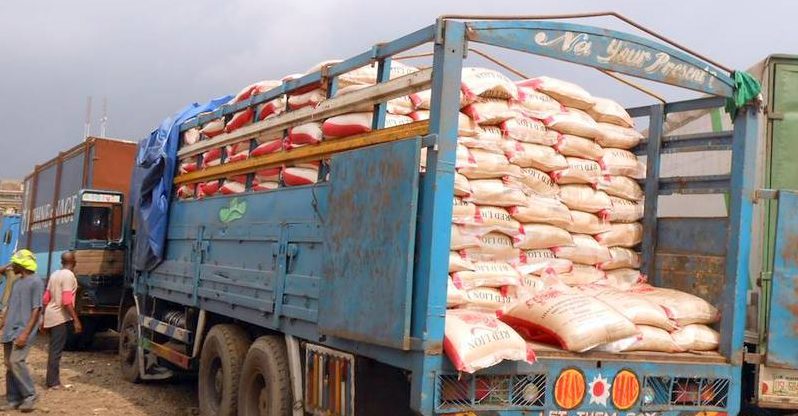
During the COVID-19 lockdowns, Nigeria faced a critical challenge in providing food relief to its citizens. While efforts were made to distribute food items to states, reports emerged that some unscrupulous individuals hijacked the supplies. Now, as 20 trucks loaded with rice are been dispatched to each of the 36 states and the Federal Capital Territory (FCT), questions arise about equitable distribution. How can Nigeria ensure that these essential food products reach those who need them most, considering past experiences?
The reason for the foregoing backdrop cannot be farfetched as the Federal Government recently announced the distribution of 20 trucks of rice to each state and the FCT. As gathered, each truck carries approximately 1,200 25kg bags of rice, totaling about 24,000 bags per state. This move aims to alleviate the country’s food crisis and ease the hardship faced by vulnerable Nigerians.
Given the foregoing, it is germane to opine that to achieve equitable distribution of 20 trucks of loaded rice to each of the 36 states that transparency is crucial. Therefore, state governments must provide clear guidelines on how the rice will be allocated. Citizens should be informed about the process, ensuring accountability and minimizing corruption.
In a similar vein, the bags of rice should prioritize reaching the most vulnerable citizens. Inasmuch as local governments and community leaders play a vital role in identifying those in need, past experiences should not be underplayed during the distribution as they highlight the importance of accurate targeting to prevent diversion.
Also, there should be an urgent need to engage local communities to foster trust and ensures fair distribution of the items so that the people they are actually meant for are not denied the benefits of the palliatives. Therefore, community leaders, civil society organizations, and volunteers should be made to help in overseeing the process in order to ensure that the rice reaches the intended beneficiaries.
Also in the same vein is that there should be regular monitoring and feedback loops during, and after the distribution, as they are essential. In fact, citizens should have channels to report any irregularities or challenges in distribution, even as authorities can use the feedback to address issues promptly.
In fact, while this distribution is a positive step, there is no denying the fact that Nigeria faces deeper challenges as rising food prices are affecting citizens’ purchasing power, and even as the removal of subsidies on petrol is fast exacerbating the cost of living. Some experts argue that Nigeria should focus on domestic food production rather than relying on imports, saying that efforts should be made to strengthen the agricultural sector to stabilize prices, create jobs, and reduce foreign exchange spending.
At this juncture, it is germane to opine that the expression of this opinion could not have been made at a better time than now as it has become a disheartening reality to always witness palliatives meant for the people hijacked by relatively rich people in Nigeria.
For instance, in the wake of the COVID-19 pandemic, Nigeria, like many other countries, faced immense challenges, prompting the government to announce palliative measures to alleviate the suffering of vulnerable citizens during lockdowns. However, a disturbing trend emerged: these palliatives, intended for the people, were being diverted and misused by the wealthy elite. Without a doubt, this article sheds light on this disheartening reality and calls for urgent action to preempt such crooked distribution process from repeating itself as we have once again been told that there are trucks of rice to be distributed across the 36 states of the federation.
Against the foregoing backdrop, it is expedient to recall how the Federal and Lagos State governments unveiled stimulus packages to cushion the effects of lockdowns. These packages included food distribution, cash transfers, and loan repayment waivers. Unfortunately, the distribution process was marred by corruption and political favoritism.
Without resort to campaign of calumny in this context, there were some distressing accounts as the distribution of the relief materials were politicized, particularly in Akinyemi, Ketu/Agboyi Local Government Area as residents reported that relief materials were reserved for party members. They alleged that those without party cards were denied access to essential supplies. One resident lamented, “These rich people are the ones that brought the disease to Nigeria, now they want us to suffer”.
In fact, unequal distribution of the palliatives were alleged, even as it was reported that a fight broke out when only three bags of relief materials were left for an entire street, while a larger quantity had been earmarked for party loyalists and officials. The system failed to prioritize those in need, leaving vulnerable citizens without adequate support.
In fact, the civic organization, BudgIT, conducted an investigation and found that mismanagement of palliative items and funds exacerbated the gap between the rich and the poor. This is as vulnerable and marginalized individuals were denied access to resources that rightfully belonged to them. Without a doubt, this blatant injustice highlights the urgent need for transparency and accountability, particularly as the federal government has made available 20 trucks loaded with rice for citizens across the 36 states.
At this juncture, permit this writer to deviate a bit from this subject by recalling that a former Lagos state lawmaker, MojisolaoluwaKehindeAlli-Macaulay, who was accused of looting COVID-19 Palliatives has been appointed as the Executive Director of the Nigeria Social Insurance Trust Fund (NSITF). Her appointment shows that even if the poor are robbed by the rich, the government does not bother, hence the need to express this opinion, particularly now that we have been told that the federal government has somewhat flooded the 36 states with trucks of rice.
Mrs Macaulay was exposed for allegedly diverting some relief items meant to alleviate the suffering of poor masses during the COVID-19 lockdown and rebranding the palliatives as her birthday souvenirs in 2020.
Besides, it will also be recalled at this juncture that the Nigeria Labour Congress (NLC) criticized the then proposed N8, 000 monthly cash palliative for 12 million Nigerian families in the wake of the inauguration of the ongoing government under the leadership of President Bola Ahmed Tinubu. This is as President Bola Ahmed Tinubu says about 12 million households will get N8, 000 over a period of six months to ameliorate the hardships faced by Nigerians as a result of subsidy removal. The NLC argued that it robs the poor to pay the rich, and thatthe disparity in access to relief measures underscores the failure of the system to protect the most vulnerable during crises.
Against the foregoing backdrop, it is expedient to advice in this context that Nigeria must address this alarming trend as the hijacking of palliatives meant for the people perpetuates inequality and erodes trust. We need a system that prioritizes the welfare of all citizens, regardless of their political affiliations or social status. Only then can we build a more just and resilient society.
In fact, Nigeria’s equitable distribution of rice is a critical test of its commitment to addressing food insecurity. By learning from past mistakes, promoting transparency, and involving communities, the country can ensure that these 20 trucks of rice reach those who need them most. However, sustainable solutions require long-term investments in agriculture and policies that prioritize self-sufficiency.