
Breaking News
Federal, State, LG Workers Begin Three-Day Warning Strike Nationwide
Nigerian public workers begin a three-day warning strike after the government failed to address demands for N500 petrol, wage awards and a new minimum wage.

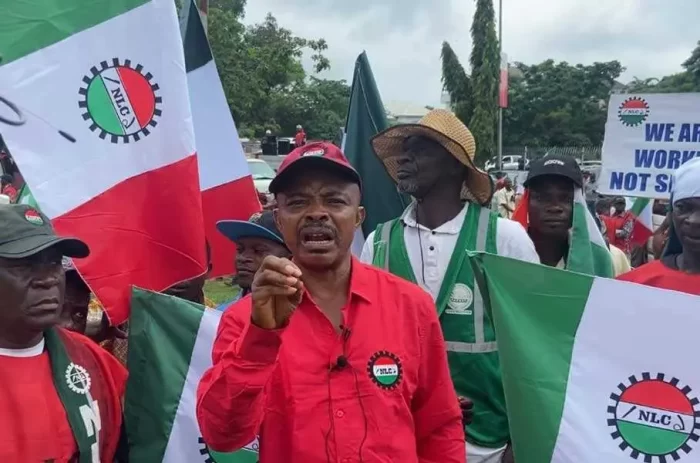
Public sector workers under the Joint National Public Service Negotiating Council (JNPSNC) have commenced a three-day warning strike across Nigeria, following the Federal Government’s failure to address demands on petrol prices, wage awards and negotiations for a new national minimum wage.
The industrial action is scheduled to run from midnight on Friday, October 2, to Sunday, October 4, 2026. The JNPSNC directed workers in federal, state and local government services, including ministries, departments and agencies, to comply with the directive.
The council said the strike was prompted by what it described as worsening economic and mental hardship affecting workers, their dependants and other vulnerable Nigerians.
The JNPSNC comprises the Nigerian Civil Service Union (NCSU), Medical and Health Workers Union (M&HWU), Association of Senior Civil Servants of Nigeria (ASCSN), National Association of Nigerian Nurses and Midwives (NANNM), Amalgamated Union of Public Corporations, Civil Service Technical and Recreational Employees (AUPCTRE), Nigeria Union of Public Service, Reportorial, Secretarial, Data Processors and Allied Workers (NUPSRAW), National Union of Printing, Publishing and Paper Products Workers (NUPPPPROW), and National Union of Agriculture and Allied Employees (NUAEE).
The warning strike followed the council’s September 21, 2026, letter to President Bola Tinubu, in which it demanded measures to reduce the impact of rising living costs.
Among its major demands are a reduction of petrol to N500 per litre, an immediate wage award for workers and the establishment of a tripartite committee to begin negotiations for a new national minimum wage expected to become due in 2027.
The council had earlier given the Federal Government until September 30 to address the demands, warning that failure to act would trigger the three-day industrial action.
In a circular dated October 1, JNPSNC National Secretary, Olowoyo Gbenga, directed affiliate unions to mobilise their members.
The circular stated: “Please, recall the position of the National leadership of Joint National Public Service Negotiating Council that if Mr President of the Federal Republic of Nigeria, Bola Ahmed Tinubu refuses to address our requests as contained in the letter to his exalted office (dated 21st September, 2026), the three day warning strike earlier scheduled shall commence immediately.”
It added: “Consequent upon the above, the strike shall start with effect from midnight of Friday 2nd October, 2026 to Sunday October 4th, 2026.”
The council also said: “The economic and mental hardships are becoming unbearable and frustrating.”
Workers Express Disappointment
The JNPSNC leadership said it was disappointed that President Tinubu’s Independence Anniversary Address did not address its demand for a reduction in petrol prices or announce measures it considered sufficient to cushion the economic pressure on workers and other Nigerians.
One of the council’s leaders told Vanguard: “We are deeply disappointed that the President’s Independence Anniversary address failed to address our legitimate demands for a reduction in the pump price of petrol and the introduction of concrete measures to alleviate the excruciating hardship confronting workers and other Nigerians.”
The leader added: “While the President acknowledged the severe suffering inflicted on citizens by government policies, it is deeply concerning that the speech offered no concrete relief or meaningful response to the urgent demands of Nigerian workers.”
“In view of this failure to address these pressing concerns, our three-day warning strike will proceed as planned.”
NLC Backs Workers’ Demands
The Nigeria Labour Congress (NLC) has also called for lower petrol prices, a nationwide wage award and negotiations for a new national minimum wage.
In its Independence Day statement signed by President Joe Ajaero, the NLC said rising petrol prices, inflation and transportation costs had reduced workers’ purchasing power. The union said petrol was selling at about N1,430 per litre or higher in major cities, with prices reportedly higher in some remote areas.
The NLC said: “The real value of wages has been devoured by structural inflation. Petrol now sells at N1,430 per litre or higher in major cities and far more in remote areas.”
It also demanded the immediate establishment of a tripartite committee to negotiate a new wage standard ahead of 2027, alongside measures to reduce the cost of living and improve economic opportunities.
The JNPSNC’s warning strike therefore places the demands for cheaper petrol, wage support and preparations for a new minimum wage at the centre of the current dispute between organised labour and the Federal Government.
Africans Angle News












You must be logged in to post a comment Login