
National Issues
66 Years After Independence, Nigeria’s Economic Hardship and the Test of Democracy in 2027 -By Abdullahi Adda’u
Whether that opportunity produces greater public confidence will depend not on promises made during campaigns, but on the integrity of the institutions and people responsible for turning those promises—and the votes of Nigerians—into reality.

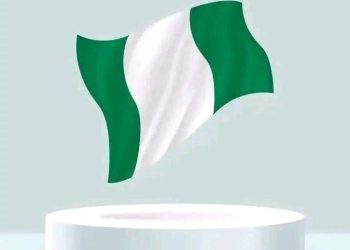
On October 1, 1960, Nigeria gained independence from British colonial rule and began the difficult journey of building a sovereign nation capable of determining its own political and economic destiny.
The independence era was greeted with enormous optimism. Nigeria possessed a large population, abundant agricultural land, vast oil and gas reserves, mineral resources and a population widely regarded as capable of building a prosperous and united country. The expectations were straightforward: political independence would eventually translate into economic opportunity, better living standards, social justice and a government accountable to its citizens.
Sixty-six years later, however, Nigeria’s independence anniversary arrives at a moment of deep national reflection.
The country has undoubtedly recorded important achievements. It has maintained democratic rule since 1999, developed a larger and more diversified economy, expanded telecommunications and digital services, produced a growing generation of entrepreneurs and professionals, and remained one of Africa’s most important political and economic powers.
Yet these achievements exist alongside a difficult reality for millions of Nigerians. The reforms undertaken in recent years have helped improve some macroeconomic indicators, but the benefits of economic stabilisation have not yet translated sufficiently into improvements in household welfare.
The World Bank says inflation has eased significantly from its earlier highs and Nigeria’s external and fiscal positions have strengthened. At the same time, it notes that household incomes have not fully recovered and poverty remains widespread.
This is the contradiction at the centre of Nigeria’s economic story. the economy may be showing signs of stabilisation on paper, while many households continue to experience economic hardship in their daily lives.
For ordinary Nigerians, economic conditions are ultimately measured not by macroeconomic statistics but by the price of food, transportation, electricity, rent, school fees, healthcare and other necessities.
The cost of living crisis has therefore become one of the most important issues shaping public perception of government and the country’s direction.
Nigeria has experienced significant changes in fuel pricing, exchange-rate policy and monetary policy since 2023.
These reforms were designed to address longstanding structural weaknesses, including fiscal pressures, foreign-exchange distortions and the cost of fuel subsidies.
The International Monetary Fund has acknowledged that reforms over the past three years have improved macroeconomic stability, strengthened external buffers and improved the functioning of the foreign-exchange market. But the IMF has also warned that higher fuel, food and fertiliser prices could intensify inflationary pressures and worsen poverty and food insecurity.
That distinction is important.
Economic stabilisation is not the same thing as economic prosperity.
A reduction in inflation does not mean prices have returned to where they were before the crisis. If prices continue rising, even at a slower rate, households can still feel poorer if wages and incomes do not increase sufficiently.
The World Bank estimates that more than 60 percent of Nigerians were living below the national poverty line in 2025, while food inflation continues to disproportionately affect poorer households. It also estimates that Nigeria must absorb roughly 3.5 million new labour-force entrants every year.
That is an enormous challenge for any government.
One of Nigeria’s greatest economic problems is not simply unemployment but the shortage of sufficiently productive and well-paid employment.
Every year, millions of young Nigerians enter the labour market looking for opportunities. When the formal economy cannot absorb them, many are pushed into informal employment, small-scale trading, subsistence agriculture or precarious work.
Others leave the country in search of opportunities abroad.
This creates a dangerous cycle. A young population should be an economic advantage when it is educated, skilled and employed. But when large numbers of young people cannot find decent work, population growth can instead become a source of frustration and economic pressure.
Nigeria therefore needs an economic strategy that goes beyond achieving headline GDP growth.
The critical question should be: How many decent jobs are being created, how much are people earning, and are ordinary households actually experiencing improvements in their standard of living?
Agriculture, manufacturing, construction, technology, renewable energy, transportation, creative industries and small businesses all have significant potential to absorb labour.
Agriculture in particular remains crucial. In March 2026, the World Bank approved a $500 million project aimed at improving agricultural productivity, strengthening value chains and creating jobs.
But government programmes must move beyond announcements. Nigerians need to see whether investments actually translate into functioning infrastructure, lower production costs, better access to markets and sustainable employment.
Energy remains another major part of Nigeria’s economic problem.
Electricity is essential for households and businesses, yet unreliable power supply forces millions of Nigerians and businesses to depend on generators and alternative sources of electricity.
For businesses, unreliable electricity increases the cost of production. Those additional costs are eventually transferred to consumers through higher prices.
The same applies to transportation.
Changes in fuel prices affect the cost of moving people and goods. When transportation becomes more expensive, the impact is felt throughout the economy—from the farmer transporting produce to market to the worker commuting to work and the trader moving goods between states.
This is why energy reform cannot be treated simply as an issue for the electricity or petroleum sectors. It is directly connected to inflation, employment, food prices and household welfare.
Nigeria’s recent reforms have attempted to correct structural problems that previous administrations often postponed.
But reforms inevitably create winners and losers in the short term, and the political sustainability of difficult reforms depends heavily on whether citizens believe the sacrifices are producing tangible benefits.
The government therefore faces a crucial challenge: translating macroeconomic improvements into improvements in people’s daily lives.
That requires stronger public institutions, more efficient government spending, better infrastructure, improved education and healthcare, stronger social protection and a business environment capable of attracting investment and encouraging local entrepreneurship.
It also requires transparency.
When citizens are being asked to endure higher costs in the name of economic reform, they naturally want to know how public money is being spent, whether government programmes are achieving their stated objectives and whether the burden of adjustment is being fairly distributed.
Economic reform without adequate protection for vulnerable households can deepen social hardship.
Nigeria therefore needs social protection programmes that are transparent, properly targeted and capable of reaching people who genuinely need assistance.
Cash transfers, food assistance, employment programmes and support for vulnerable households can provide immediate relief. But these should complement—not replace—long-term investments in education, healthcare, housing, agriculture and job creation.
The ultimate objective should be to move people from dependence on temporary assistance to sustainable economic independence.
Against this economic background, Nigeria is moving toward another important political moment, the 2027 general elections.
INEC has formally released the electoral timetable. The presidential and National Assembly elections are scheduled for February 20, 2027, while governorship and State House of Assembly elections are scheduled for March 6, 2027.
The elections will therefore take place in an environment where the economy is likely to be one of the dominant issues in the minds of voters.
For millions of Nigerians, the election will not simply be about political personalities, ethnic calculations or party slogans. It will also be about very practical questions:
Can I afford food?
Can I find a job?
Can I pay my rent?
Can my business survive?
Can I afford transportation?
Can my children receive a good education?
Can I access reliable electricity and healthcare?
And perhaps most importantly:
Has democracy improved my life?
These questions make the 2027 election particularly significant.
This is perhaps one of the most important questions facing the country as the next election approaches.
The honest answer, at this stage, is that the quality of the 2027 election cannot responsibly be guaranteed in advance.
Whether Nigerians experience elections that are genuinely free, fair and credible will depend on what happens between now and election day—and on the conduct of INEC, political parties, candidates, security agencies, the judiciary, the media, civil society and voters themselves.
There are reasons for cautious attention as well as reasons for concern.
INEC has said it is working to strengthen the electoral process, including cleaning up the voters’ register and aligning its regulations with the Electoral Act 2026. The Commission has also acknowledged concerns surrounding duplicate registrations, deceased voters, non-citizen registrations and incomplete or inaccurate voter records.
The integrity of the voters’ register will therefore be fundamental.
Technology will also remain important. Nigeria’s experience with BVAS and electronic result transmission in 2023 demonstrated both the potential of technology to strengthen elections and the consequences when technological and operational systems do not perform as expected.
The European Union Election Observation Mission’s final assessment of the 2023 elections identified problems involving transparency, electoral administration, results management, campaign conditions, media protection and accountability for electoral offences. It issued 23 recommendations, including recommendations concerning real-time publication of results, the selection and accountability of INEC leadership, protection of journalists, women’s participation and electoral offences.
These observations should not simply become another election report that disappears after an election cycle.
They provide a checklist of issues Nigeria must address before 2027.
An election cannot be genuinely free if voters are afraid to participate.
In its assessment of the 2023 elections, the EU Election Observation Mission documented incidents involving intimidation, violence, vote-buying and misuse of administrative resources in some areas. It also reported that insecurity affected campaigning in certain parts of the country.
This means security agencies have an important responsibility in 2027.
Their role should be to protect voters, electoral officials, journalists, observers and candidates while remaining professionally neutral.
Political parties and candidates also have a responsibility to discourage violence and intimidation among their supporters.
It is easy to place all responsibility for credible elections on INEC.
But elections are not conducted by INEC alone.
Political parties determine candidates, organise campaigns and mobilise supporters. Candidates influence the behaviour of their supporters. Security agencies determine how law and order are maintained. The judiciary handles electoral disputes. The media informs citizens. Civil society organisations observe and educate voters.
And ultimately, citizens determine whether politicians can successfully use money, misinformation, ethnic divisions or intimidation to manipulate electoral participation.
INEC itself has described the success of the 2027 election as a collective responsibility involving government institutions, security agencies, political actors, the media, civil society and citizens.
There is another connection between Nigeria’s economic crisis and the 2027 election that deserves serious attention.
Economic hardship can make voters more vulnerable to inducements.
When people are struggling to feed their families, a small amount of money or a bag of food can become extremely attractive during an election campaign.
This creates an environment in which vote-buying can become more difficult to resist.
The answer, however, is not to blame citizens who are experiencing poverty. The deeper problem is a political and economic system in which citizens can become vulnerable to short-term inducements because their long-term economic security is so fragile.
A stronger economy, stronger institutions and greater political accountability can therefore reinforce each other.
Democracy should not be measured only by whether elections take place every four years.
It should also be measured by whether citizens can freely choose their leaders, whether votes are properly counted, whether electoral disputes are fairly resolved, whether public institutions are accountable and whether elected governments respond to the needs of the people.
Nigeria has built a considerable democratic tradition since 1999. But democratic consolidation is a continuous process.
The 2027 election will therefore be another important test—not only for INEC, but for the entire political system.
A credible election requires an accurate voters’ register, transparent procedures, functioning technology, impartial administration, professional security agencies, responsible political parties, independent journalism, effective judicial remedies and citizens who are able to participate without intimidation.
Rather than assuming that the 2027 election will automatically be free, fair and credible—or assuming in advance that it will not—the more useful question is what Nigerians should watch between now and election day.
They should watch whether electoral reforms are actually implemented.
They should watch how the voters’ register is cleaned and verified.
They should watch whether political parties conduct transparent and competitive internal processes.
They should watch how campaign financing is handled.
They should watch whether security agencies remain professional and politically neutral.
They should watch whether journalists and civil society organisations can operate freely.
They should watch whether election results are transparently transmitted and published.
And they should watch how electoral offences are investigated and prosecuted.
These are measurable indicators of electoral credibility.
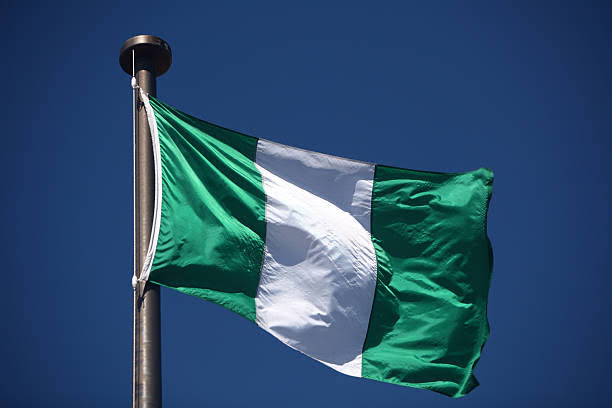
Nigeria’s 66th Independence Anniversary should therefore be more than a celebration of flags, speeches and patriotic messages.
It should be an opportunity for honest national reflection.
The country has enormous potential, but potential alone does not produce prosperity. Natural resources do not automatically create jobs. Economic reforms do not automatically improve living standards. Elections do not automatically produce accountable government.
Institutions, policies and leadership matter.
Nigeria needs an economy capable of creating productive employment for its growing population. It needs inflation that does not continuously erode household incomes. It needs reliable electricity and infrastructure. It needs productive agriculture and manufacturing. It needs stronger education and healthcare systems. It needs social protection for those who genuinely require assistance.
Above all, it needs institutions that citizens can trust.
As Nigeria approaches the 2027 general elections, the connection between economic welfare and democracy will become increasingly important.
Citizens will judge political promises against their lived experiences. Political parties will present competing visions for the country’s future. The government will be judged on its record. Opposition parties will be challenged to demonstrate credible alternatives.
But beyond political competition, one principle should remain constant: the Nigerian voter must be free to make an informed choice without intimidation, manipulation or coercion.
The promise of independence was never merely the transfer of political power from colonial authorities to Nigerian leaders. It was the promise that Nigerians would ultimately have greater control over their political and economic destiny.
Sixty-six years later, that promise remains unfinished.
The road ahead requires economic reforms that improve people’s lives, institutions that protect citizens’ rights, leaders who can be held accountable, and an electoral system capable of faithfully reflecting the choices of the Nigerian people.
The 2027 elections will provide another opportunity for Nigeria to demonstrate how far its democracy has come.
Whether that opportunity produces greater public confidence will depend not on promises made during campaigns, but on the integrity of the institutions and people responsible for turning those promises—and the votes of Nigerians—into reality.
Abdullahi Adda’u Turawa, Wrote from Zaria, Nigeria












You must be logged in to post a comment Login