
Forgotten Dairies
UNGA ’81: Before The Frenzy Over Permanent Seat For Africa -By Pius Mordi
Rather than engaging in the esoteric and long shot debate on securing a seat in the Security Council, African leaders should reconcile themselves to the fact that we are too enmeshed in existential challenges that the rest of the world have taken for granted. For Nigeria that is bogged down by monumental insecurity and unable to light up the country, power its economic growth and yet to evolve a structure for holding credible elections for smooth transfer of power based on the people’s verdict, her quest is farcical.

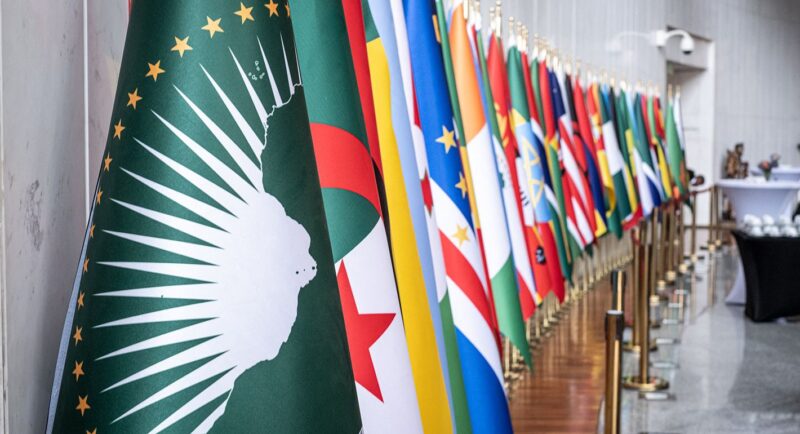
As if on cue, virtually every African leader that addressed the world at the just concluded United Nations General Assembly in New York, United States, spoke vociferously about the need for Africa to get a permanent seat with possibly a veto power in the Security Council. António Guterres, UN Secretary-General and Annalena Baerboc, President of the General Assembly, set the tone for chorus with their address as the assembly rolled into gear.
Guterres said Africa’s exclusion from permanent membership was no longer defensible while Baerboc proclaimed that “Africa needs to be at the table, not on the menu”. It was a tone duly adopted by Africa’s leaders in their address. And there is huge merit in their demand.
The five permanent members—China, France, Russia, the United Kingdom, and the United States—possess absolute veto power. If even one of these five permanent members casts a negative “no” vote on a substantive matter, the resolution fails completely, regardless of how many other members support it. African countries have 54 countries, representing 28 percent of the entire UN members, about the largest regional bloc and contributes immensely to peacekeeping operations worldwide.
To the leaders advocating a fundamental review of the structure of the global body, these factors, in their perception, make the inclusion of Africa as a permanent member of the Security Council a fait accompli. That is rather a naive argument to make as logical and even though it may seem logical. Certain power dynamics and factors that may doom the quest are overlooked in the frenzied argument.
According to UN rules, any reform of the Security Council requires a two-third majority vote in the General Assembly and the approval of all five permanent members. In effect, any single one of the five permanent nations can use its own veto to block potential veto power seeking members. Global affairs experts note that current permanent members are reluctant to dilute their own exclusive privileges. For example, the United States has expressed support for permanent African seats, but explicitly excluded granting them veto power.
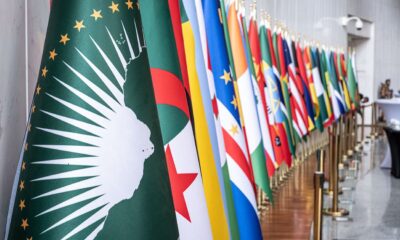
Africa’s quest for a permanent seat on the United Nations Security Council is constrained by several factors. First is the continent’s lack of unity over which countries should represent Africa. Rivalries among major powers such as Nigeria, South Africa and Egypt complicate consensus. Second, weak diplomatic coordination and inadequate lobbying limit Africa’s influence in global negotiations. Third, divisions within the African Union often weaken a common negotiating position.
When the UN was being midwifed by the major allies that defeated Nazi Germany during World War II, China was not initially in the exclusive group of those wielding veto powers. Eventually, China emerged as a veto-wielding permanent member of the UN Security Council through wartime alliances in 1945, followed by a shift in representation from the Republic of China to the People’s Republic of China in 1971.
For Africa, its poor economic standing can complicate the quest for a permanent seat on the UN Security Council by weakening its bargaining power and influence among major global powers. Economic weakness limits many African states’ ability to finance diplomacy, contribute substantially to international peace and security, and use trade and investment relationships as diplomatic leverage. In fact, the very poor level of the economy of African nations in global trade reinforced perceptions that Africa is more dependent on external assistance than capable of shaping global economic and security rules.
While her leaders eloquently spoke of the need for fairness in New York, their individual countries are embroiled in internal disequilibrium and instability, weak democratic institutions, rampant corruption, misgovernance and poverty that its vibrant young population is perpetually adopting extreme measures to escape debilitating poverty by emigrating to the developed countries in the western hemisphere. This has fueled the resurgence of right wing nationalism whereby the door is being shut to African migrants.
Nigeria, Egypt and South Africa are often mentioned as possible contenders for Africa’s future permanent seats on the UN Security Council. However, several obstacles could make it difficult for any of them to emerge as Africa’s representative. Africa’s overall economic contribution remains relatively small compared with the major economies that currently dominate global institutions. This could make it harder for any individual African country to demonstrate the economic leverage expected of a permanent power. The UN has historically identified economic potential, alongside population and capacity to contribute to international peace and security, as relevant considerations in discussions about Council expansion.
Nigeria has a very large population and economy but faces limited fiscal space, insecurity, weak economic diversification, food insecurity and other structural constraints.
Although South Africa possesses substantial industrial and financial capabilities, its economy faces structural bottlenecks, inadequate infrastructure, governance challenges and rising public debt. In the continent, it has taken considerable bashing from the lingering xenophobic attacks against black Africans, with a seeming tacit endorsement by the government which has failed to restrain its people. Who can vote for Mandela’s country getting a slot?
Egypt has considerable strategic and economic importance, but high financing needs, debt-service pressures and dependence on external financial support can constrain its ability to project economic power consistently at the global level. Besides, like other North African countries, Egypt hold dual allegiance to African and Arab interests. Many Africans believe they are more committed to their Arabic ancestry and may not be trusted to advance Africa’s overall interest.
Rather than engaging in the esoteric and long shot debate on securing a seat in the Security Council, African leaders should reconcile themselves to the fact that we are too enmeshed in existential challenges that the rest of the world have taken for granted. For Nigeria that is bogged down by monumental insecurity and unable to light up the country, power its economic growth and yet to evolve a structure for holding credible elections for smooth transfer of power based on the people’s verdict, her quest is farcical.

















You must be logged in to post a comment Login