Africa
Fela Told Us Human Rights Are Non-Negotiable -By Daniel Nduka Okonkwo
Fela was a multi-instrumentalist, a gifted composer, and a revolutionary artist whose legacy was rooted in courage, sacrifice, and moral consistency. His activism was not seasonal. It was not sponsored. It cost him everything, and he paid willingly.

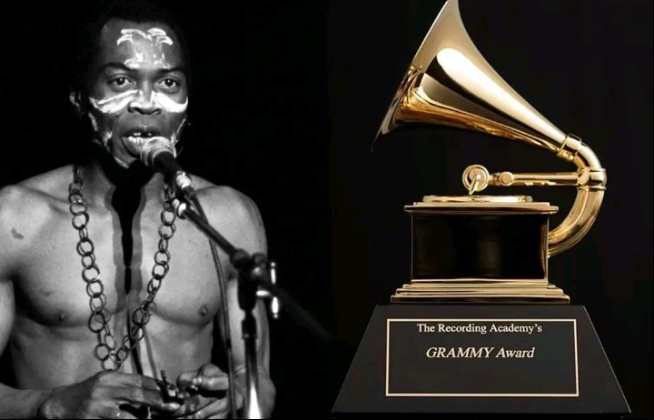
At a time when there was no Facebook, no Instagram, no X, no TikTok, no digital megaphone, Fela still shook the world. He commanded international attention through raw courage, relentless truth, and artistic brilliance. Decades after his death, his work continues to earn global recognition, including a posthumous Grammy acknowledgment, an honor many modern artists desperately chase with algorithmic gimmicks.
Long after his death, Fela Anikulapo Kuti’s voice still echoes, louder than many living artists, sharper than today’s timid protest culture. His message was not entertainment; it was prophecy. Fela was a man who saw tomorrow while standing firmly in the chaos of his present. He understood power, injustice, and the machinery of oppression with unsettling clarity, and he exposed them without apology.
Fela did not beg for human rights. He declared ownership.
> “Human rights na my property. So therefore, you can’t dash me my property.”
That single line revolutionized how Nigerians understood dignity, freedom, and citizenship. Human rights, in Fela’s worldview, were not favors from government, not donations from power, and certainly not negotiable privileges. They were inherent, non-negotiable properties.
Today, it is tragic that many Nigerian music stars lack the courage to speak truth to power. They are preoccupied with luxury cars, sprawling mansions, and comfortable access to the same political and economic elites responsible for mass suffering. Art has been reduced to survival economics. Protest has been replaced by access. Silence has become a strategy.
Fela deliberately used Pidgin English, not because it was fashionable, but because it was accessible. He wanted market women, bus drivers, factory workers, and students to understand his resistance. His music framed human rights as fundamental and universal, not elite intellectual abstractions.
Fela effected change without hashtags. Fela Kuti’s confrontation with Nigeria’s military regimes of the 1970s and 1980s was fierce, sustained, and deeply personal. His music was a weapon against corruption, authoritarianism, and systemic abuse. He was arrested more than 200 times. He was brutally beaten. His home, the Kalakuta Republic, was repeatedly raided and eventually destroyed by soldiers.
The most devastating act of state violence occurred during a military raid when his elderly mother, Funmilayo Ransome-Kuti, a renowned nationalist and women’s rights activist, was thrown from a window. She later died from her injuries. Yet Fela did not retreat. He became louder.
In 1979, he formed the Movement of the People (MOP) political party, seeking to challenge the system directly. When the state realized he could not be controlled, he was barred from participating in the elections. Even then, he refused silence.
Songs like Beasts of No Nation were not metaphors; they were indictments. His lyrics asked uncomfortable questions:
> “How animal go know say dem no born me as slave?
How animal go know say slave trade don pass?”
These were not songs for comfort. They were warnings. Unlike today’s celebrity culture, Fela lived among the people. At the Shrine and in the Kalakuta community, everyone was welcome the poor, the rejected, the radical, the broken. He did not see Nigerians as content consumers or tools for relevance. He saw them as human beings.
Fela was a multi-instrumentalist, a gifted composer, and a revolutionary artist whose legacy was rooted in courage, sacrifice, and moral consistency. His activism was not seasonal. It was not sponsored. It cost him everything, and he paid willingly.
This is where the contrast becomes painful. Many contemporary Nigerian artists enjoy freedoms that Fela bled for, yet refuse to defend those freedoms. While a few voices, such as Eedris Abdulkareem and Falz, have attempted to sustain the protest tradition, they remain exceptions, not the rule.
The majority remain silent in the face of police brutality, economic collapse, institutional corruption, and mass poverty. Their activism ends where comfort begins.
Fela’s voice is still singing to us, demanding that we get it right. The time is now. This moment is not negotiable.
Human rights are not gifts. They are not dashed. It’s your right to exist
Fela exposed the rot in governance, named oppression without fear, and paid the ultimate price. History has vindicated him. The question is whether this generation, especially its artists, will rise to the standard he set, or continue to trade conscience for convenience.
Fela did not ask permission to speak. He spoke because silence was complicity.
And that message, even from the grave, remains unmistakably clear.
Daniel Nduka Okonkwo is a Nigerian investigative journalist, publisher of Profiles International Human Rights Advocate, and policy analyst whose work exposes corruption, institutional failures, and the quiet forces shaping governance and global influence. With over a thousand published pieces featured on Sahara Reporters, African Defence Forum, Daily Intel Newspapers, Opinion Nigeria, Africans Angle, and other leading international media platforms, he blends meticulous research with compelling storytelling to drive accountability and reform. A human rights advocate, ghostwriter, and strategic communicator, Daniel transforms complex issues into clear, actionable insights that resonate both locally and globally.
Email: dan.okonkwo.73@gmail.com.