Breaking News
Gowon Opens Up on 1975 Coup, Says He Confronted Joseph Garba Before Overthrow
Gowon says he warned Joseph Garba before the 1975 coup that eventually removed him from office while attending the OAU summit.

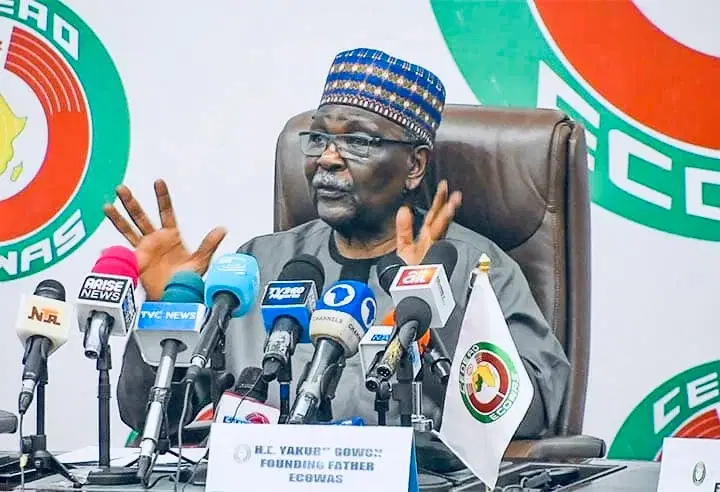
Former Head of State, Yakubu Gowon, has narrated how growing suspicion, intelligence warnings and betrayal surrounded the final days of his administration before the July 29, 1975 military coup that removed him from power.
In his memoir, My Life of Duty & Allegiance, Gowon detailed how he confronted Col. Joseph Garba over allegations that he was plotting to overthrow the government while he attended the Organisation of African Unity summit in Kampala, Uganda.
The former military leader reflected on the emotional burden of leadership during Nigeria’s years of military rule, warning against governing through fear and rumours.
“Any leader who lives in fear and acts on every rumour of plots to remove him or her from office can hardly accomplish anything,” Gowon wrote.
According to him, leaders consumed by fear often become dependent on “wily and self-serving advisers” as well as “prophets” and “marabouts” who exploit insecurity for influence.
Gowon recalled that rumours of coup plots became common after the military entered Nigerian politics in January 1966.
“From the moment I assumed office on Monday, August 1, 1966, I had learnt to live with persistent rumours of plans to unseat my government,” he said.
The former ruler disclosed that in early 1975, intelligence reports from multiple sources warned him that officers from the old Northern Region were planning a takeover.
He said D. Yusuf, then Commissioner of Police and head of the Special Branch, informed him that some officers were preparing to seize power during his trip to Kampala.
Initially, Yusuf allegedly refused to identify the officers involved and referred to them simply as “our boys.”
But when the names of Col. Joseph Garba and Col. Anthony Ochefu later emerged, Gowon said he became deeply unsettled because of their closeness to the presidency.
Garba, as Commander of the Federal Guards, headed the elite military unit responsible for protecting the Head of State.
Gowon revealed that he had personally supported Garba’s rise in the military.
“I had spotted him during a Parade of Colours and recommended him to join the Federal Guards,” he wrote, adding that “it was an open secret amongst officers that I was genuinely fond of him.”
Still, the allegations became increasingly difficult to ignore as suspicion spread within the military hierarchy.
According to Gowon, he eventually summoned both Garba and Ochefu before travelling to Uganda. While Garba honoured the invitation, Ochefu reportedly failed to appear despite repeated instructions.
“His uncharacteristic, yet deliberate act of gross disloyalty made me sense the plot might be true,” Gowon stated.
He said he then confronted Garba directly over the alleged conspiracy.
“I looked Garba in the eye during my meeting with him and confronted him with news of his alleged involvement in the conspiracy against me,” he wrote.
Gowon recalled issuing a stern warning to the officers allegedly involved.
“If you boys want to take over, you can try. If you succeed, you can call it your ‘revolution’ and you can do whatever you want,” he said.
“But if you fail, you can rest assured that I will not be as considerate as I had hitherto been, and all will pay the consequences.”
Despite the warnings, Gowon said he travelled to Kampala because Nigeria remained committed to supporting Angola’s independence campaign.
However, while attending the summit on July 29, 1975, officers led by Joseph Garba announced the overthrow of his government, ending nearly nine years in power.
Gowon’s memoir also focuses heavily on the emotional impact of suddenly losing office while abroad.
“The reality that I was out of office dawned on me early enough when I left the conference hall and had a few moments alone with myself in my hotel room in Kampala,” he wrote.
Rather than reflecting on power, Gowon said he became preoccupied with the future of his wife and children.
“I began to think about the future and where to settle my family, who, like me, had become unprepared and reluctant sojourners in foreign lands,” he stated.
The former ruler described the sudden loneliness and uncertainty that followed his removal, saying he needed “a temporary abode” before travelling to the United Kingdom to reunite with his family and discuss their future.
He also revealed that then Cameroonian President, Ahmadou Ahidjo, offered him refuge after the coup.
Beyond recounting the political intrigue, Gowon said the memoir reflects the human cost of power and the emotional devastation that can follow sudden removal from office.
“A fearful leader loses the ability to distinguish truth from manipulation,” he warned.
Africans Angle News