Africa
How Insecurity is Bleeding Nigeria about $15bn Annually and Destroying Its Economic Future -By Blaise Udunze
Nigeria cannot achieve sustainable economic growth without restoring order. The solutions must be comprehensive: modernizing security infrastructure with drones, satellite imaging, and digital surveillance; building a unified national intelligence framework; empowering local and community policing systems; addressing youth unemployment; strengthening judicial processes; securing borders; and rebuilding public trust through transparency and accountability.

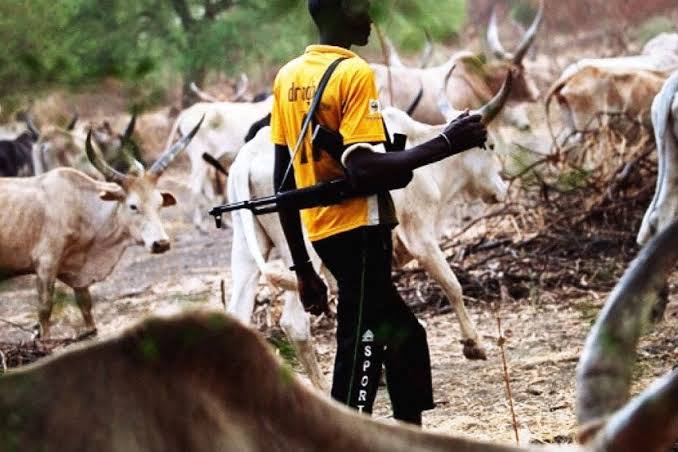
Nigeria is undergoing one of the stormiest periods in the history of its post-independence. This is not because of global oil shock, recession, or political instability; it is because of a far prevalent and devastating threat of the incessant insecurity. These once emanated as isolated insurgent attacks have now evolved into a nationwide web of terrorism, banditry, mass abductions, militancy, separatist violence, and organized crime. The repeated attacks across the North-East, North-West, North-Central, and increasingly the South have created an environment where fear, uncertainty, and instability have become the daily reality for millions of Nigerians.
But beyond the tragic loss of lives and communities torn apart, insecurity is quietly becoming Nigeria’s most devastating economic burden. It is the silent dagger cutting into the country’s gross domestic product (GDP), sabotaging investments, crippling agriculture, eroding human capital, and dragging millions deeper into poverty.
Recent events illustrate the depth of the crisis. In one of the most alarming incidents in Nigeria’s history, 315 students and staff were abducted from St. Mary’s Catholic School in Papiri, Niger State and a figure surpassing the infamous 2014 Chibok kidnapping. The Christian Association of Nigeria confirmed that 303 students and 12 teachers were taken after a verification exercise, making it one of the worst mass abductions the country has ever witnessed.
Parents wept openly on camera. A distressed woman told the BBC that her nieces, aged six and 13, were among the abducted: “I just want them to come home.” All schools in Niger State were ordered to close afterward as a move that, while necessary for safety, further chokes already strained educational access.
This tragedy was not isolated. It was the third mass abduction in a single week. In Kebbi State, over 20 schoolgirls were kidnapped days earlier. A church attack in Kwara State left two dead and 38 abducted. The rapid succession of attacks forced President Bola Tinubu to cancel foreign trips, underscoring the gravity of the situation. These incidents reveal a terrifying truth that insecurity has become a pervasive national emergency, one that carries enormous economic, financial, human, and socio-economic costs.
Agriculture, which accounts for more than 25 percent of Nigeria’s GDP and employs over 60 percent of the workforce, is one of the worst-hit sectors. Across the North-West and North-Central, Nigeria’s food-producing zones, its farmers live in fear. Bandits ambush farmlands, burn crops, extort communities, and abduct farmers for ransom. Recent estimates suggest that over 200,000 farmers and rural inhabitants have been displaced, abandoning vast hectares of arable land. The Northern Governors Forum admits that up to 60 percent of farmlands in key agricultural states have either been abandoned or severely underutilized due to unrelenting attacks.
The consequences are severe, resulting in reduced food production, escalating food prices, declining rural income, worsened inflation, and deepening threats to national food security. Nigeria now faces the possibility of a major food crisis by 2026, as farmers in Niger, Nasarawa, Kaduna, and Kogi warn that high insecurity, rising input costs, and massive post-harvest losses are driving them away from agriculture entirely. The United Nations Food and Agriculture Organization (FAO) warned that about 34.7 million Nigerians could face severe food insecurity during the next lean season (June to August 2026) if timely and coordinated interventions are not implemented.
A Niger State rice farmer, Ibrahim Abdullahi, lamented: “The cost of fertiliser, pesticides, and fuel has tripled. Most of us are running into debt. If this continues, many will leave farming completely.” If farmers retreat en masse, hunger will deepen and Nigeria’s dependence on food imports will worsen.
Kidnapping for ransom has also evolved into one of Nigeria’s most lucrative criminal enterprises. SBM Intelligence reports that kidnapping has grown into a self-sustaining industry, no longer merely a symptom of weak security but a thriving criminal ecosystem. In the first half of 2021 alone, 2,371 people were kidnapped, an average of 13 per day. By 2024, the numbers had surged, with hundreds of kidnappings recorded within months. Ransoms worth billions of naira change hands monthly. These payouts drain household savings, wipe out small business capital, push families into debt, and funnel enormous sums into criminal networks that reinvest the proceeds in more sophisticated weaponry.
The wider economic effect is crippling. Families sell properties and liquidate businesses to rescue loved ones. Schooling, commerce, and inter-state travel are disrupted. Regional trade routes deteriorate. Investors, both local and foreign, flee high-risk zones. Entire communities slip deeper into poverty. Insecurity has dismantled the confidence required for investment, expansion, and long-term planning.
Business confidence in Nigeria has fallen sharply as insecurity spreads. Large corporations, manufacturing firms, logistics companies, agribusinesses, and multinationals now operate in fear. Many are either scaling down or completely exiting Nigeria. Factories operate on skeletal staff; supply chains are strained; transportation costs skyrocket; and insurance premiums become prohibitive.
Foreign Direct Investment has steadily declined over the past decade, while Nigerian investors increasingly relocate capital abroad. No investor thrives in fear, and no economy thrives without investment.
The human cost is even more devastating. Millions have been displaced, forcing entire communities to flee their homes, farms, and businesses. Displaced populations lose their homes, farms, schools, livelihoods, and community networks. Their absence from productive work reduces national output, shrinks tax revenue, and overwhelms urban centres already battling unemployment, rising crime, and overstressed public services. The theoretical perspective by Stewart (2004), which argues that insecurity destroys productive capacity by killing workers, damaging infrastructure, and displacing populations, finds painful validation in Nigeria’s current reality.
Nigeria’s insecurity is multidimensional and regionally distinct. In the North-East, Boko Haram and ISWAP continue to operate, exploiting porous borders and challenging state authority. In the North-West and North-Central, banditry and mass kidnapping have become entrenched. In the South-East, separatist-linked violence and illegal sit-at-home orders shut down economic activity weekly. In the South-South, oil theft, pipeline vandalism, and militancy drain billions in oil revenue. In the South-West, urban crime, ritual killings, and gang violence create pockets of insecurity that hinder business operations. Each zone suffers differently, but collectively, the threats cost Nigeria billions of dollars annually, hinder trade, restrict mobility, and erode state authority.
The financial implications of insecurity are staggering, far greater than many realize. Conservative estimates from security trackers, development agencies, and fiscal analysts indicate that Nigeria loses approximately $15 billion (N20 trillion) annually due to insecurity-induced disruptions in agriculture, trade, manufacturing, transportation, and extractive industries. These losses weaken GDP growth and deepen the country’s fiscal strain.
Meanwhile, Nigeria’s security spending has ballooned. Defence and security now consume between 20 and 25 percent of the federal budget annually. More than N4 trillion has been spent on security in the past three years alone, excluding off-budget defence allocations, special interventions, and state-level spending. The opportunity cost is devastating: every naira spent fighting endless waves of violence is a naira not spent on education, healthcare, infrastructure, power, water systems, or technological advancement. Insecurity is not just costing Nigeria money; it is robbing the nation of future development.
This prevalent violence deepens poverty and inequality. Businesses shut down, schools close, markets collapse, food becomes scarce, jobs disappear, and vulnerable groups, especially women and children, bear disproportionate hardship. Healthcare deteriorates, rural communities empty out, and social cohesion breaks down.
Transportation and logistics, which happen to be the backbone of commerce, are particularly affected. Nigeria’s highways are now labelled among the most dangerous in West Africa. Haulage firms require armed escorts. Farmers cannot safely transport produce to major markets. Supply chains are broken, pushing prices even higher. When transportation collapses, commerce collapses, and so does the economy.
Food insecurity is escalating rapidly. Banditry is blocking farms, fuel prices are rising, fertiliser costs have tripled, farmlands are abandoned, and post-harvest losses are mounting. A nation that cannot feed itself cannot grow its economy.
Nigeria cannot achieve sustainable economic growth without restoring order. The solutions must be comprehensive: modernizing security infrastructure with drones, satellite imaging, and digital surveillance; building a unified national intelligence framework; empowering local and community policing systems; addressing youth unemployment; strengthening judicial processes; securing borders; and rebuilding public trust through transparency and accountability.
Nigeria’s insecurity crisis is not merely a security challenge; it is an economic emergency. It drains national resources, scares away investors, cripple’s agriculture, destroys human capital, and sabotages the nation’s pursuit of sustainable development. Until Nigeria defeats insecurity decisively, all economic reforms will remain fragile.
No investor thrives in fear.
No farmer plants on a battlefield.
No child learns in captivity.
No economy grows in chaos.
Security is the foundation of development. Nigeria must rebuild that foundation now or risk watching its economic future slip further away.
Blaise, a journalist and PR professional, writes from Lagos, can be reached via: blaise.udunze@gmail.com