Forgotten Dairies
Jonathan 2027 Speculation Sparks Political Debate: Betrayal of Hope or a Test of History? -By Daniel Nduka Okonkwo
Coalitions from different regions have also reportedly encouraged Jonathan to enter the race, framing his potential candidacy as a unifying option capable of bridging Nigeria’s complex regional and political divides. Some northern political actors, according to party sources, view a potential one‑term Jonathan presidency as a transitional arrangement that could restore rotational balance in national leadership.

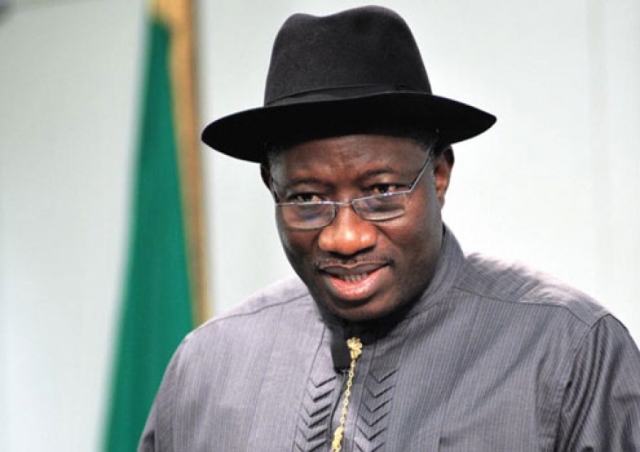
Former President Goodluck Jonathan has re‑emerged in Nigerian politics. As of May 2026, he has been screened by a faction of the Peoples Democratic Party (PDP) as the sole presidential aspirant for the 2027 elections. However, this is not yet official. He has only been positioned by that faction as the candidate, and the election itself is still ahead. Jonathan, like every other Nigerian, has the right to contest and represent his people. The real question is whether he has the capacity to steer the national narrative or if he is merely joining the circus of politics. Already, voices are warning that his inclusion could split votes, potentially disenfranchising Peter Obi and tilting momentum toward the incumbent. As the stage is set, the suspense lingers: will Goodluck Jonathan make history, or will he become history?
The discussions surrounding a potential return to presidential politics by Jonathan have intensified ahead of the 2027 general election, triggering renewed debate within the PDP, legal circles, and Nigeria’s broader political establishment. Although Jonathan has not formally declared his candidacy, multiple political groups and party factions have reportedly encouraged him to consider a comeback, citing his past leadership experience and perceived ability to stabilize the country during periods of economic uncertainty. His recent consultations with political stakeholders across different regions have further fueled speculation that he may be weighing a return to the electoral arena.
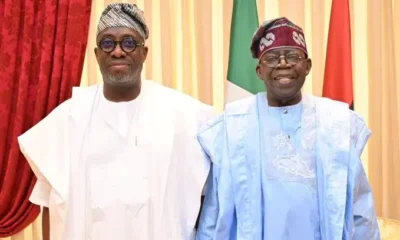
Within the PDP, reactions to Jonathan’s potential candidacy remain sharply divided. A faction of the party has positioned him as a leading or even sole aspirant for preliminary screening processes, while other stakeholders insist that the party must maintain an open and competitive primary system. Prominent figures such as Governor Seyi Makinde are among those linked with support for broader consultations around Jonathan’s potential return. However, other party leaders have cautioned against any perception that the PDP is predetermining its presidential candidate, warning that such positioning could alienate other aspirants and fracture internal unity ahead of a critical electoral cycle. Party insiders maintain that the PDP retains a wide pool of viable contenders and should avoid over‑reliance on a single figure, regardless of national prominence.
The possibility of Jonathan’s candidacy has also reopened constitutional debates regarding presidential term limits and eligibility. Legal arguments circulating in public discourse focus on whether prior service in the presidency affects eligibility for another full term under Nigeria’s 1999 Constitution, particularly following amendments introduced in 2018. Some legal interpretations suggest that the constitutional framework permits Jonathan to contest again, given that he was elected only once as president (2011–2015) and completed an earlier tenure that began through succession rather than election. Under this interpretation, he would remain eligible for one additional four‑year term if elected.
Opposing legal arguments continue to surface, with critics pointing to constitutional amendments aimed at limiting cumulative presidential tenure. These disputes have led to litigation in Nigerian courts, including filings seeking clarification or disqualification. A Federal High Court in Abuja is scheduled to rule on May 26, 2026, on whether Jonathan is constitutionally eligible to contest.
Supporters of Jonathan’s possible return argue that his administration is associated with relative political stability, improved diplomatic engagement, and a conciliatory leadership style that could help ease Nigeria’s current socio‑economic tensions. Some political commentators and elder statesmen, including Professor Jerry Gana, have publicly or semi‑publicly expressed favorable views toward his re‑emergence, suggesting that Nigeria may benefit from experienced leadership during a period marked by inflationary pressure, insecurity concerns, and public dissatisfaction with governance outcomes.
Coalitions from different regions have also reportedly encouraged Jonathan to enter the race, framing his potential candidacy as a unifying option capable of bridging Nigeria’s complex regional and political divides. Some northern political actors, according to party sources, view a potential one‑term Jonathan presidency as a transitional arrangement that could restore rotational balance in national leadership.
Despite growing momentum in some quarters, Jonathan’s potential return has also attracted skepticism and outright opposition. Critics argue that re‑entering frontline politics could complicate his reputation as an international statesman and potentially diminish the goodwill he has accumulated since leaving office. Religious and civic voices have also weighed in, with some advising him to preserve his legacy rather than re‑engage in what they describe as a highly polarized and unpredictable political environment. Other analysts have gone further, suggesting that renewed speculation around Jonathan’s candidacy could function as a strategic distraction within opposition politics, potentially fragmenting alliances and reshaping electoral calculations in ways that may indirectly benefit incumbent power structures.
Officially, the PDP leadership has rejected claims that any presidential ticket has been predetermined or exclusively allocated to Jonathan. The party maintains that its nomination process remains open and will follow established democratic procedures. At present, Jonathan himself has neither confirmed nor denied an intention to run, maintaining a posture of consultation rather than declaration. This ambiguity continues to fuel political speculation across party lines and within Nigeria’s broader electoral space.
As the 2027 election cycle gradually approaches, Jonathan’s name has re‑emerged as one of the most discussed possibilities in Nigerian politics. Whether this momentum translates into a formal candidacy remains uncertain, but the debate has already exposed deep divisions within party structures, revived constitutional interpretation disputes, and reshaped early strategic positioning among political actors. For now, Nigeria’s political front remains in a state of anticipation, with Jonathan’s next move closely watched by supporters, critics, and party stakeholders alike.
Daniel Nduka Okonkwo is a Nigerian investigative journalist, publisher of Profiles International Human Rights Advocate, and a policy analyst whose work focuses on governance, institutional accountability, and political power. He is also a human rights activist and advocate, with a strong commitment to justice and transparency.
His reporting and analysis have been featured in Sahara Reporters, African Defence Forum, Daily Intel Newspapers, Opinion Nigeria, African Angle, NewsBreak (local.newsbreak.com), Vanguard Newspaper, Daily Trust Newspapers, and other international media platforms.
He writes from Nigeria and can be reached at dan.okonkwo.73@gmail.com.