Africa
Killing in the Name of Law: The Global Failure to Protect People of African Descent from Police Violence -By Fransiscus Nanga Roka
For people of African descent, the out come is distressing. Their communities exist in a state of perpetual apprehension, their routine dealings with the police pose dangers unknown to others. Whether intended or not, the message is clear: some lives count more than others. But these facts also testify to the failure of governance and the rule of law. Policing loses all legitimacy when it causes fear rather than conferring safety. Law enforcement could never claim to have the public’s support while whole communities feel that the sight of a badge is synonymous with threat rather than salvation.

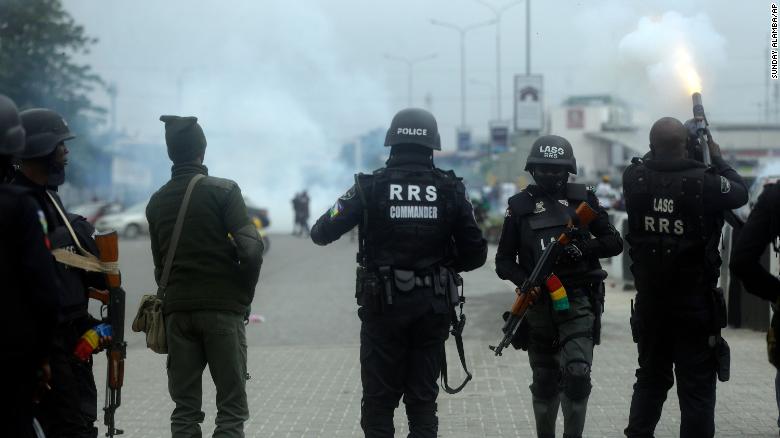
In the name of law, order, and public safety the governance of every country has the right to use force. policemen are given extraordinary power, “Detain, bind, and in extreme cases, may kill.” But for millions of people of African origin, this power too often becomes a means to their own death: law is transformed into an instrument which inflicts violence upon them.
The killing of George Floyd in 2020 sparked off a global debate. On continents across the world, millions marched and demanded that the police should be held accountable. Governments promised they would put systems right. International institutions committed themselves anew to racial justice and equality. But several years later, the uncomfortable truth remains: the structure within which police violence against people of African descent is entrenched has not undergone fundamental change.
Time and time again, throughout many countries, statistics and inquiries into the matter have shown a deeply disturbing pattern. Within the criminal justice system people As of African descent are treated disproportionately: They get stopped, searched and detained more often than others; are on the receiving end of physical violence meted out by law enforcement authorities. The death toll from police encounters keeps rising inexorably. These occurrences are all too frequently referred to as isolated tragedies caused by some slip up or other falling back on a few “bad apples.” But these explanations are comforting because they are half truths, and potentially much more dangerous than that.
This is not a problem of individual behaviour. This is a structural problem.
In many countries around the world, policing systems have arisen out of societies structured by colonialism, racial hierarchy and economic polarity. In such settings, law enforcement institutions often inherit practices which regard some groups not as patients needing care but rather populations to be controlled through repressive means. Where racial prejudice whether unconscious or is the result of policy makers coincides with broad leeway for police action, the result can be fatal.
So is the fact that killers remain at large. Investigate the cases of killed by police frequently slip within net of hands of prosecutors. Because of this, they are often reluctant to press charges. Internal disciplinary systems lack impartiality. The treatment regime in the courts tends toward deferential standards that put primary weight on the subjective perception officers have over human life as it is objectively to be protected. What we end up with is a legal paradox: the institutions that ought to enforce the law are protected by it. All this failure is not just national. It’s a global human rights issue. National legal systems must, in turn, appreciate and implement these principles. And here lies the tragedy for many ordinary citizens: they are deprived for no reason of their lives. These principles are enshrined in international instruments and strengthened by general rules on the use of force. Yet the gulf between them and the real situation remains enormous. In many areas, accountability mechanisms are either weak or non existent. Independent oversight organizations are either under funded or politically stymied. Victims’ families remain unable to get any form of redress. Structural bias within the criminal justice system is still something that determines outcomes long before their case comes to trial. For people of African descent, the out come is distressing. Their communities exist in a state of perpetual apprehension, their routine dealings with the police pose dangers unknown to others. Whether intended or not, the message is clear: some lives count more than others. But these facts also testify to the failure of governance and the rule of law. Policing loses all legitimacy when it causes fear rather than conferring safety. Law enforcement could never claim to have the public’s support while whole communities feel that the sight of a badge is synonymous with threat rather than salvation. Moreover, if the power to use force operates without robust accountability then the rule of law does not stand a chance. beyond Reform’s revamped slogans. Governments have to tackle the structural racism in law enforcement on all fronts. Indigenous investigative mechanisms must be reinforced.It is imperative that police departments start collecting data in a transparent manner about how officers use force.Training schemes ought to cover in depth how profiling according to race works and when to take an officer down a notch or two. More importantly the legal criteria for using deadly force must comport with international human rights treaties. But structural reformation is not enough. What is needed is to reorient the very philosophy of policing itself. Law enforcement should have its efforts directed towards safeguarding human dignity instead of preserving institutional power. Public security has to be seen in inseparable tandem with racial justice.The right of the state in its final analysis rests upon whether it is protecting the weakest members of society. Globalization also has an important role, because global agencies should move beyond mere words of sympathy to continuous monitoring, reportage and accountability mechanisms that address systemic racism is found in law enforcement. Sustained silence about this perpetuates the problem. In the end, history will judge now not by statements made following controversies over human rights, but whether governments had the courage to confront the issues of structural injustice behind them. Because when legal power itself unjustly takes a life, then the law becomes complicit in doing so. And when whole communities live in constant terror that an encounter with police might mean death, the promise of Equal Justice Under Law is not weakened, it is fundamentally broken.
Fransiscus Nanga Roka
Faculty of Law University of 17 August 1945 Surabaya Indonesia