Forgotten Dairies
Locating Gen Abacha On The 2027 Road -By Festus Adedayo
Writing in How Tyrants Fall (2024), Marcel Dirsus’ quotes, which I find very appropriate to us in Nigeria, and which I re-state here, are self-explanatory: “A dictator can do everything to maximize his chances of staying in power” Dirsus said on page 13 of the book. “Autocracies are enrichment machines” p20 and “Dictators are often the richest men in their country” p22. These quotes will tell us whether we are close to autocracy or really practicing democracy. Let’s ponder on these as we enjoy the circus of Omokri and Fani Power’s grovelling whitewash of Aso Rock.

Published
2 hours agoon
Femi, son of legendary First Republic’s Western Region politician, Chief Remilekun Fani-Kayode, popularly known as Fani Power, demonstrated the eternal permanence of the spoken word. Last week, as he did this, he invoked the spirit of the word “disrespect”. He had accused respected veteran journalist, Dele Momodu, of “disrespect” to President Bola Tinubu. On a Channels Television’s Politics Today programme aired last Monday, Momodu compared Tinubu to Gen Sani Abacha. Like a 20-year old pounded yam that my people say is capable of scorching fingers, that word, “disrespect” came back to sear the flesh. “Not only was he uncharitable and disrespectful to the President, the Vice President, the ministers, the senators and the newly-appointed ambassadors, many of whom have far more experience than him in governance and government… he also insulted the collective intelligence of the Nigerian people,” the younger Fani Power said.
This is the history of “disrespect” for the Fani-Kayodes: On March 22, 1961, then Opposition Leader in the Western Region House of Assembly, Femi’s father literally set the region on fire with his “disrespect”. Fani Power had aristocracy in his bloodline, and was a Q.C. and SAN who played a major role in Nigeria’s legal history and politics from the late 1940s until his death in 1995. He was one who, in July 1958, at the federal parliament in Lagos, moved the motion for Nigeria’s independence for April 2, 1960. On that day in 1961, at the tenth session of the Assembly, some of the Region’s considered VIPs were slated to be presented to the Governor-General, Oba Adesoji Aderemi. Fani hailed from Ile-Ife, and as such, was one of the subjects of the monarch. At the approach of the Governor, who was also the spiritual head of the Yoruba, being the Oba of Ile-Ife, considered to be the ancestral home of the Yoruba, Fani-Kayode’s gut reaction, considered rude, was to head for the rest room. This was presumed to be a subterfuge as he hated the politics of the Ooni. All efforts to get him stay on failed. His “disrespect” unleashed a fusillade of anger.
In its lead story of March 23, 1961, the Tribune reported this “disrespect” as Fani disappears as Gov approaches. Thereafter, a volley of attacks came for the Opposition Leader. The Action Group Member for Remo North, Mr. J. Olu Awopeju, was unsparing of the “disrespect”. Fani’s action was an assault on, not only the Governor but the whole House, he said. Chief J. A. O. Odebiyi, Leader of the House and Western Region Finance Minister, said the behaviour was a challenge to the constitution as the Governor was a representative of the Queen and “everybody is in honour bound to give him his due respect”. S. L. Akintola, the Premier himself, lampooned this ‘disrespectfulness’ of Fani-Kayode (a man he was to later work with, as against the rest of the rump of the Action Group. Indeed, Fani-Kayode later became his Deputy Premier on January 1, 1963.) Akintola said he was “disturbed to observe at this historic session, the unfortunate insult passed on our Governor.” This “disrespect” was to also attract a front page leader by the Tribune edition of the same day entitled, Political incivility. In it, the newspaper called for a “very strong censure” for this “act of discourtesy” which it said was symptomatic of “an ominous future for parliamentary democracy in the country”.
Fani-Kayode’s tongue, like his son, Femi’s, burnt like a lacerating whip. As the October 11, 1965 Western Region elections drew near, his tongue even burnt more. By then, he was Deputy Leader of Akintola’s coalition party, the NNDP and Deputy Premier. In Billy Dudley’s An Introduction to Nigerian Government and Politics, (1982) Fani-Kayode reportedly said that even if NNDP was not voted for, the party would win the elections. Bola Ige, in his People, politics and politicians of Nigeria: (1940-1979) published in 1995, quoted Fani-Kayode, whom he labeled “the most fascist of them all,” to have said: “Whether you vote for us or you don’t, we are returning to office; we will make sure that invisible bodies vote for us if you refuse to. So you can do whatever you like with your votes. The NNDP has won these elections.”
On page 277 of this same book, Ige ascribed a statement, which has refused to be interred in the political lexicon of Western Nigeria, to Fani-Kayode after the widely rigged 1965 election. He quoted him to have said, “the bronze ring has been securely fitted to the High Priest’s finger,” daring whosoever’s father was bold enough to remove the ring to come forward (A ti f’òjé b’olóòsà l’ówó, ó ku baba eni tí ó bóo!). Before the said 1965 election, which had Akintola and Alhaji Dauda Soroye Adegbenro vying for Premiership on the ballot for UPGA and NNDP, violence and threats of it ruled the airwaves. In a broadcast few days to the election, Adegbenro offered a riposte to Fani-Kayode, which also became a famous, “appropriate and prophetic retort” to the bronze ring threat. Adegbenro said inter alia that, “if the expropriated ring (on the High Priest’s finger) cannot be removed gently, the finger would be chopped off!” Such was the level of violence and threat of it in the politics of the First Republic.
So when son of “fascist” – apologies to Chief Bola Ige – Fani Power told Momodu that he had disrespected Tinubu and “the collective intelligence of the Nigerian people” by drawing a comparison between him and the late military despot, Sani Abacha, he would seem to have queried Yoruba people’s ancient fascination with homophones. On their journey of “like attracts likes”, Yoruba have imagery procured in the service of their explanation. One is their query of the proprietary of two homophones, “Ságo” and “Ìgò”, daring to disagree. While the “Ságo” is a container, a large glass pitcher used for holding liquids, “Ìgò,” the bottle, performs same role. Both however differ in structure. So, when these two containers begin to bicker on individual physique, the Yoruba wonder what difference exists between them.
Yoruba nevertheless agree on the existence of homophones. They also argue that only likes can attract likes. Likes, they argue, should be compared with likes. Words, like birds, should move in their own company. To give this understanding a sharper and clearer focus, two sayings come to their rescue. One is that, while contrasting words repel one another, similar words bait selves. So, what similarity does Abacha bear with Bola Tinubu, in the words of Dele Momodu? Afterall, the president’s own people say, “Ohun t’ó bá jo’hun l’a fií wé’hun”.
If you still do not understand the Yoruba, imagery comes in handy when they are in this type of dilemma. They then say, in physical resemblance, the head of a tortoise shares striking features with a human toe. In the same vein, they say, the seed coat of groundnut/peanut fruits bears striking similarity to the cocoon (casket) of the African pygmy rat called èlírí. Does this then give Momodu grace to engage in such comparison?
For Abacha, the dead, it will seem, do not die. This will explain the constant invocation of his spirit. Whether they were good or evil while alive, spirits of the dead play central roles in African narratives. They shape cultural identities, moral values and collective memory.
African spirituality aside, it behooves us, as citizens, to dissect both Momodu’s comparison of Tinubu’s government with Abacha’s and Fani-Kayode, Reno Omokri’s ostensible grovelling defence. After all, still talking about homophones, it has been said that when a child exhibits palpable ignorance in differentiating between ewe and òwè, it is elders’ responsibility to explain to them differences, if there are any, between them. This, the elders will do, by holding both in their two hands and showing them which is ewe and which is òwè.
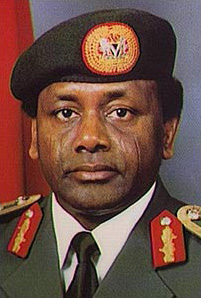
General Sani Abacha was no doubt very ruthless. Before him was General Ibrahim Badamosi who, despite his reputation as an unprincipled, military ruler, conducted what has been variously dubbed the freest and fairest elections in Nigeria’s history. However, Abacha, who took over in a bloodless putsch, is reckoned as having ran one of the most convoluted transition to civil rule programmes in Nigeria. After dissolving the Ernest Shonekan ING, he banned all political parties and political gatherings. In October 1995 he began a transition programme laden with his self-succession ploy, aimed at transforming into a civilian president through a manipulated electoral process. This literally imploded the country into its worst political crisis.
Nigeria suffocated under massive human rights violations. It provoked the formation of NADECO (National Democratic Coalition) and National Liberation Council of Nigeria (NALICON) to challenge him. A one million-man march was formed in support of his transmutation, with a Daniel Kanu leading this self-succession gambit. Then Abacha announced a foiled coup plot against him, immediately making Gens Victor Malu and Chris Garuba as heads. The panel convicted influential Nigerians like Gen. Olusegun Obasanjo, Lt. General Oladipo Diya (former Chief of General Staff) and Musa Yar’Adua, among others, with the latter poisoned in Abakaliki prison. Ogoni rights activist, Ken Saro-Wiwa, and his compatriots also met their waterloo in Abacha’s hands, having been executed in 1995. This led to Nigeria’s suspention from the Commonwealth of Nations.
Abacha’s National Electoral Commission of Nigeria (NECON) began the formation of political parties in July 1996. In the process, it denied notable political associations registration, registering only five. By April, 1998, all the five political parties adopted Abacha as their sole candidate. However, in the words of the holy writ, by the time Abacha was saying peace and safety, a sudden destruction came. Before he could realize his dream of becoming Nigeria’s life president in 1998, he suddenly died.
With the above illustration of the venal hold on power by Abacha, both Fani Power’s son and Omokri believe it was disrespectful to draw Tinubu, a major NADECO activist who fought Abacha to the hilt, into what they felt was an incongrous comparison of him and Abacha. Now, let us together look at the “ewe” and “òwè” of the allegation. A very senior lawyer and human rights activist once told me that, while together in detention with Gani Fawehinmi, he cautioned him to tread carefully about demonizing Tinubu. “Chief, don’t let us forget Tinubu’s significant contribution to where Nigeria’s democracy is today,” he said he reminded the late activist. This points to the fact that only people with very short memory would discountenance the Nigerian president’s military era democratic credentials.
However, time and tide sometimes dud the sharpness of the matchete. Of a truth, it would be uncharitable to draw a wholesale comparison between Tinubu and Abacha. In the same vein, as Yoruba say of someone whose wobbly strides are overtly manifest like a lame’s, “Ó jo gáté, kò jo gàté, ò fi esè méjèèjì tiro”, the facts speak for themselves. As writers, if we wrote what we write today under Abacha, we most probably won’t live to tell the tale. I practised journalism under the goggled General and I know the difference. However, Fani-Kayode and Omokri’s attempts to remove Tinubu from any blameworthiness in the Abacha-like democratic ferment that Nigeria currently witnesses is a relapse into the fallacy of excluded middle. In this fallacy, also called false dilemma, an interlocutor incorrectly assumes only two extreme options exist, whereas, a middle ground is the path to tread. Rather than sacralize the Tinubu government as both Omokri and Fani-Kayode did, the truth is that this government wears a facade that sometimes looks like a borrow from the tactics playbook of Sani Abacha.
Methinks Tinubu painstakingly studied Italian philosopher, Antonio Gramsci’s theory of cultural hegemony and emerged therefrom deadlier than Abacha. It is a theory which explains how the ruling class maintains power. Writing from Benito Musolini’s jail, Gramsci theorized that a stronger power could be got, not from force or coercion of Abacha, but by willingly wringing consent off your captives. Gramsci teaches how to capture minds without shooting a shot, without recruiting Colonel Omenka and Sergeant Rogers. This makes elite ideologies appear as common sense. His latest student, Tinubu, shapes mass consciousness through dispensing cash, position and carrots, thus rendering coercion unnecessary. It is however despotism by other means.
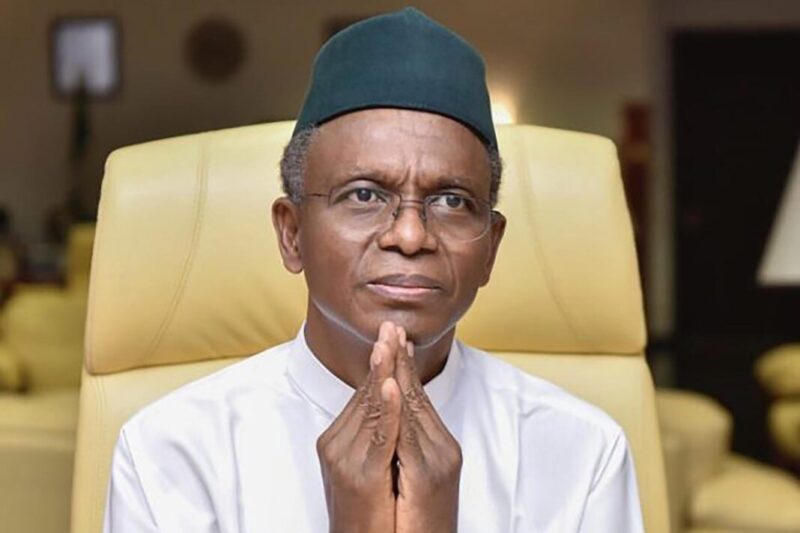
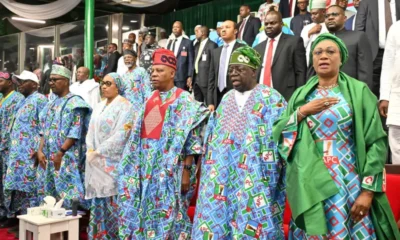
Today, Tinubu has 30 governors feeding off his fingers. He gets the Nigerian political elite bending over backwards for him without killing them as Abacha did. He found out that their weakness is cash and high-sounding offices. Many of them are laden with criminal cases, he overlooked them. Just as they do in the underworld, he secretly found governors’ Achilles heels and worked upon them to his advantage. Similar to a herd of sheep, they come feeding off his tray. When persuasion doesn’t work, he switches to coercion, as in El-Rufai’s case. Today, the APC is like a huge sanatorium housing all manner of unwell persons. The ones in need of food, Tinubu gives them; the ones who need whiplash, he administers. If you saw the party’s last weekend convention, you will agree with me. On top of it, all opposition parties are prostrate today. Tinubu recruited hitmen to help him kill all opposition parties so that he alone can remain in contest in 2027. How is that tactic different from Abacha’s?
Rather than go the route of hiring Daniel Kanu to beatify him, Tinubu has multiple of millions hungry recruits on social media and on ground in all the 36 states of the federation, to whom he gives miserable dole-outs. And who are ready to kill anyone who dares to oppose him with their data. So, how is he different from the goggled General? Let Omokri calmly go in peace to the land of drug barons where he is Ambassador-designate. He can tell his grovelling homily to the birds. Only God knows what literary device Tinubu was trying to ape with the posting of a man who alleged he was a drug baron to a country where drug barons thrive. If Omokri must know, this is not how democracy works. It is not how to build political parties to face opponent. It is crass political opportunism.
Writing in How Tyrants Fall (2024), Marcel Dirsus’ quotes, which I find very appropriate to us in Nigeria, and which I re-state here, are self-explanatory: “A dictator can do everything to maximize his chances of staying in power” Dirsus said on page 13 of the book. “Autocracies are enrichment machines” p20 and “Dictators are often the richest men in their country” p22. These quotes will tell us whether we are close to autocracy or really practicing democracy. Let’s ponder on these as we enjoy the circus of Omokri and Fani Power’s grovelling whitewash of Aso Rock.