
Forgotten Dairies
From Democratic Oversight to Executive Control: What Indonesia Can Learn from Norway, Switzerland, Singapore, and Tajikistan -By Fransiscus Nanga Roka
Indonesia can choose to remain with a system where policing inevitably runs the risk of becoming an agent of executive will, or it can move toward a model in which the police are grounded in law rather than power. In the end, the matter is simple and severe. Do the police protect the government or do they protect the people?

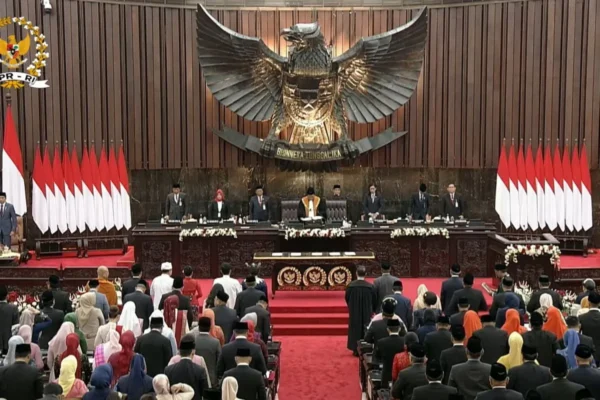
Indonesia now stands at an important constitutional crossing. No more whether the police should succeed is the question but whether they should be free, free of political command, free from executive pressure and free to uphold law instead of power. When the state’s police operate directly under the president abroad is where democratic oversight ends and control by the executive begins. This is not just a matter of structure; it is also an issue of human rights. An entire literature in multiple languages stretching throughout the world has been devoted to one and only problem that plagues each republic or democracy without distinction. How can police be held to account without being turned into arms of your political party? The time-honored solution, prevalent in most advanced democratic countries, is straightforward. Distance brings integrity. In Norway, although the police are under the jurisdiction of a department, the police force has a strong sense of professional self esteem. The Norwegian legal environment and institutional safeguards encourage police independence. Operational decisions are not dictated to political leaders. Result: It is a system of policing that enjoys the public’s confidence not because it is mighty but because it is indeed constrained Similar to Switzerland, where sovereignty is localized to cantons, this division is no weakness but in fact serves as a safeguard. By dividing power down into more manageable units, Switzerland reduces the likelihood of centralised political control. Police serve communities, not political centers. Compare this with Singapore where police operations remain under strong executive control, although they are shielded by quite deeply ingrained bureaucracies and severe legal frames of reference. Efficiency is paramount in combating what costs it has. A little dissent space and heavily relying critically on people trusting its government institutions for integrity instead of structurally independent — these are problems which can be expected to develop titely for them.
Tajikistan is a case in point. The enforcement powers of the police in this country are tied closely to executive power and that has far reaching consequences precedent: scant accountability institutions with limited judicial independence, overwhelming likelihood of law enforcement being used against opposition rather than for the protection of citizens. This cannot be called “policing”. It is government by the police.
So where should Indonesia be ranked? Disease control/tutorial structure, or cooperation according to capitalist logic
Indonesia’s constitution is a democractic system that pursues human rights and with rule of law. Nevertheless, the very fact that police are positioned under direct presidential authority has brought about a surprise turn of events: How can impartiality exist for any police at all, when it their own institutional subordination to the political center can always lead them to settle truths in a way favoring one side over another?
The danger is not potential. When both political authority and operational effectiveness in law enforcement lie with the executive, vigilance will lean toward selectivity. More than likely, investigations are steered, priorities changed and Even neutrality may evaporate. Without formal malpractice. simply because control is visible enough to induce a feeling that the balance of power has shifted unfavorably – This alone destroys public confidence.
Policing is based on trust.
Comparative systems instruct us that one model will not work in every society. It is vital rather than optional that democratic policing be independent. Norway and Switzerland show how institutional separations and legal guarantees can turn an ordinary police into an agent of democracy. On the other hand, Singapore demonstrates that efficiency without independence needs extraordinary integrity to avoid abuse. Meanwhile, Tajikistan sounds a note of caution for what happens when that integrity–is not there.
Indonesia cannot afford to gamble on integrity only. What is now required is thoroughgoing reforms constitutional and institutional redesign that will wrench political authority from the grip of operational policing. This does not mean to let accountability off the hook; on the contrary, it will necessitate reinforcing it through independent oversight bodies, transparent procedures and court enforceable standards.
It is not when power is correctly exercised that democracy faces its test but when power can be misused. This confrontation with harsh reality cannot be avoided if Indonesia is to give substance to its professions of commitment to human rights and the rule of law: a police force that answers directly to the president may therve the state, but not necessarily the people. The choice is clear.
Indonesia can choose to remain with a system where policing inevitably runs the risk of becoming an agent of executive will, or it can move toward a model in which the police are grounded in law rather than power. In the end, the matter is simple and severe. Do the police protect the government or do they protect the people?
Fransiscus Nanga Roka
Faculty of Law University 17 August 1945 Surabaya Indonesia






















You must be logged in to post a comment Login