Africa
Mr. President, General Musa, IGP Egbetokun, NSA Ribadu—How Many Meetings Must Happen Before Nigeria Cracks Beneath the Weight of Insecurity? -By Psychologist John Egbeazien Oshodi
In December 2023, I proposed a model titled “Forest Guardians: A Psychologist Calls for Paradigm Shift” (Modern Ghana). I argued for locally trained, psychologically equipped, community-integrated forest security forces—not militarized extensions of state power, but rooted neighborhood defenders, familiar with both terrain and trust.

President Bola Ahmed Tinubu is once again gathered with Nigeria’s top security leaders within the secured walls of Aso Rock. The atmosphere is one of urgency—again. This time, the cause is Borno State, where insurgents recently stormed multiple military bases in Dikwa, Marte, and Kala Balge, leaving soldiers dead, armored vehicles destroyed, and civilians terrified.
In these assaults, drones flew ahead of the militants. Tanks were set ablaze. Outposts were briefly overrun. Then came the familiar response: high-level consultations, back-to-back security briefings, statements of concern.
But the same quiet question echoes across the country:
How many more times must these meetings happen before the killings stop—and the people feel truly defended?
The Psychology of Recurring Response
As a psychologist, one must study not only what a system does—but how often it does it. In Nigeria’s case, the state’s repeated cycle—tragedy, reaction, meeting, statement, pause—has become something deeper than a governance pattern. It has become a national coping mechanism. A ritualized performance of concern, often more symbolic than strategic.
Each gathering risks becoming a placebo of policy—soothing to the surface, yet ineffective at addressing the wound beneath. Over time, this predictability has a psychological cost. It breeds detachment. The public begins to expect pain without remedy, trauma without healing. Hope thins.
And that is perhaps the most dangerous outcome:
When a nation loses the feeling that anyone is truly in control.
From a Strategy Gap to a Moral Distance
Let us not forget what the past months have shown us.
In Benue, April 2025 reopened the wounds of Agatu, as tension surged and ultimatums were issued in the deepening farmer-herder crisis.
In Mangu, Plateau State, bloodshed returned, despite meetings between Abuja and state leaders.
In Gwoza, Borno, bombings revisited streets once thought to be recovering.
In Zamfara, despair ran so deep that communities began negotiating directly with bandits, bypassing state institutions altogether.
And now, in May, key military bases in Borno are under siege. Confidence is cracking, even among troops.
Governor Babagana Zulum, whose record for on-ground leadership is widely respected, has now raised a warning few dared to voice publicly: militants may be regaining ground that Nigerians once believed was already secured.
This is not just about strategy. It is about proximity, presence, and emotional contract. It is about whether those at the center still feel what is happening at the edge.
A Governor’s Cry the Nation Cannot Ignore
On May 18, 2025, Governor Zulum stood in Marte Local Government Area and delivered words that should echo across every level of Nigerian leadership:
“Hitherto, Marte Local Government comprises over 300 towns and villages; now we have only one standing. If we cannot maintain this one, then we will lose the whole Local Government to the insurgents.”
Let that sink in: only one town remains in an entire local government area.
This is not distant theory—it is an on-ground report from a sitting governor. He witnessed the displacement of over 20,000 people to Dikwa. He understood the human risk, warning that young people idle in camps may be vulnerable to recruitment by insurgents.
And yet, in the face of this near-collapse, Zulum did something powerful:
He spent the night in Marte, alongside Nigerian soldiers and civilian volunteers. He returned to a town resettled not for the first time—but for the second. That alone is a statement of resilience.
But the governor cannot defend Marte alone.
Marte is no longer just a town. It is a symbolic frontline. If we lose this last standing place, the message will ripple far and wide—not just to insurgents, but to citizens: that some territories have become too remote to matter, too fractured to defend.
Leadership Must Frequently Touch the Ground—Not Just Issue Statements
In trauma psychology, healing begins with presence. Not policy. Not press. Presence.
This is why national leadership must find its way into the geography of suffering—not occasionally, but structurally.
Could we not imagine:
General Christopher Musa, Chief of Defence Staff, hosting rotating strategy sessions from Makurdi, where Benue’s crises demand close attention?
IGP Kayode Egbetokun, physically embedded in Mangu, to oversee firsthand how policing must adapt to community pain?
NSA Nuhu Ribadu, not only monitoring Maiduguri, but coordinating part of his office’s functions from within its embattled landscape?
And perhaps—quietly, without cameras—the President himself walking through Dikwa, through Marte, or through an IDP camp in Zamfara. To listen. To see. Not to perform, but to witness.
These gestures may not change a battlefield—but they change a narrative. And they remind the people that those at the top still believe the bottom is worth saving.
A Note on Forest Security: A Vision Revisited
In December 2023, I proposed a model titled “Forest Guardians: A Psychologist Calls for Paradigm Shift” (Modern Ghana). I argued for locally trained, psychologically equipped, community-integrated forest security forces—not militarized extensions of state power, but rooted neighborhood defenders, familiar with both terrain and trust.
Now, in 2025, President Tinubu’s administration has launched the deployment of Forest Guards across more than 1,000 forests.
The idea is encouraging. But implementation is everything.
If these forces are politically installed, poorly trained, or alienated from communities, the outcome will disappoint.
But if they are accountable, locally respected, and emotionally supported, they could represent a rare breakthrough—a model for proactive rural defense that restores faith.
We are not short of ideas. What we need now is discipline in execution and courage in presence.
Mr. President, Concern Can No Longer Be Distant
The Nigerian people have endured.
And endured.
And endured.
They no longer count promises.
They count graves—some marked, many unmarked.
They no longer wait for press releases.
They wait for nights without gunfire.
They no longer interpret each high-level meeting as a turning point.
Sometimes, they suspect it is only a way to delay accountability,
to recycle grief into another televised agenda.
Yet somehow, they still hope.
And that hope is no longer loud.
It is worn down, but stubborn,
a quiet resolve not to fully give up on a country that continues to test its people.
What the public asks for is not miracles.
They are not demanding perfection.
They know the burdens of leadership.
But they are asking for something far more basic—presence.
They want to know that those entrusted with the survival of the republic
are not hovering above the smoke,
but stepping, even briefly, into the fire.
That leadership is not only commanding from comfort,
but listening inside discomfort.
That it is not only speaking about the nation,
but standing in the nation—as it breaks, bends, and begs for help.
Reflection Before the Next Meeting
The emotional temperature of the nation has changed.
This is no longer a country grumbling.
It is a country exhaling slowly, day by day,
trying to endure without falling into despair.
Where there was once loud criticism,
there is now a resigned ache.
Where there was once rage,
there is now quiet, boiling fatigue.
And so, before the next security meeting is scheduled,
before the next protocol is followed,
perhaps this one question deserves to precede all others:
Not what more can we say—
but where else must we stand?
Because no matter how strategic the briefings,
how eloquent the communiqués,
if the people cannot feel a shared risk,
a shared ground,
a shared willingness to descend from the towers of Abuja into the trenches of loss,
then something deeper than morale will continue to collapse.
It will be the public’s sense of meaning.
Not a Call for Change—But a Call to Wake Up
And Mr. President, let me be precise.
This is not a call to reshuffle the service chiefs or fire the Inspector General.
It is not about dramatic changes that scratch the surface but leave the roots untouched.
It is a call to the current leadership—
General Christopher Musa,
IGP Kayode Egbetokun,
NSA Nuhu Ribadu,
and others—
to no longer manage this war at arm’s length.
They must stop repeating the same national refrain:
That insurgents are “foreign,”
that communities are not cooperating,
that civilians should share intelligence while soldiers remain out of reach.
Sir, these are not solutions. They are shields.
They protect image, not people.
And meanwhile, the pattern continues.
Senior officers receive awards and commendations.
Promotions are approved.
Ceremonies are held.
While in the background,
the foot soldiers—the ones bleeding on the highways,
the ones ambushed in unknown forests,
the ones standing between terror and the unarmed—
cry for backup, for proper gear, for clarity, for leadership that sees them.
Their voices are not always in the newspapers.
But they speak—in barracks, in WhatsApp chats, in prayer.
They speak through their exhaustion.
And sometimes, through their silence.
Do We Now Ask for Help?
There is a difficult but necessary conversation waiting on the margins of national discourse:
Is it time to accept external support—formally, clearly, unapologetically?
Should Nigeria request embedded technical teams,
private-sector expertise,
or bilateral intelligence units
from countries like the United States, the United Kingdom, or even ECOWAS partners,
not to take over sovereignty,
but to help secure it?
This is not a question of pride.
It is a question of survival.
It is a question of whether our leaders can admit that some problems now require outsourced precision, modern tools, and psychological recalibration.
Because we cannot keep saying,
“This is our fight,”
while entire local governments like Marte nearly disappear.
We cannot keep issuing medals at the top,
while asking the public to forget the pain beneath.
We cannot keep meeting in Abuja,
while towns in Borno, Zamfara, and Plateau fall into memory.
The Final Plea
This country is not yet lost.
But it is losing pieces of itself—one local government,
one IDP camp,
one forgotten promise at a time.
This is a psychological emergency.
A moral emergency.
A civic emergency.
And it will not be healed with words alone.
The people of Nigeria are not asking for declarations anymore.
They are asking for footsteps.
Into their towns. Into their truths. Into their trauma.
Show up. Stay awhile. Then act.
Because someday soon, when history writes the story of this moment,
it will not ask how many meetings were held.
It will ask:
Who stood up—when the country was falling?
This writer does not know any of the individuals involved; the focus is solely on upholding democracy, truth, and justice.
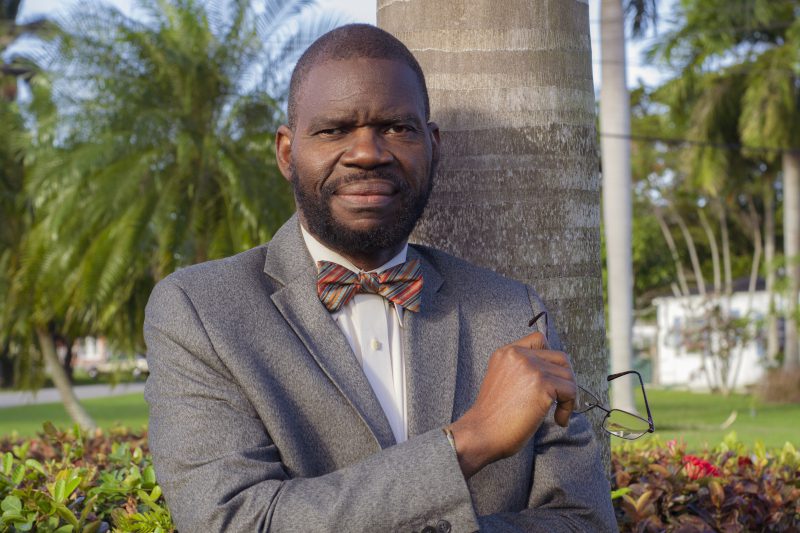
Professor John Egbeazien Oshodi is an American psychologist, educator, and author specializing in forensic, legal, and clinical psychology, cross-cultural psychology, police and prison sciences, and community justice. Born in Uromi, Edo State, Nigeria, he is the son of a 37-year veteran of the Nigeria Police Force—an experience that shaped his enduring commitment to justice, security, and psychological reform.
A pioneer in the field, he introduced state-of-the-art forensic psychology to Nigeria in 2011 through the National Universities Commission and Nasarawa State University, where he served as Associate Professor in the Department of Psychology. His contributions extend beyond academia through the Oshodi Foundation and the Center for Psychological and Forensic Services, advancing mental health, behavioral reform, and institutional transformation.
Professor Oshodi has held faculty positions at Florida Memorial University, Florida International University, Broward College, where he also served as Assistant Professor and Interim Associate Dean, Nova Southeastern University, and Lynn University. He is currently a contributing faculty member at Walden University and a virtual professor with Weldios University and ISCOM University.
In the United States, he serves as a government consultant in forensic-clinical psychology, offering expertise in mental health, behavioral analysis, and institutional evaluation. He is also the founder of Psychoafricalysis, a theoretical framework that integrates African sociocultural dynamics into modern psychology.
A proud Black Republican, Professor Oshodi advocates for individual empowerment, ethical leadership, and institutional integrity. His work focuses on promoting functional governance and sustainable development across Africa.