
Breaking News
N3.9trn debt: 22 NGX firms face cash shortfall as analysts warn of risks
Data shows 22 NGX firms had more debt than cash in Q2 2026, with analysts warning of refinancing, interest-rate and liquidity risks.

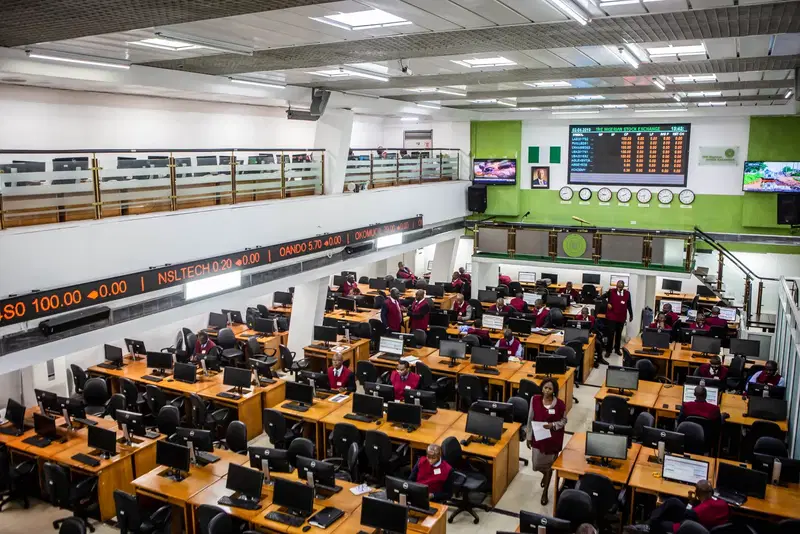
Twenty-two companies listed on the Nigerian Exchange Limited (NGX) had cash/debt ratios below 1.0 times in the second quarter of 2026, indicating that their total borrowings were higher than their available cash, according to data obtained by Vanguard.
The figures come as the 40 companies covered in the analysis reported combined debt of N3.9 trillion, highlighting significant differences in the liquidity positions of firms operating across various sectors of the economy.
Analysts said the varying levels of cash coverage could affect companies’ ability to withstand higher borrowing costs, fund expansion, maintain production and protect jobs.
The cash/debt ratio compares a company’s cash holdings with its total debt. A ratio above 1.0 times generally means that cash is sufficient to cover total debt, while a ratio below 1.0 times means debt is higher than cash.
However, analysts stressed that the ratio should not be used as a standalone measure of financial strength.
HBM Nigeria records 319.07x
HBM Nigeria recorded the highest cash/debt ratio among the companies reviewed, at 319.07 times.
The company had N393.68 billion in cash against total debt of N1.23 billion.
UPDC Real Estate Investment Trust followed with 283.73 times, having N7.15 billion cash compared with N25.2 million debt.
eTranzact International recorded 214.89 times, based on N23.69 billion cash and N110.24 million debt, while CWG posted 211.1 times, with N7.4 billion cash against N35.06 million debt.
Other companies with high cash coverage included Unilever Nigeria at 44.8 times, Berger Paints at 18.4 times, Industrial & Medical Gases at 13.56 times and NASCON Allied Industries at 12.72 times.
More companies maintain cash above debt
Vitafoam Nigeria had a cash/debt ratio of 5.88 times, while UPDC recorded 5.47 times.
International Breweries stood at 3.34 times, Sterling Financial Holdings at 3.08 times and May & Baker Nigeria at 2.83 times.
Livestock Feeds recorded 1.94 times, Julius Berger Nigeria 1.85 times, Chams Holdings 1.65 times and Dangote Cement 1.31 times. Skyway Aviation recorded 1.19 times.
According to analysts, companies with cash above debt have a liquidity buffer that can potentially help them meet obligations, fund working capital and cope with temporary revenue disruptions.
But they warned that having more cash than debt does not necessarily mean a company is more profitable or efficiently managed.
Caverton records lowest ratio
Among companies where debt exceeded cash, Aradel Holdings recorded 0.96 times, with N1.77 trillion cash against N1.84 trillion debt.
Ellah Lakes recorded 0.81 time, followed by John Holt at 0.77 times, Academy Press at 0.72 times and Eterna at 0.69 times.
ABC Transport had 0.58 times, while Cadbury Nigeria and Fidson each recorded 0.53 times.
BUA Cement posted 0.46 times, BUA Foods 0.44 time and Beta Glass 0.34 time.
Conoil recorded 0.20 times, while Guinness Nigeria and Champion Breweries each posted 0.16 times.
DAAR Communications had 0.14 time, Cutix and Japaul Gold & Ventures each recorded 0.11 times, Geregu Power 0.09 times, FTN Cocoa Processors 0.08 times, C & I Leasing 0.07 time and Chellarams 0.05 times.
Caverton Offshore Support Group recorded the lowest ratio at 0.03 times.
The company had N2.46 billion cash compared with N87.15 billion total debt.
Chellarams, meanwhile, had N235.16 million cash against N5.12 billion debt.
Debt burden could affect expansion
Analysts said companies with persistently low cash/debt ratios could face refinancing and interest-rate risks, especially when debt repayments become due before sufficient operating cash is generated.
They noted that companies with high cash balances have greater flexibility to repay borrowings, finance capital expenditure internally or negotiate new loans from a stronger position.
Such flexibility could become increasingly important where refinancing comes at higher interest rates.
However, analysts also cautioned that a large cash balance is not automatically positive.
Companies may retain substantial cash for inventories, capital expenditure, acquisitions, dividends or other strategic commitments. Some cash and cash equivalents may also be restricted or invested in instruments that cannot immediately be deployed.
Investors urged to examine wider financial picture
Ambrose Omordion, Chief Operating Officer, InvestData Consulting Limited, said investors should look beyond the amount of debt and consider earnings, cash flow, interest-cover ratios and the maturity profile of borrowings.
According to him, high debt can increase shareholder returns when borrowed funds are invested in profitable projects, but can also magnify losses when earnings and cash flows weaken.
The same principle applies to cash-to-debt levels, he said, noting that a company with a low ratio can remain financially stable if it generates strong and predictable operating cash flows.
Economic and communications expert Clifford Egbomeade similarly urged investors to look beyond the headline ratio.
“The interpretation of cash and debt should go beyond the ratio itself,” Egbomeade said, stressing the importance of examining the quality and utilisation of cash.
“A company with substantial cash and low debt has greater flexibility to respond to economic shocks, finance expansion or take advantage of investment opportunities without immediately resorting to expensive borrowing.
“This is particularly relevant in Nigeria where corporate borrowing costs remain relatively high.
“Some companies deliberately retain cash to finance inventories, capital expenditure, acquisitions, dividend payments and other strategic commitments.
“In addition, cash and cash equivalents may include restricted funds or short-term investments that cannot necessarily be deployed immediately.
“This means that shareholders should examine the composition of cash before drawing conclusions about a company’s liquidity.”
Employment and economic implications
The liquidity position of listed companies also has broader implications for the economy.
Analysts said companies facing heavy debt-service obligations may have less money available for expansion, technology, employment and dividend payments.
Conversely, productive borrowing can enable businesses to expand capacity, increase production and create employment.
They therefore stressed that the quality and use of debt matter alongside the absolute debt figure.
For shareholders, companies with stronger liquidity may have more flexibility to maintain operations and finance expansion, while businesses with low cash/debt ratios could face greater financial pressure if earnings or operating cash flows weaken.
Analysts nonetheless advised investors to assess profitability, operating cash flow, interest expenses, debt maturity, working-capital requirements, asset quality and capital-allocation strategy before drawing conclusions about a company’s financial position.
The second-quarter figures therefore underline the wide differences in liquidity management among NGX-listed companies and provide investors with an additional indicator for assessing debt, cash management and financial risk.
Africans Angle News



























You must be logged in to post a comment Login