
Forgotten Dairies
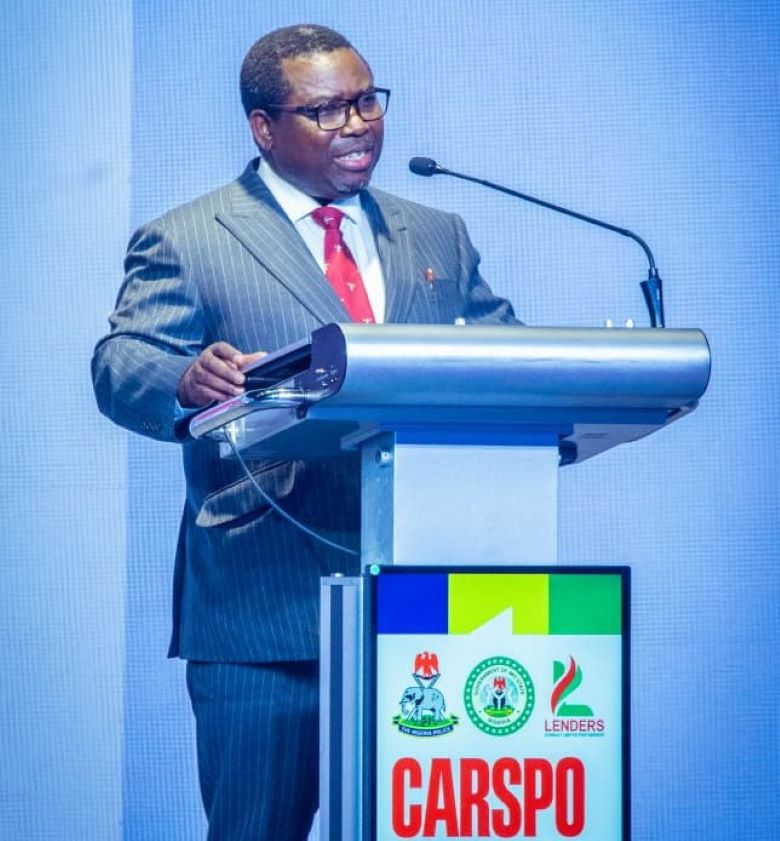
Why Professor Joash Amupitan’s CARSPO 2026 Message Deserves National Attention -By Adewole Kehinde
Professor Joash Amupitan’s intervention at CARSPO 2026 serves as a reminder that credible elections are built on preparation, collaboration, accountability and respect for the law. Nigeria would do well to heed that message.

Nigeria’s electoral calendar is now firmly established. The Presidential and National Assembly elections will take place on January 16, 2027, while the Governorship and State Assembly elections will follow on February 6, 2027. As the nation moves steadily toward these crucial dates, discussions about electoral integrity, voter confidence, security, logistics and legal compliance will dominate national discourse.
For this reason, the remarks made by the Chairman of the Independent National Electoral Commission (INEC), Professor Joash Amupitan, at the just concluded sixth Conference and Retreat for Senior Police Officers (CARSPO 2026) in Owerri, Imo State, deserve serious attention from all stakeholders.
The conference, which brought together senior police officers, security experts, election managers and other critical stakeholders, was designed to strengthen preparations for the management of election security ahead of the 2027 general elections. While many presentations focused on operational security, intelligence gathering and election management, Professor Amupitan drew attention to an equally important dimension that is often overlooked—the legal and financial foundations of credible elections.
His intervention was timely, practical and rooted in the realities facing Nigeria’s electoral process.
One of the strongest points made by the INEC Chairman was the need for adequate funding. Elections are among the most complex exercises undertaken by any democratic government. They require extensive planning, procurement of sensitive and non-sensitive materials, deployment of personnel, voter education, voter registration exercises, technological infrastructure, logistics and security arrangements.
Too often, public discussions reduce election funding to activities occurring on election day. Professor Amupitan correctly reminded participants that the commission’s responsibilities begin long before citizens arrive at polling units.
INEC must continuously update and maintain the voter register. It must supervise and regulate political parties. It must conduct voter registration exercises, process applications from political associations seeking registration as parties, train election personnel and maintain the infrastructure necessary for transparent elections. These responsibilities demand consistent and sufficient funding.
A poorly funded electoral process creates vulnerabilities that can compromise public confidence. Delays in logistics, inadequate training, insufficient deployment of personnel and gaps in election security can all undermine the credibility of an election. Therefore, when Professor Amupitan stressed the importance of adequate funding, he was not merely making a budgetary appeal; he was identifying a fundamental requirement for electoral credibility. His concerns about insecurity were equally significant.
Nigeria continues to face security challenges in several parts of the country. Insurgency, banditry, communal conflicts, kidnapping and other forms of criminality have displaced communities and restricted movement in some areas. These realities pose serious challenges to voter participation. Professor Amupitan was right to warn that insecurity could lead to voter disenfranchisement.
Every Nigerian citizen who is legally qualified to vote deserves the opportunity to participate in choosing leaders. Any circumstance that prevents eligible citizens from exercising that constitutional right should concern every democrat regardless of political affiliation.
The challenge before security agencies is therefore not simply to maintain law and order on election day. It is to create an environment in which citizens feel safe enough to register, campaign, attend political meetings and eventually cast their votes without fear.
This is why the collaboration between INEC and the Nigeria Police Force, alongside other security agencies, remains indispensable. Perhaps the most insightful aspect of Professor Amupitan’s presentation was his analysis of vote buying and electoral corruption.
For years, election observers and law enforcement agencies concentrated heavily on activities occurring at polling units. While such vigilance remains necessary, electoral offenders have become more sophisticated.
As the INEC Chairman noted, much of the planning and execution of vote buying now takes place outside polling units and often long before election day. This observation reflects a changing reality that security agencies must confront.
Vote buying has evolved beyond the crude exchange of money at polling centres. It increasingly involves organized networks, advance arrangements, covert financial transactions and coordinated operations designed to influence electoral outcomes while avoiding detection.
This evolution demands a corresponding shift in strategy. Professor Amupitan’s position underscores the growing importance of intelligence-led election security. The fight against electoral corruption can no longer rely solely on visible enforcement at polling stations. It must involve surveillance, intelligence gathering, financial investigations and coordinated law enforcement efforts before, during and after elections.
His revelation that INEC is working with the Nigeria Police Force, the Economic and Financial Crimes Commission (EFCC), the Independent Corrupt Practices and Other Related Offences Commission (ICPC) and the Federal Ministry of Justice to develop a joint framework is therefore encouraging.
For too long, Nigerians have witnessed electoral offenders being arrested only for cases to disappear from public attention without meaningful prosecution. The public has become accustomed to headlines announcing arrests but has seen relatively few convictions capable of deterring future offenders.
Professor Amupitan’s emphasis on converting arrests into successful prosecutions addresses a major weakness in Nigeria’s electoral accountability framework. The true measure of electoral law enforcement is not the number of arrests announced during elections. It is the number of cases successfully investigated, prosecuted and concluded within the framework of the law.
A credible prosecution system sends a stronger message than any public statement. It demonstrates that electoral crimes carry consequences and that no individual is above the law. The proposed collaboration among INEC, the police, the EFCC, the ICPC and the Ministry of Justice offers an opportunity to bridge the longstanding gap between arrest and conviction.
Equally commendable was Professor Amupitan’s clarity regarding disputes arising from party primaries. Nigeria’s electoral cycle often becomes overwhelmed by litigation arising from internal party processes. Such disputes frequently generate confusion, public controversy and political tension.
The INEC Chairman correctly reminded stakeholders that the resolution of primary election disputes belongs to the courts. His position reflects the constitutional and legal framework governing elections in Nigeria.
By reaffirming that INEC will comply with court decisions, Professor Amupitan demonstrated respect for the rule of law and institutional boundaries. Electoral management bodies must not assume judicial powers, just as courts must not perform electoral functions.
Each institution has a clearly defined constitutional role. His observation that elections are contested in law by political parties rather than individual candidates is also an important reminder. It highlights the legal realities that underpin Nigeria’s democratic process and reinforces the importance of political parties adhering to internal democratic principles during candidate selection.
As Nigeria approaches the 2027 elections, Professor Amupitan’s message should not be viewed merely as a conference presentation. It should be seen as a roadmap for strengthening electoral credibility.
His emphasis on adequate funding recognizes the practical realities of election management. His concerns about insecurity highlight the need to protect citizens’ voting rights. His focus on intelligence-driven approaches to vote buying reflects the changing nature of electoral offences. His support for inter-agency cooperation offers a pathway toward stronger enforcement. And his commitment to judicial authority reinforces respect for the rule of law.
The success of the 2027 elections will depend not only on what happens at polling units on January 16 and February 6. It will depend on preparations taking place today within INEC, the police, anti-corruption agencies, the judiciary and other institutions charged with safeguarding democracy.
Professor Joash Amupitan’s intervention at CARSPO 2026 serves as a reminder that credible elections are built on preparation, collaboration, accountability and respect for the law. Nigeria would do well to heed that message.
Adewole Kehinde is the publisher of Swift Reporters and can be reached through 08166240846 Email: kennyadewole@gmail.com


























You must be logged in to post a comment Login