Africa
Nigeria And The Part Of Our Past (1) -By Abiodun Komolafe
The conventional wisdom suggests that Lombardy, Italy’s most prosperous region, which, like our Niger Delta, is the goose that lays the golden eggs, would certainly have pulled out of Italy. This prompts a crucial question for Nigeria’s political establishment: can intellectual honesty and moral circumspection guide a comprehensive overhaul of the country’s perennial underdevelopment and lack of national cohesion?

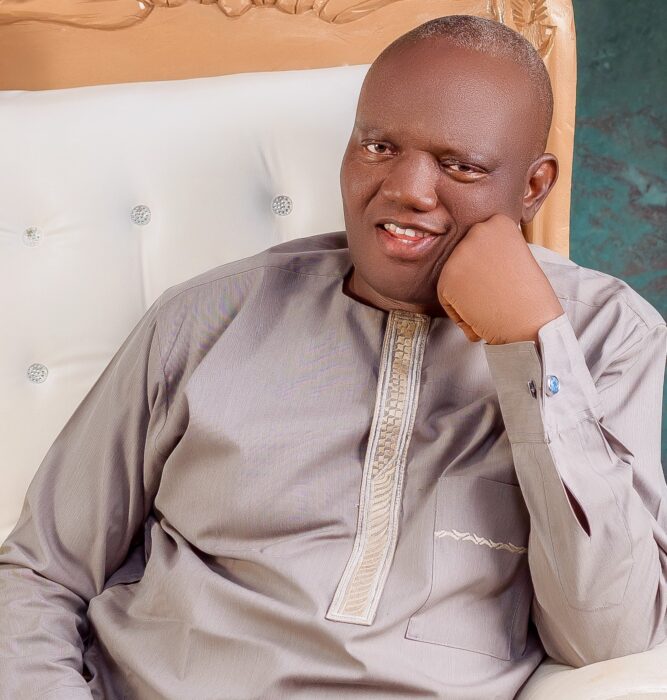
On October 1, 1999, I wrote an article titled ‘The Ethical Imperative of Governance’ in one of Nigeria’s leading national newspapers.
In the said article, I advocated for a deep sense of objective right and wrong in society, one that transcended Nigeria’s multicultural identity, as this shared moral foundation was essential for achieving our national objectives. Fast-forward to 2025, nearly three decades later, and the question remains: has anything changed? If so, what exactly has changed, and how do we measure the extent of this transformation?
In fairness to posterity, to ask how we got to wherever we are is to ask whether or not Nigeria should have been created in the first place. The amalgamation of the protectorates and territories, after all, was not put to a referendum, and there is no record of the people giving their consent to this amalgamation. It was largely driven by the British government’s cost-cutting measures, undertaken amidst the turmoil of a Europe on the brink of World War I.
The 1911 report of the Committee headed by Lord Haldane, akin to Nigeria’s Oronsaye Report, paved the way for cost rationalization, ultimately leading to the amalgamation. However, a critical question remains: did this amalgamation truly create a country, or merely a geographical expression? This conundrum is reminiscent of Giuseppe Garibaldi’s unification of 27 principalities, states and provinces into Italy. As Garibaldi excellently remarked, “We have created a geographical expression; now we must create the Italians.”
General Yakubu ‘Jack’ Gowon is arguably the only Nigerian leader who has come close to addressing the question of national unity. One of his notable achievements was the creation of the National Youth Service Corps (NYSC) in 1974.
While the NYSC has unified the Nigerian elite to some extent, its impact has been limited, more so as it has largely been serving interests that are not particularly productive. More importantly, it has failed to unite the Nigerian people. This failure is symptomatic of a broader issue – a country built on rent-seeking and a scramble for resources, which inevitably leads to the current state of disarray.
When Nigeria was governed by production-based constitutions, such as the 1963 Constitution, the country experienced flashpoints, but also enjoyed better focus on development and greater national cohesion. A similar trajectory can be observed in India, which has maintained stability despite experiencing flashpoints since its independence in 1947. India has avoided coups and has become the world’s 5th largest economy. Projections also suggest that India will become the world’s largest economy by 2050.
India’s experience offers a valuable lesson. By adhering to a constitutional framework similar to Nigeria’s 1960 and 1963 Constitutions, the country has successfully lifted hundreds of millions of people out of poverty. Meanwhile, Nigeria grapples with communal clashes, violence and land-grabbing. Nigerians are roasting Nigerians, thus rendering the country neither peaceful nor cohesive. This lack of cohesion underscores that sustainable development cannot be achieved through isolated ‘projects’. Instead, it will remain a case of ‘all motion without development.’
The National Assembly’s inability to promptly reform the internal security mechanism, adopting a community and state policing approach akin to countries like Australia, Canada, Brazil, and the USA, is striking. This inaction betrays a lack of interest in fostering national cohesion. Unfortunately, there is little indication that this will change soon. Apart from when the Super Eagles are playing, there is very little evidence of national cohesion. Dear fatherland continues to look like a ‘geographical expression’ rather than a state based on national identity, cohesion and a focused programme for national reconstruction.
In response to Nigeria’s struggles with national identity and underperformance, the establishment should revisit and upgrade the 1963 Republican Constitution, backing it with a referendum as a measure of self-preservation. At this critical juncture, the country must work towards a Nigerian equivalent of Italy’s 1971 ‘Historic Compromise.’
The Italian ‘Compromesso Storico’ breathed new life into Italy’s struggling state, addressing its disoriented public finances and stabilizing its sagging currency. This historic compromise reduced regional tensions and laid the groundwork for a unified effort against the Sicilian Mafia, ultimately paving the way for its downfall.
The conventional wisdom suggests that Lombardy, Italy’s most prosperous region, which, like our Niger Delta, is the goose that lays the golden eggs, would certainly have pulled out of Italy. This prompts a crucial question for Nigeria’s political establishment: can intellectual honesty and moral circumspection guide a comprehensive overhaul of the country’s perennial underdevelopment and lack of national cohesion?
Nigeria transitioned from military rule to democracy, but the journey was far from glorious. With this reality in mind, we must recognize that India’s independence in 1947 marked the beginning of a period where the country’s military structure prevented at least a dozen potential military coups. This contrasts with Nigeria’s experience under military rule, as well as Brazil’s, which was marked by brutality and viciousness.
However, it’s essential to consider the outcomes of military rule, as seen in South Korea’s remarkable transformation since 1958. The question remains: can military rule be beneficial if it leads to a forced advance, as in South Korea’s case?
*To be concluded.
*KOMOLAFE wrote from Ijebu-Jesa, Osun State, Nigeria (ijebujesa@yahoo.co.uk)