Africa
Nigeria and Türkiye: A New Era of Strategic Partnership -By Kenan Toprak & Isah Aliyu Chiroma
On the diplomatic front, Nigeria and Türkiye enjoy a strong rapport on multilateral platforms such as the D-8 and the Organisation of Islamic Cooperation. Both countries have emerged as influential voices in advocating for reform in global governance structures, with President Erdoğan’s notable assertion that “the world is bigger than five” echoing Nigeria’s demand for stronger African representation on the UN Security Council. This alignment reflects a shared commitment to a more equitable and multipolar international system.

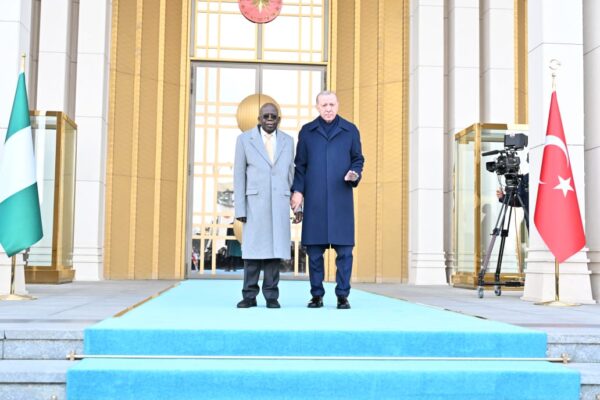
President Bola Ahmed Tinubu’s recent state visit to Türkiye marks a pivotal moment in the evolving partnership between Africa’s most populous nation and the dynamic Eurasian power. Both the scope and ambition of this visit, which saw the signing of nine separate agreements across a range of sectors, reflect a deliberate shift from transactional interactions to a comprehensive, strategic partnership covering security, economics, infrastructure, and people-to-people ties.
The Nigeria-Türkiye relationship is no longer defined by a singular deal or isolated engagement; instead, both countries have signaled their intent to forge a multi-dimensional, future-oriented alliance. This visit stands out as one of the most consequential in the history of Nigeria-Türkiye relations, given the scale and depth of the discussions, the diversity of the delegations, and the mutual recognition of shared interests and challenges. As the world witnesses shifting geopolitical dynamics, the strengthening of ties between Ankara and Abuja represents not only an opportunity for bilateral advancement but also a model for South-South cooperation in the 21st century.
A cornerstone of this new era is the robust security cooperation established through the recently signed Military Cooperation Protocol. Unlike previous agreements, this protocol moves beyond arms purchases to provide an integrated framework for counter-terrorism support, military training, intelligence sharing, and defense industry collaboration. These developments are especially significant as Nigeria seeks to address persistent threats from groups like Boko Haram and ISWAP, as well as broader internal security challenges.
President Tinubu’s delegation, comprising senior officials in foreign policy, defence, internal security, and intelligence underscored the significance of the agenda. Security coordination has emerged as a central pillar of this renewed partnership, with Nigeria aiming to draw from Türkiye’s extensive and hard-earned experience in counterterrorism and indigenous defence capabilities. The recently signed Military Cooperation Protocol goes beyond the traditional scope of arms purchases, establishing an integrated framework for counter-terrorism support, military training, intelligence sharing, and defense industry collaboration. This agreement is particularly significant for Nigeria, which continues to face persistent threats from terrorism, as well as broader internal security challenges including banditry and inter-communal violence. Turkey’s practical expertise and advanced defence industry offer Nigeria not only access to military hardware, such as T-129 ATAK helicopters and unmanned aerial systems, but also opportunities for local capacity building, technology transfer, and the modernization of the NNS ARADU naval flagship in Turkish shipyards. Drawing inspiration from Türkiye’s own successful counter-insurgency operations, such as Operation Peace Spring, Nigeria stands to benefit from new strategies in intelligence gathering, targeted air strikes, and civil-military coordination. Moreover, the protocol signals Ankara’s commitment to supporting a stable and secure Nigeria, recognizing that West African security is integral to broader regional and global stability.
Economic cooperation forms the backbone of the relationship, representing both immediate opportunities and long-term strategic alignment. Trade between Nigeria and Türkiye reached $688.4 million in the first eleven months of 2025, but both sides have set an ambitious target of $5 billion in the medium term. This ambition is supported by the activities of over 50 Turkish companies in Nigeria, whose investments are estimated at $400 million, and by Turkish contractors undertaking projects worth approximately $3 billion. Nigeria’s status as Türkiye’s largest trading partner in Sub-Saharan Africa reflects the growing significance of this partnership, especially in the oil and energy sectors. Turkish companies have made notable inroads into Nigeria’s construction, manufacturing, and energy industries, including major infrastructure projects, road construction, housing, and power generation. At the same time, Nigeria is actively seeking to diversify its economy, attract foreign investment, and integrate more deeply into global value chains. The planned Joint Economic and Trade Committee will play a pivotal role in facilitating investment flows, removing barriers, and fostering innovation. Türkiye’s unique position as a gateway between Europe, Africa, and the Middle East, coupled with its policy independence and expertise in large-scale projects, resonates with Nigeria’s ambition for industrialisation and strategic autonomy. Energy cooperation is an area of particular promise, with Nigerian LNG imports playing a crucial role in Türkiye’s energy security while also offering Nigeria new export markets and investment opportunities in oil, natural gas, and renewables.
On the diplomatic front, Nigeria and Türkiye enjoy a strong rapport on multilateral platforms such as the D-8 and the Organisation of Islamic Cooperation. Both countries have emerged as influential voices in advocating for reform in global governance structures, with President Erdoğan’s notable assertion that “the world is bigger than five” echoing Nigeria’s demand for stronger African representation on the UN Security Council. This alignment reflects a shared commitment to a more equitable and multipolar international system. Ankara’s “win-win” approach offers Nigeria a flexible diplomatic space, distinct from Western-centric models, and opens avenues for pragmatic collaboration in peacekeeping, mediation, and humanitarian efforts. The growing diplomatic synergy between Nigeria and Türkiye is also evident in their support for each other’s candidacies in international organizations, their cooperation on migration and refugee issues, and their joint advocacy for South-South cooperation. By forging a partnership based on mutual respect, shared priorities, and policy independence, both countries are positioning themselves as leaders in shaping the future of the Global South.
People-to-people ties and educational exchanges are vital elements sustaining the long-term partnership between Nigeria and Türkiye. Through the Türkiye Scholarships programme, over 188 Nigerian students currently study in Turkish universities, with more than 1000 students graduating from higher education and more than 3,000 Nigerians have benefited from Turkish higher education overall. These educational exchanges foster cross-cultural understanding, build professional networks, and lay the foundation for sustained collaboration in science, technology, and entrepreneurship. Turkish Airlines’ regular flights between major Nigerian cities and Istanbul have enhanced travel and business connections, facilitating tourism, investment, and greater cultural awareness. Meanwhile, institutions like the Yunus Emre Institute and Türkiye Diyanet Foundation play an important role in cultural diplomacy, offering language courses, cultural events, and humanitarian support. These initiatives deepen societal ties, encourage intercultural dialogue, and help cultivate the next generation of Nigerian and Turkish leaders committed to advancing the bilateral relationship.
With a foundation stretching from early Ottoman contacts in the 16th century to modern diplomatic and economic engagement, Nigeria-Türkiye relations are entering a new era of expansive cooperation and mutual ambition. President Tinubu’s visit, anchored by a broad ministerial delegation and the signing of landmark agreements, reflects a shared determination to translate historical ties into a robust, strategic partnership capable of delivering security, economic growth, and global influence for both nations. The challenge ahead lies in the effective implementation of these agreements, the management of ongoing challenges such as security threats and trade imbalances, and the nurturing of deeper societal and institutional links. As both countries navigate an increasingly complex world, their willingness to innovate, adapt, and cooperate will determine the lasting impact of this new partnership. Ultimately, the evolving relationship between Nigeria and Türkiye stands as a testament to the potential of South-South cooperation and the emergence of new global partnerships that transcend traditional alliances.
Kenan Toprak is a Turkish analyst and writer specialising in Türkye-Africa relations with a special focus on Türkiye’s relations with Nigeria.
Isah Aliyu Chiroma is a Nigerian writer and public affairs analyst; he focuses on government policies, economy, and diplomacy.