Africa
Nigeria’s Deepening Crisis of Trust: Corruption and Institutional Collapse -By Angelic Bitrus Yerima
What Nigeria needs now is a shift not only in policy but in culture. The Chatham House research emphasises the role of “integrity role-models” — individuals within institutions who demonstrate ethical behaviour, transparency and accountability despite pressures. If such change agents can be supported, the broader social norms of impunity and concealment might begin to unravel.


In Nigeria today, a growing sense of disillusionment is sweeping across society as citizens increasingly perceive their institutions as not only ineffective but fundamentally compromised. Numerous surveys and reports indicate that corruption remains deeply entrenched in both public and private sectors, undermining trust, eroding legitimacy and compromising the capacity of the state to deliver.
For decades, successive governments have pledged to tackle graft, to reform procurement, strengthen oversight, and recover stolen assets. Yet the latest research from Chatham House reveals that institutional efforts remain uneven, selective and often symbolic—while daily life for ordinary Nigerians reflects little change in behaviour or service.
What compounds the crisis is that many Nigerians believe the “rules” do not apply equally to all. The perception that elites enjoy impunity, that contracts are awarded without transparency and that public funds vanish without trace is now widespread. According to an Afrobarometer survey, some 80 % of Nigerians reported that corruption had increased in the past year, and only a small minority believe they could report wrongdoing without reprisals.
This collapse of trust has profound consequences: governance becomes less about serving citizens and more about sustaining networks of favour, patronage and survival. Citizens, disillusioned, withdraw from meaningful civic engagement; young people lose hope that merit or integrity will carry them forward. The culture of “getting by” rather than “building together” grows stronger.
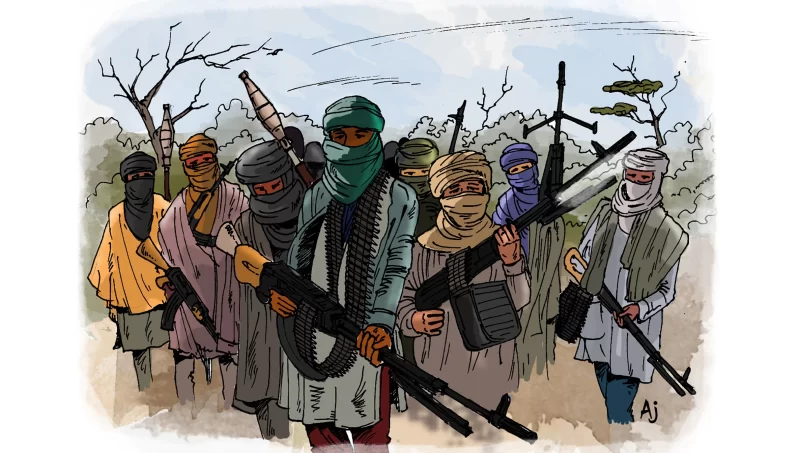
Perhaps nowhere is the impact more visible than in Nigeria’s security challenges. As Nuhu Ribadu, National Security Adviser, remarked, corruption has directly weakened institutional capacity—diverting funds for military hardware, undermining procurement processes and eroding public confidence. The result is a vicious cycle: poor service delivery fuels grievance, grievance fuels insecurity, and insecurity makes reform harder.
Despite a modest uptick in Nigeria’s ranking on the Transparency International Corruption Perceptions Index—moving from 145th to 140th in 2024—this improvement belies the depth of the problem. The country’s score remains far below the global average, underscoring how entrenched the challenge is.
In response, the federal government recently inaugurated a high-level committee to drive the National Anti‑Corruption Strategy (NACS) (2022-2026) and its monitoring and evaluation framework. But scepticism remains: without independent oversight, genuine transparency and political will, many fear the initiative will join the long list of reform efforts that stall.
What Nigeria needs now is a shift not only in policy but in culture. The Chatham House research emphasises the role of “integrity role-models” — individuals within institutions who demonstrate ethical behaviour, transparency and accountability despite pressures. If such change agents can be supported, the broader social norms of impunity and concealment might begin to unravel.
Ultimately, the crisis of trust in Nigeria is not just about numbers or corruption statistics—it is about the social contract. When citizens lose faith that the state works for them, not against them, the foundations of democracy and development begin to fray. Rebuilding that faith will require more than reforms; it will require visible change, consistent accountability and a collective commitment to a different way of doing public life in Nigeria.
Angelic Bitrus Yerima Student of mass communication Kashim Ibrahim University, Maiduguri