Health and Lifestyle
Nigeria’s Global Health Moment: Celebrating Talent, Inspiring Investment -By Patrick Iwelunmor
If Nigeria aligns its investments with its proven capacity, the results could be transformative. Its experts will not only shape global standards; they will anchor them at home. Its institutions will not just produce talent; they will retain and multiply it. And its health system will not merely respond to challenges; it will lead innovation.

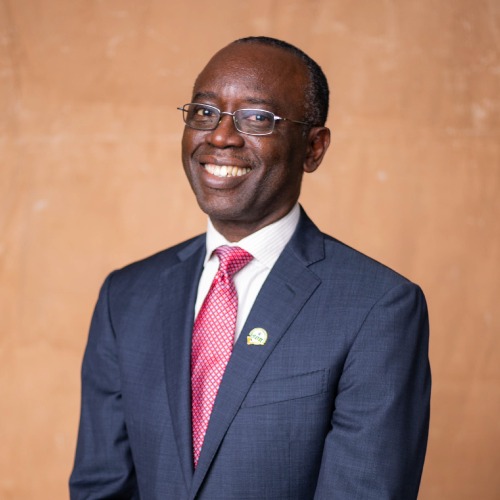
The appointment of Professor Olobayo Olufunsho Kunle to the World Health Organization Expert Group on the International Herbal Pharmacopoeia is more than a professional milestone. It is a moment of national significance. It affirms, once again, that Nigerian expertise is not only relevant but increasingly central to the conversations shaping global health.
Across international institutions, advisory panels, and research collaborations, Nigerian scientists and public health professionals are no longer peripheral voices. They are contributors, shapers, and, in many cases, leaders. Professor Kunle’s appointment simply brings into sharper focus a reality that has been building quietly over time. Nigeria is exporting not just people, but influence.
His career tells that story clearly. As a leading figure at the National Institute for Pharmaceutical Research and Development, he helped drive the development of NICOSAN, Nigeria’s first fully commercialised phytomedicine for sickle cell disease. That journey, from laboratory research to clinical validation and eventual commercialisation, remains one of the most compelling examples of what is possible when local knowledge meets scientific rigour. It demonstrated that innovation rooted in Nigerian realities can achieve global relevance.
His latest role at the global level, focused on standardising herbal medicines, is not accidental. It is the culmination of decades of work in phytomedicine, regulatory science, and pharmacopoeia development. But beyond the individual, it represents something larger. It is evidence that Nigerian expertise is trusted to help define standards that will guide healthcare systems across the world.
This is worth celebrating. Yet, celebration without reflection risks becoming complacency. Because behind this growing global recognition lies a persistent and uncomfortable contradiction. The same country whose experts are shaping international health frameworks continues to underinvest in the systems that produce them.
Nigeria’s health financing profile tells a sobering story. Total health expenditure hovers around 4 percent of GDP, below the global average of nearly 7 percent. Even more concerning is public sector commitment. Government health spending remains just over 4 percent of total government expenditure, far below the 15 percent benchmark agreed under the Abuja Declaration.
The consequences of this underinvestment are not abstract. They are visible in under-equipped laboratories, inconsistent research funding, and a pharmaceutical sector that struggles to scale despite clear potential. They are evident in a system where over 75 percent of health spending comes directly from individuals’ pockets, placing a heavy burden on households and limiting access to care.
This is the paradox Nigeria must confront. We are producing experts who shape global standards, yet we are not building a system that allows those standards to be developed, tested, and implemented at home. We celebrate international appointments, yet we underfund the institutions that make those appointments possible. We export excellence, but we do not sufficiently invest in retaining and multiplying it.
Professor Kunle’s appointment should therefore not be seen in isolation. It should be read as a signal. A signal of capacity. A signal of credibility. And more importantly, a signal of opportunity. Because the question is no longer whether Nigeria has the talent to compete globally. That question has been answered repeatedly. The real question is whether Nigeria is willing to invest in that talent as a strategic national asset.
The case for doing so is compelling, not just from a health perspective, but from an economic and developmental standpoint. A stronger health and pharmaceutical sector has the potential to drive industrial growth, create jobs, and reduce dependence on imported medicines. The COVID-19 pandemic made this painfully clear. Countries with local capacity responded faster, more effectively, and with greater autonomy.
Nigeria has the building blocks to do the same. It has institutions like NIPRD. It has a growing base of scientific expertise. It has a rich biodiversity that positions it uniquely in the global phytomedicine space. What it lacks is not potential, but sustained and strategic investment.
That investment must be deliberate. It must prioritise research infrastructure, support pharmaceutical manufacturing, and strengthen regulatory systems. It must move beyond episodic funding to long-term commitment. And it must recognise that healthcare is not just a social service, but a knowledge-driven sector with significant economic value.
There is also a narrative responsibility. Nations that lead in global health do not do so quietly. They amplify their achievements and connect individual success stories to a broader national vision. Professor Kunle’s appointment is not just about one man’s career. It is about what Nigeria represents in the global health ecosystem.
This is why this moment matters. It is a moment to celebrate, but also a moment to decide. To decide whether global recognition will remain symbolic, or whether it will be translated into tangible progress at home. To decide whether Nigeria will continue to be a source of expertise for others, or become a centre of excellence in its own right.
The stakes are high. A country that fails to invest in its health system does not just risk poor health outcomes. It risks losing the very capacity that could drive its transformation. It risks turning moments of pride into missed opportunities.
Nigeria’s growing presence in global health is not an accident. It is the result of years of intellectual labour, institutional effort, and individual dedication. But moments like this demand more than acknowledgement. They demand alignment.
If Nigeria aligns its investments with its proven capacity, the results could be transformative. Its experts will not only shape global standards; they will anchor them at home. Its institutions will not just produce talent; they will retain and multiply it. And its health system will not merely respond to challenges; it will lead innovation.
This is Nigeria’s global health moment. It is a moment to celebrate talent. But more importantly, it is a moment to invest in it.