Breaking News
Nomination Fees Debate Deepens as Chidoka Flags Threat to Democratic Inclusion
Chidoka warns rising nomination fees could price ordinary Nigerians out of politics, despite APC’s denial of viral 2027 figures.


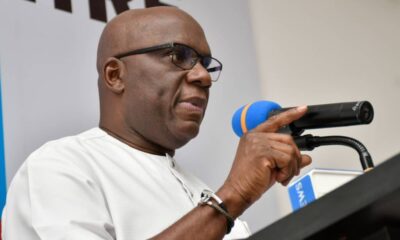
A fresh controversy over the cost of political participation has emerged in Nigeria, with former minister Osita Chidoka warning that rising nomination fees could limit access to elective offices.
The debate followed viral claims about proposed 2027 nomination form prices, which the All Progressives Congress (APC) has dismissed as false.
While acknowledging the party’s denial, Chidoka argued that the concern goes beyond any single report.
“The issue is not limited to one party,” he said, stressing that increasing costs across political parties are gradually excluding ordinary Nigerians from the political process.
The figures circulating online suggested fees of up to ₦200 million for presidential aspirants and tens of millions for other positions, prompting widespread reactions.
Chidoka highlighted the economic gap, noting that with a ₦70,000 minimum wage, most Nigerians cannot realistically afford to contest elections.
He warned that this could concentrate political power among a small, financially privileged group.
He also pointed out that nomination fees, if sustained at high levels, could generate enormous income for parties—potentially comparable to allocations in key sectors such as healthcare and education.
To address the issue, Chidoka proposed reforms including broader membership contributions to fund party activities, thereby lowering financial barriers for aspirants.
He compared Nigeria’s system with other democracies, where candidacy is often determined through internal party processes with fewer financial constraints.
Referencing past data, he noted that in 2022, the APC and Peoples Democratic Party (PDP) both set high nomination fees, indicating a long-standing trend.
Chidoka concluded that the issue transcends party lines and called for urgent reforms to ensure Nigeria’s democracy remains accessible, competitive, and inclusive.
Africans Angle News