Africa
Obasanjo’s Third Term Denial: A Revision of History That Cannot Stand -By Jeff Okoroafor
Obasanjo claims he never wanted a third term and challenges critics for proof. This op-ed delivers overwhelming evidence, from financial inducements to legislative pressure, that debunks his recent statement.

In a recent speech in Accra, former President Olusegun Obasanjo dared Nigerians to provide proof that he sought a constitutional amendment for a third term in office. He framed the allegation as a baseless rumor, claiming that achieving debt relief was a more difficult task and that he would have succeeded if he had truly wanted an extension. This challenge, however, flies in the face of well-documented history. A thorough examination of the empirical evidence—from legislative maneuvers to financial records and testimonies of key players—paints a starkly different picture: that of a calculated, high-stakes, and ultimately failed bid to prolong his presidency.
The genesis of the third-term agenda is often traced to the National Political Reform Conference (NPRC) convened by Obasanjo in 2005. While the conference’s official mandate was broad, a central, unstated objective emerged: to test the waters for a constitutional amendment to remove the two-term limit for presidents.
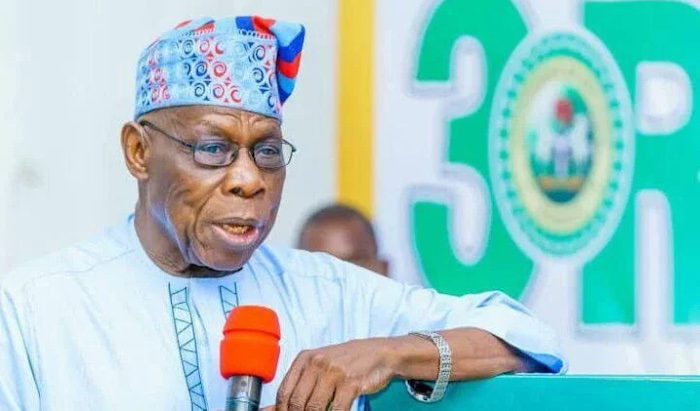
The controversy peaked when the conference’s Committee on Judiciary and Legal Matters, chaired by Justice Niki Tobi, presented a report that included a clause recommending a change to the tenure of the president. While the clause was controversially voted down within the committee and later at the plenary, its very insertion was widely perceived as a trial balloon launched by the presidency. The fact that such a pivotal recommendation found its way into the draft of a presidential committee is hardly coincidental; it suggests a coordinated effort from the top to initiate the conversation.
The most concrete evidence lies in the events of 2006 in the National Assembly. A controversial constitution amendment bill was introduced. While it bundled several amendments together, its most contentious provision was the one seeking to extend presidential tenure from two to three terms.
The push for this bill was characterized by intense pressure, financial inducement, and intimidation of legislators. It was an open secret in Abuja. Senators and members of the House of Representatives were subjected to immense pressure from the presidency to support the bill. The media was awash with reports of massive monetary offers made to lawmakers to secure their “aye” votes.
The campaign was so brazen that it galvanized a coalition of civil society groups, opposition parties, and, crucially, resistant lawmakers within his own party, the PDP. The bill was ultimately defeated on the floor of the Senate on May 16, 2006, in a dramatic voice vote where the “nays” overwhelmingly drowned out the “ayes.” This defeat was not due to a lack of trying; it was a result of a courageous rebellion against an executive overreach. To claim no involvement is to ignore the very public and brutal legislative battle that consumed the nation for months.
Obasanjo’s claim that “no Nigerian dead or alive” can say he told them of his desire is directly contradicted by the accounts of those who were at the heart of his government.
1. Senator Ken Nnamani: As the President of the Senate who presided over the defeat of the bill, Nnamani has been unequivocal. He has repeatedly detailed the immense pressure he and other senators faced from the presidency. In his memoir, Standing Strong, he chronicled the events, leaving no doubt that the third-term agenda was real and was being driven from the State House.
2. Alhaji Abubakar Atiku: Then-Vice President Atiku, who had fallen out with Obasanjo, became a focal point of the opposition to the term extension. He has consistently stated that the agenda was real and that it was the primary reason for the irreparable rift between them.
3. Numerous Legislators: Countless senators and representatives from that era, on and off the record, have confirmed the existence of the scheme. Their collective testimony forms a body of evidence that is impossible to dismiss merely as rumor.
Perhaps the most damning evidence against the claim that the president was unaware is the financial one. Investigations and widespread reports indicated that state resources were deployed in the push for the bill. The allegation was that huge sums of money were withdrawn from the Central Bank of Nigeria (CBN) under the guise of “security votes” or other opaque headings and funneled to legislators to secure their support.
While a direct, publicly available paper trail leading to Obasanjo’s desk is naturally elusive in such operations, the scale of the financial operation, which required executive authorization, points directly to the highest level of government. The Economic and Financial Crimes Commission (EFCC) under Nuhu Ribadu was also allegedly used to intimidate opposing lawmakers with threats of corruption investigations, a tactic that further implicates the executive arm.

President Obasanjo is correct on one point: he is not a fool. He is a master political strategist. This is precisely why the argument that “if I wanted it, I would have gotten it” rings hollow. The failure of the third-term bid was not due to a lack of effort or desire; it was a failure caused by the resilience of Nigeria’s democracy. A coalition of courageous lawmakers, a vigilant media, and a strong civil society pushed back against an executive power grab.
To now deny this well-chronicled chapter of our history is an attempt to rewrite it. The evidence is not hidden. It is in the archival footage of the NPRC and the National Assembly debates, in the memoirs of key protagonists, and in the living memory of the political class and informed citizens who witnessed it.
The former president’s legacy is complex and significant, encompassing both his achievements, like the debt relief he rightly cites, and his controversies. Owning all parts of that legacy, including the aggressive pursuit of a third term, is what true leadership and respect for history demand. Daring Nigerians for proof of an event that unfolded in the full glare of the public is not a challenge; it is a revision of history that the facts simply cannot support.
Jeff Okoroafor is a social accountability advocate and a political commentator focused on governance, accountability, and social justice in West Africa.