Politics
PDP And The Jinx Of Crisis Ahead Of Presidential Election -By Isaac Asabor
On the way forward for PDP, it can be suggested in this context that If the PDP is to remain relevant in Nigerian politics, it must address the underlying issues that have plagued it for years. Some key steps that need to be taken include that of ensuring that internal democracy exists in the party, even at it is expedient that zoning formula is respected. Also, strengthening conflict resolution mechanism in the party is crucial, particularly as the 2027 presidential election beckons.

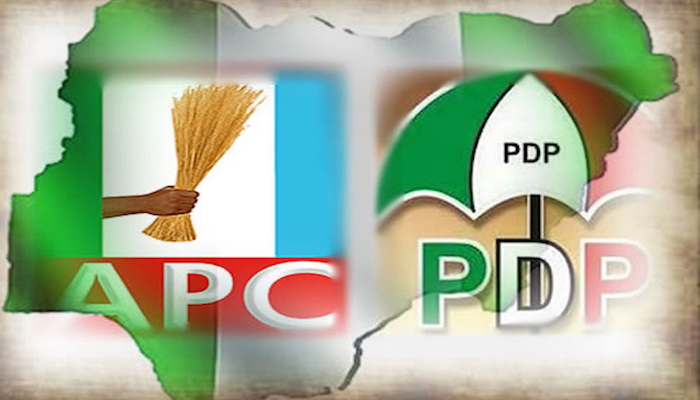
The Peoples Democratic Party (PDP), once the dominant force in Nigeria’s political landscape, has found itself embroiled in crisis after crisis, particularly in the lead-up to presidential elections. This recurring pattern raises a critical question: why does the party struggle to maintain internal cohesion when it matters most? To understand this persistent issue, one must examine the historical, structural, and political factors that contribute to PDP’s perennial pre-election turbulence.
Analyzing PDP’s internal crisis from historical perspective, it is germane to opine that since its formation in 1998 that the party has suffered a series of internal wrangling, often exacerbated by power struggles among its key stakeholders. The party, which once boasted of ruling Nigeria for 60 uninterrupted years, has seen itself fall from grace, largely due to its inability to manage internal disputes. A look at the past few presidential elections highlights the recurring nature of these conflicts:
Against the backdrop of the foregoing, it is expedient to recall that ahead of the 2007 presidential election that the battle for succession in view of President Olusegun Obasanjo’s exit from Aso Rock on the grounds of the expiration of his tenure, that a major crisis ensued within the party. In fact, the imposition of Umaru Musa Yar’Adua as the presidential candidate alienated many party members, leading to deep-seated resentment.
Ahead of the 2011 presidential election, after the unfortunate demise of Yar’Adua, the emergence of Goodluck Jonathan as the party’s flagbearer led to internal resistance, particularly from Northern politicians who felt it was their turn to produce a candidate.
In a similar vein, it is not a misnomer to opine that the internal crisis within the PDP in view of the 2015 presidential election, was one of the major reasons for its historic loss to the All Progressives Congress (APC). This came about as prominent party members, including former Vice President Atiku Abubakar and some state governors, defected to the APC, citing lack of internal democracy and impunity within the party.
Also, ahead of the 2019 presidential election, the party struggled with multiple defections and unresolved disputes over its leadership, leading to a weakened opposition against the APC’s Muhammadu Buhari.
Also ahead of the 2023 presidential election, the same pattern repeated itself when Atiku Abubakar’s candidacy was challenged by the G-5 governors, led by Governor Nyesom Wike, who felt the party had betrayed an agreement to rotate power to the South.
In fact, looking at the key factors fueling PDP’s crisis, the fact cannot be mistaken by that several factors contribute to the PDP’s perpetual state of crisis before every presidential election. These include a lack of internal democracy, zoning controversies, power struggles, and poor conflict resolution mechanisms.
Explanatorily put, one of the fundamental issues plaguing the PDP is the lack of internal democracy. This is as selection of candidates is often influenced by powerful party chieftains, leading to imposition rather than democratic primaries. This creates resentment among aspirants who feel sidelined and, in many cases, leads to mass defections. In fact, the failure to conduct free and fair primaries has consistently weakened the party’s ability to present a united front ahead of elections.
Concerning zoning controversies, it is expedient to recall in this context that the PDP initially operated on a zoning arrangement that allowed for the rotation of the presidency between the North and South. However, this principle has been violated multiple times, leading to conflicts. For instance, the decision to field Atiku Abubakar in 2023, despite growing calls for a Southern candidate, led to the rebellion of the G-5 governors. This violation of the zoning formula has been a recurring source of discord within the party.
Looking at the issue from another perspective, which is that of power struggles and godfatherism, it can be said that the PDP is often dominated by powerful political godfathers who control party structures at different levels. These godfathers seek to assert their influence by determining candidates, which leads to bitter rivalries. For example, the Wike-Atiku feud in 2023 was largely fueled by Wike’s perceived betrayal after supporting the party’s survival in previous elections. When these power struggles are not managed properly, they escalate into full-blown crises that weaken the party before elections.
In a similar vein, looking at the party’s perennial pre-election crisis looking from the perspective of weak conflict resolution mechanisms, it is germane to opine that unlike the APC, which has managed to paper over cracks within its ranks through strong party discipline, the PDP has struggled to effectively resolve disputes. Efforts at reconciliation are often half-hearted, leading to unresolved grievances that resurface at crucial moments. The inability of the party leadership to proactively address issues before they escalate has cost PDP dearly in multiple elections.
Other factors are incessant defections and lack of loyalty that characterized the party. This is as the PDP has suffered from a high rate of defections, especially in the months leading up to presidential elections. Many party members, feeling disenfranchised or sidelined, opt to switch allegiance to rival parties. In 2015, key PDP stalwarts defected to the APC, contributing to the party’s historic defeat. Similarly, in 2023, aggrieved members of the PDP openly worked against the party’s candidate, leading to internal sabotage.
On the impact of PDP’s crisis on Nigerian politics, the fact cannot be denied that the constant infighting within the PDP has broader implications for Nigeria’s democratic process. As the main opposition party, PDP’s instability affects the quality of political competition. This is because when the opposition is weak and fragmented, the ruling party faces little challenge, reducing accountability and deepening the culture of impunity in governance.
Moreover, PDP’s internal crisis has contributed to voter apathy. Many Nigerians, disillusioned by the party’s repeated failures to manage its affairs, have lost confidence in its ability to provide a viable alternative to the ruling APC. This has resulted in declining voter turnout and general disinterest in the political process.
On the way forward for PDP, it can be suggested in this context that If the PDP is to remain relevant in Nigerian politics, it must address the underlying issues that have plagued it for years. Some key steps that need to be taken include that of ensuring that internal democracy exists in the party, even at it is expedient that zoning formula is respected. Also, strengthening conflict resolution mechanism in the party is crucial, particularly as the 2027 presidential election beckons.
Explanatorily put, the party must embrace transparency in its candidate selection process to foster inclusivity and prevent imposition, and should strictly adhere to its zoning agreement and avoid last-minute alterations that breed discontent.
In a similar vein, the party must develop proactive measures to address disputes before they escalate into major crises, and in the same vein encourage party loyalty. In fact, the PDP should work towards creating a sense of belonging among its members to prevent defections and disloyalty.
Also, there is the need for building strong leadership. This is as a visionary and strong leadership is needed to steer the party away from constant crisis towards stability.
In fact, the PDP’s repeated crises ahead of presidential elections are not coincidental but rather the result of deep-rooted structural and political issues. If the p arty hopes to regain power at the national level, it must undertake serious reforms to address internal democracy, zoning disputes, power struggles, and conflict resolution. Without these changes, the PDP risks remaining in perpetual crisis, handing continuous advantage to its political rivals. The party’s future depends on its ability to evolve beyond these self-inflicted wounds and offer Nigerians a credible alternative in future elections.