Forgotten Dairies
Peter Obi: Nigeria’s Organic Kingmaker Amid Partisan Godfathers -By Isaac Asabor
Their calculations were understandable. Obi’s political brand, the loyalty of the Obidient movement, and his unrivaled ability to mobilize young voters had become electoral assets capable of transforming even politically obscure actors into viable contenders. For many politicians, merely sharing a political platform with Obi appeared sufficient to increase visibility, relevance, and electoral prospects.

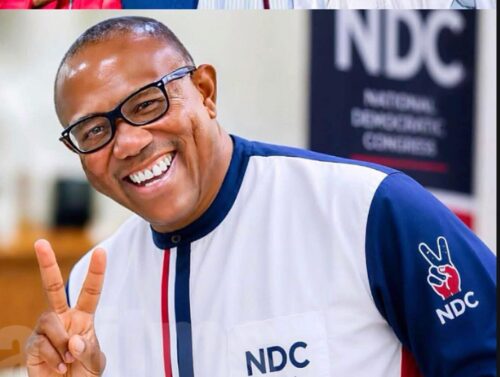
In a political landscape historically dominated by partisan godfathers, money-driven alliances, and entrenched political machinery, Peter Obi has emerged as an entirely different force, an organic kingmaker whose influence is rooted not in coercion or patronage, but in credibility, public trust, and mass appeal.
There is no denying the fact that Obi carries with him a rare magnetic aura that is difficult to define yet impossible to ignore. He possesses a quiet but commanding presence that attracts people not through empty rhetoric, political drama, or theatrical populism, but through the sheer weight of his perceived integrity, competence, and calm disposition. In a nation where loudness often substitutes for leadership, Obi’s measured conviction cuts through the noise with unusual clarity. Nigerians listen to him not because he shouts the loudest, but because his words often appear deliberate, disciplined, and grounded in conviction.
What distinguishes Obi from the traditional political elite is the consistency between his message and his personal image. His legendary frugality and his widely celebrated record as former governor of Anambra State have elevated him beyond ordinary partisan politics into a symbol of responsible leadership. Across tribal, religious, and regional lines, many Nigerians see in him a reflection of what governance could and should look like: prudent, accountable, people-oriented, and transparent.
It is precisely this perception that transformed admiration for Obi into widespread political devotion, especially among millions of young Nigerians disillusioned by decades of recycled leadership and broken promises. For many citizens, Obi became more than a presidential candidate during the 2023 elections; he became an embodiment of hope and an expression of collective frustration against an establishment seen as disconnected from the suffering of ordinary people.
Without a doubt, Obi’s charisma, discipline, and perceived incorruptibility were central to the astonishing rise of the Labour Party in the 2023 general elections. Before his arrival, the party existed largely at the margins of national politics with little electoral significance. Yet, under the force of Obi’s popularity and the emergence of the Obidient movement, the Labour Party suddenly transformed into a formidable national platform capable of challenging deeply entrenched political structures.
The Obidient movement itself was not merely a political campaign. It evolved into a social awakening and a cultural movement driven by citizens yearning for departure from the old political order. Obi’s appeal transcended conventional party loyalty. His supporters rallied not necessarily because of the Labour Party as an institution, but because they identified personally with his values, message, and leadership style.
That phenomenon produced one of the most remarkable political developments in Nigeria’s democratic history. Across several constituencies in the country, relatively unknown candidates rode on Obi’s popularity and the Obidient wave to secure shocking electoral victories against long-established political heavyweights who had previously appeared untouchable.
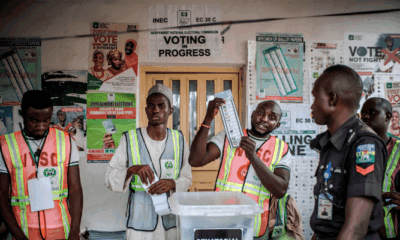
Evidentially put, Nigerians cannot forget in hurry on how great jubilation erupted in February 2023 amongst commercial. motorcyclists (Okada riders) in Southgern Kaduna when their colleague and then House of Representatives candidate of the Labour Party (LP), Mr Donatus Mathew was declared winner of the House of Representatives seat for Kaura Federal constituency of Kaduna State.
Many of these candidates who rode on the wings of Obi’s charisma had little name recognition, limited financial resources, and weak political structures prior to the elections. Yet, association with Obi and the Labour Party became sufficient political capital to galvanize voters seeking change. In many cases, voters transferred their confidence in Obi directly to candidates they barely knew simply because those candidates represented the movement he inspired. That is the clearest evidence that Obi has evolved into an organic kingmaker.
Unlike the traditional Nigerian political godfather whose influence depends on financial patronage, political intimidation, state-backed structures, and transactional loyalty, Obi’s influence derives largely from public enthusiasm and emotional connection with the electorate. His political strength is not manufactured in smoky backroom negotiations or sustained through coercive structures. It is sustained by millions of ordinary Nigerians who genuinely believe in the possibility of a different political culture.
This distinction is crucial because it represents a significant shift in Nigeria’s democratic evolution. For decades, political relevance in Nigeria has often depended on proximity to wealthy godfathers capable of imposing candidates on parties and electorates alike. Obi, however, has demonstrated that public trust itself can become a powerful political structure.
Perhaps nothing illustrates Obi’s kingmaker status more clearly than the political calculations that have surrounded his recent party movements. A number of ambitious politicians reportedly positioned themselves strategically within the African Democratic Congress (ADC), believing that Obi’s presence in the party would dramatically enhance their electoral fortunes ahead of future elections.
Their calculations were understandable. Obi’s political brand, the loyalty of the Obidient movement, and his unrivaled ability to mobilize young voters had become electoral assets capable of transforming even politically obscure actors into viable contenders. For many politicians, merely sharing a political platform with Obi appeared sufficient to increase visibility, relevance, and electoral prospects.
However, when Obi unexpectedly aligned himself with the Nigeria Democratic Coalition (NDC) instead, many of those political hopefuls were left stranded and disappointed. The anticipated political momentum they hoped to inherit vanished almost immediately, forcing many to reconsider their strategies or confront the harsh reality that without Obi’s influence, the platform they had embraced suddenly appeared far less attractive.
That episode revealed an uncomfortable but undeniable truth within Nigeria’s political space: Peter Obi’s political capital now extends beyond personal ambition. His presence can energize parties, reshape alliances, influence voter behavior, and redefine electoral calculations nationwide.
Whether one supports him or opposes him politically, it is increasingly difficult to deny the transformational impact Obi has had on Nigerian politics. He has altered the national conversation about leadership, governance, and political participation. More importantly, he has shown that political influence can emerge organically from public credibility rather than solely from entrenched partisan structures.
In the midst of Nigeria’s enduring culture of political godfatherism, Peter Obi stands out as something rare, an organic kingmaker powered not by fear or patronage, but by belief. And in a country desperately searching for a new democratic direction, that may well be his most enduring political legacy.