Africa
Power Sector: The Watts That Weren’t! -By Abiodun KOMOLAFE
The ministry’s new role is to steward energy as a public good, ensuring it serves social justice and economic empowerment. By focusing on transparency, collaboration, and long-term vision, Nigeria’s Ministry of Power can uphold high ideals of public service. With the right leadership and clear purpose, the nation can meet its energy needs and fulfill its collective potential.

There was a delusion that the privatization of the power sector – an existing, dilapidated monopoly – would be as straightforward and eventually beneficial as the transformative liberalization of the telecommunications industry. What we are now witnessing is the shattering of that illusion, with the critical failure of the electricity sector. The entire framework was rushed, ill-conceived, and frankly, a disgrace to Nigeria.
As with many things in Nigeria, a political elite, in a moment of cynical opportunism and historical amnesia, miscalculated that the success of the telecommunications sector would be effortlessly replicated. This was an almost ridiculously naive assumption, because the telecommunications industry was a blank slate built from scratch on new technology and a fierce, consumer-driven competitive environment.
In contradistinction, those who bought into the so-called electricity privatization were fixated on creating monopolies and fiefdoms, where the consumer counted for nothing. This was the direct opposite of the competition-driven, marketing-savvy telecommunications framework. The outcome, of course, was a total disaster and the rest is history! Without electricity, no country can develop its basic industries or a continuously expanding manufacturing base to create jobs.
What’s now to be done? A more fundamental question is whether the nation possesses the intellectual humility to admit that an urgent, comprehensive reworking of the process is needed. The concept of privatizing the Transmission Company of Nigeria (TCN) is a final, desperate plea to private capital to fix what political incompetence has broken. Foreign and local investors should be encouraged to take the driving seat. There’s no alternative to this because a robust transmission network is the critical, missing link between power generation and distribution.
The concept of a centralized national grid should be replaced by a decentralized system. As then-presidential candidate Barack Obama pointed out, even in the United States, the idea of a single national grid is outdated. Under a competitive framework, Nigeria’s six geopolitical zones should have their own independent grids.
Furthermore, major commercial hubs such as Lagos, Kano, Abuja, and Rivers should have separate, self-contained grids. This is simply common sense! In the Year of our Lord 2025, the persistence of a single national grid reflects the self-defeating mindset of a quasi-federal system. A proper federal system would have abandoned this outdated concept decades ago.
The Federal Government’s decision to empower states on the concurrent list to determine their own electricity framework is right. This approach is consistent with practices in countries like India, Canada, and Brazil.
The creation of the Nigerian Electricity Regulatory Commission (NERC) raises a critical question: should Nigeria even have a Ministry of Power? A similar argument could be made regarding the Ministry of Communications, especially as the National Communications Commission (NCC) is in place. Ditto for the Ministry of Agriculture and Food Security.
If the Ministry of Power must exist, its primary role should be to coordinate the sector’s liberalization and competitive framework. This would involve collaborating with the Ministers of Finance and Industry, Trade, and Investment to develop robust regulations and secure the necessary funding to advance the renewable energy sector. The core focus of the ministry should therefore be to facilitate real competition by breaking up the transmission of power.
Nigeria must go all-in on renewable energy. It’s unacceptable that a country with significant lithium deposits in Nasarawa State is not negotiating to develop a massive, value-added, lithium-powered factory base. Unless we break from our fixation on fossil fuels, our efforts will be in vain.
A redefined Ministry of Power would have significant implications for policy and practice, demanding a shift from a traditional, centralized model to one that is more decentralized, agile, and market-oriented. Policymakers must focus on creating a robust regulatory framework that encourages private sector participation, renewable energy integration, and smart grid development. This involves establishing clear and transparent rules for licensing, tariff setting, and grid access, which would attract essential investment and innovation. For instance, policies could incentivize the adoption of distributed energy resources like rooftop solar panels and micro-grids.
Uruguay achieved 91% of electricity generation from renewables in 2022, transitioning from fossil fuel dependence. Morocco leveraged solar energy with the Noor-Ouarzazate complex, one of the world’s largest concentrated solar farms.
Kenya developed the Lake Turkana Wind Power Project, Africa’s largest wind farm, contributing significantly to renewable energy. Iceland generates almost 100% of electricity from renewables (hydropower and geothermal), with geothermal power heating most homes. With the right expertise and needed political will, we can say it’s better late than never!
A massive breakthrough is possible if the government can secure the funds for wind turbines along Nigeria’s coasts, a sector with significant prospects. Therefore, President Bola Tinubu should instruct his minister to establish a competitive framework and create an annual fighting fund of at least one billion dollars to finance private sector-driven renewable energy projects.
Public-private partnerships can also help share costs and risks associated with these reforms. Enhancing technical expertise through capacity building and training is essential for managing decentralized grids and integrating renewables. Implementing pilot projects and phased rollout can help test these changes before a nationwide implementation. This will go a long way in minimizing potential disruptions. With careful planning and stakeholder engagement, smooth transitions can ensure improved efficiency, sustainability, and reliability in power supply.
The ministry would need to champion modern technologies like advanced metering infrastructure and predictive maintenance analytics. The ultimate challenge is to transform the abstract concept of power into a tangible force for good, moving from the ‘what is’ of a centralized system to the ‘what can be’ of a decentralized, democratized and sustainable energy future.
Obtaining a meter shouldn’t be an issue. After all, people have been used to buying telephone handsets and gas cylinders anywhere they wish for decades. Without a competitive framework, the electricity sector – and by extension, Nigeria itself – will continue to struggle.
Talk about estimated billing and one would conjure images of a distant, ineffectual bureaucracy – a calculated exploitation in the political economy. It’s a daily reality where utility companies’ administrative convenience acts as a regressive tax, stunting small businesses’ growth. The system asserts that a provider’s algorithm outweighs a consumer’s meter, with tacit consent from a political system that treats accountability as a foreign concept.
Epileptic electricity supply is a profound issue of distributive justice, as it disproportionately affects the poor who cannot afford alternatives, thereby limiting their human flourishing and freedom. This raises moral questions about the state’s obligation to provide a reliable public good to all citizens, fulfilling its part of the social contract.
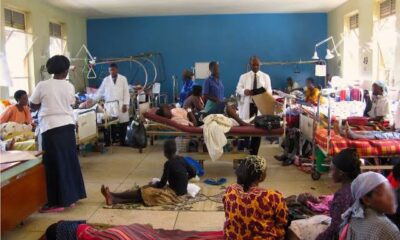
In Nigeria, this translates into concrete hardships: small-scale entrepreneurs are forced to use expensive generators, which increases costs and often leads to business failure, trapping them in poverty. Socially, it limits access to essential services like education and healthcare, as students cannot study at night and hospitals struggle to power critical equipment. Besides, this unreliability breeds corruption and institutional decay which perpetuate a vicious cycle of inequality and poverty.
The ministry’s new role is to steward energy as a public good, ensuring it serves social justice and economic empowerment. By focusing on transparency, collaboration, and long-term vision, Nigeria’s Ministry of Power can uphold high ideals of public service. With the right leadership and clear purpose, the nation can meet its energy needs and fulfill its collective potential.
May the Lamb of God, who takes away the sin of the world, grant us peace in Nigeria!
*KOMOLAFE wrote from Ijebu-Jesa, Osun State, Nigeria (ijebujesa@yahoo.co.uk; 08033614419 – SMS only)