
Africa
Rivers’ Political Crisis And The Tower Of Babel: When Lawmakers Speak Different Languages -By Isaac Asabor
The Tower of Babel was abandoned, unfinished and forgotten, because its builders lost the ability to move together. Rivers’ impeachment plot is heading the same way, not with a dramatic collapse, but with quiet withdrawals, awkward explanations, and a growing recognition that the project was flawed from the start.

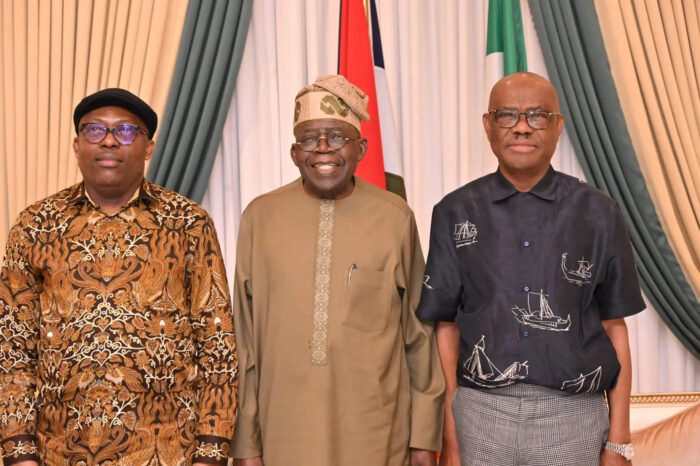
It is no more news that Rivers State is once again trapped in a political crisis of its own making, one that did not erupt overnight but was carefully assembled, loudly announced, and then quietly began to fall apart. What was projected as a unified, unstoppable impeachment move against Governor Siminalayi Fubara is now revealing itself as a fractured power play riddled with doubt, fear, and conflicting interests. The most telling evidence is not in court filings or official statements, but in the steady withdrawal of lawmakers who were once counted as foot soldiers of the plot.
Without a doubt, this moment finds a fitting parallel in the biblical story of the Tower of Babel. In Genesis, the builders of Babel were confident. They had numbers, coordination, and ambition. They spoke one language and believed nothing could stop them from reaching the heavens. Nevertheless, their unity was not grounded in righteousness or humility; it was driven by arrogance and the desire to dominate. The collapse did not come through violence or external attack. Instead, confusion set in. The builders began to speak different languages, lost the ability to coordinate, and the grand project died under the weight of its own contradictions. That is precisely the stage Rivers politics has entered.
At the height of the impeachment drumbeat, 26, then 27 lawmakers were said to have signed a notice of misconduct against Governor Fubara. The impression created was deliberate: the governor was isolated, overwhelmed, and politically finished. The House of Assembly was presented as speaking with one voice.
Contrary to perceived unity of the lawmakers against Fubara, the backing out of Sylvanus Enyinna Nwankwo, Peter Abbey, Barile Nwakoh, and Emilia Amadi, have publicly pulled out of the impeachment camp widely linked to former governor and current FCT Minister, Nyesom Wike. Their withdrawal has reduced the bloc of lawmakers to 23 and, more importantly, exposed the absence of genuine consensus behind the impeachment move.
Sylvanus Nwankwo, the Minority Leader of the Assembly, alongside Peter Abbey of Degema Constituency, led the first retreat. In a widely circulated video and excerpts aired by Rivers State Television, they urged their colleagues to exercise restraint, prioritize dialogue, and allow a cooling-off period in the interest of peace and stability. They spoke of wisdom and truth prevailing over tension and brinkmanship. Notably, they avoided passionately defending impeachment or insisting on the governor’s removal. In political language, that omission speaks volumes.
Within 24 hours, two other lawmakers, Barile Nwakoh of Khana Constituency I and Emilia Amadi of Obio/Akpor Constituency II openly distanced themselves from what they described as an “illegal impeachment plot.” They went further by admitting that an “authority above” had intervened to stop the process, an admission that stripped the exercise of any pretence of legislative independence. At that point, the impeachment effort stopped speaking one language.
Some lawmakers were talking about constitutional breaches. Others were talking about peace and restraint. Others were pointing to external authority and intervention. Once a political bloc reaches that stage, it has already lost coherence. Babel has set in.
This crisis did not emerge in a vacuum. The Rivers House of Assembly has been fractured ever since the fallout between Governor Fubara and his political benefactor-turned-adversary, Nyesom Wike. What should have been a routine transition from godfather to successor degenerated into a prolonged struggle for relevance and control. Governance became secondary. Power became the objective.
Impeachment, in that context, was never about accountability alone. It was a weapon, meant to discipline, intimidate, and possibly remove a governor who refused to remain politically subordinate. That is why the process has been pursued with such urgency and such disregard for optics, legality, and public sentiment. However, Rivers State has been here before, and the memory is fresh.
Previous impeachment attempts against Fubara plunged the state into chaos, split the legislature into rival camps, and paralysed governance. The crisis escalated to the point where President Bola Tinubu declared a six-month state of emergency, suspending the governor, his deputy, and the lawmakers themselves. That intervention was a national embarrassment for a strategic oil-producing state. Lawmakers do not forget such moments easily.
The current withdrawals signal that some legislators are no longer willing to gamble their political futures on another reckless experiment. When lawmakers begin to publicly appeal for restraint, dialogue, and peace, it is not because they suddenly discovered statesmanship. It is because the cost of proceeding has become clearer than the benefit. This is where the Tower of Babel analogy cuts deepest.
The builders failed not because they lacked manpower, but because their unity was artificial. It depended on everyone submitting to a single ambition without questioning its purpose. Once confusion entered, once people began to reassess motives and consequences, the project collapsed naturally.
The same dynamic is now at work in Rivers. The impeachment camp is no longer united by purpose. It is splintered by fear, legal uncertainty, public backlash, and the realization that borrowed power is unreliable power. Lawmakers who once marched confidently are now hedging, retreating, or going silent.
Crucially, this crisis should not be misread as a sign that Governor Fubara is on the brink of removal. On the contrary, the defections point in the opposite direction. Impeachment is not succeeding; it is unravelling. The process lacks moral authority, procedural clarity, and political consensus. Without these, impeachment becomes noise, loud, disruptive, but ultimately ineffective.
What remains dangerous, however, is the lingering instability. Rivers State cannot afford perpetual elite warfare disguised as legislative oversight. Each failed power play weakens institutions, erodes public trust, and deepens cynicism about democracy. The state’s development challenges—security, infrastructure, youth unemployment—are sidelined while political actors fight over supremacy.
The lawmakers who have withdrawn have, perhaps unintentionally, exposed the central truth of this crisis: Rivers does not suffer from a lack of power blocs; it suffers from too many power blocs speaking different languages and pursuing incompatible interests.
Until that reality is confronted honestly, the state will continue to oscillate between manufactured crises and fragile truces.
The Tower of Babel was abandoned, unfinished and forgotten, because its builders lost the ability to move together. Rivers’ impeachment plot is heading the same way, not with a dramatic collapse, but with quiet withdrawals, awkward explanations, and a growing recognition that the project was flawed from the start.
In the end, this crisis will not be remembered for removing a governor. It will be remembered as a moment when power overreached, unity fractured, and a political bloc discovered, too late, that speaking loudly is not the same as speaking with one voice.




















![Human rights groups are concerned about further arrests amid continuing raids in the occupied West Bank [File: Jaafar Ashtiyeh/AFP]](https://www.africansangle.com/wp-content/uploads/2023/10/Human-rights-groups-are-concerned-about-further-arrests-amid-continuing-raids-in-the-occupied-West-Bank.webp)