
Africa
Shockwave in Tehran: The Death of Iran’s Leader and the Collapse of Regional Order -By Fransiscus Nanga Roka, Yovita Arie Mangesti
A diplomatic crisis involving international agencies, which must balance their desire for peace against geopolitical rivalries.In the short term, the Middle East is on the eve of a great upheaval. Diplomacy can fail in just a single link and cause predicament to carry over from generation after generation throughout huge stretches of time: the little strike that caused the war.

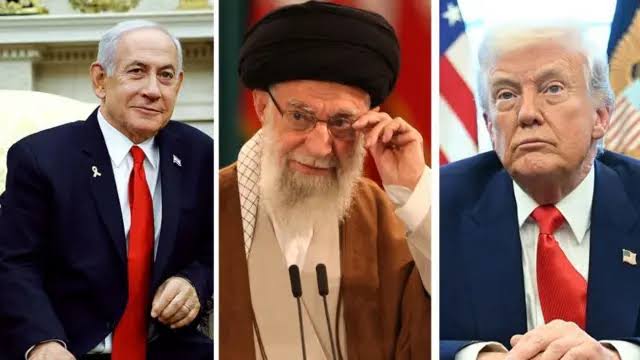
Supreme Leader Ayatollah Ali Khamenei’s assassination in a joint American-Israeli military strike is one of the most traumatic geopolitical crises to occur in the modern Middle East, shaking Tehran and causing regional instability while challenging international order from after World War II.
On 28 February 2026, under the operational name Operation Epic Fury, joint U.S.-Israeli forces launched a series of precision missile strikes on Iran’s capital and other important military and government targets—as well as waves more from the air. Among those reported to be killed was Ayatollah Ali Khamenei, who had for more than three and a half decades dominated Iranian politics as supreme leader. His death along with that of several close family members and senior military officers would later be confirmed by Iranian state media.
Now foreign forces have taken out sovereignty of individual states with impunity. In the past there were deterrence mechanisms that limited direct military clashes in todays world,e.g. Isreal’s control is not an accident artistically; it is a complete stratagem. When Khamenei was killed, it wasn’t just a strike at the tactical level; he had the whole structure of Iran’s theocratic government lodged in his person and voice. Killing him was strategic decapitation of Iran’s top religious authorities. It was also an audacious act under an internationally recognized legitimate government.
Immediate Fallout: military escalation and human costs
The initial military ripple effect was as fast as lightning. Iran retaliated with rocket and drone attacks, targeting Israeli towns where people live or U.S. military bases in the Persian Gulf along with power grids across many of its neighbours. The death toll from attacks – offensive and retaliatory — exact on civilians is still being counted but initial reports suggest numerous fatal and serious injuries, including strikes on schools and residential areas.
In towns and villages throughout Iran, people are still haunted by the scenes of death and destruction that have become all too familiar over nearly a decade of war involving other Muslim countries as well as just their own.Iranians, as they mourn their leader, feel deeply the vacuum of power left by his abrupt departure. There will be no special blessings for any particular faction among the multitude competing to fill it. The clergy is in retreat, the Revolutionary Guard forces are rising up and certain of them have already come out in opposition against any more admit adult education or enlightenment. Whence, inventing policies till now almost unimaginable among their more high-ranking colleagues lends them both support toward leading off altogether and personal ambition close at hand if things go well but remote if not so they can still try later for whatever comes next.The death of Khamenei has upset the fragile balance of power in the Middle East. For years, regional strategy by Iran has operated via proxy alliances and by asymmetrical warfare, with a portion of this spent off on keeping Syria war-torn Hezbollah for example at arm’s length but doing so from a safe distance to also throw its weight around in Lebanon. Now apart from scattered decisions to kill wrong targets or start politically motivated violence—which gets them so little respect in even their own circles as an indicator of internal decay—this policy is shot to pieces. The quick result of all these changes is that, with its highest leader gone and other heavy-hitting men broken, Iran’s ability to extend its reach is now centralized yet more strained if not decentralized entirely. But this very absence of a coordinating force will also strip down other constraints within the country itself. Local commanders may in the future take conflict up a level quite on their own initiative.
A BREAKDOWN OF REGIONAL ORDER
The assassination of Khamenei has thrown the delicate balance of power in the Middle East out of kilter. Alongside its longer-term aim of revolutionising international order, Iran’s regional strategy in recent years has largely been based on both proxy alliances and using careful as well as forceful tactics to deter predators–techniques which range from supplying other groups with equipment so they avoid open battle (Iraq and Syria), or subordinating them altogether for a time by cutting off their means of living (Palestinian Territories). With Khamenei dead, the upshot is that although Tehran’s capacity to project power and coordinate its proxy networks out to allies becomes weaker, at the same time a breaking down of centralized command is not bad for those on the ground.177 Neighbouring states, already split by ethnic and political lines, now feel greater insecurity than ever. The Gulf Sunni monarchies view Western military intervention as a barrier to Iran’s influence. In contrast, states like Iraq and Lebanon face for themselves new or intensified risks of violence among all manner. The absence of an obvious successor to Khamenei radically increases the chances that regional conflicts will spill into open war, bringing in actors from Turkey through Saudi Arabia on down into Jordan.
This crisis is also grounds to review the international law and territorial sovereignty principles. To kill a head of state in office, as the U.S. and Israel have done, will set a contentious precedent. Although justified in terms of pre-emptive self-defense by Washington and Tel Aviv, there are those who argue that it violated the basic principles of the United Nations charter and introduced a precedent under which powerful states normalize targeted assassinations of foreign leaders.If Iran’s UN representative had his way, the attacks would be called “crimes against humanity.” Special meetings are being convened by the Security Council as the destroyed countries of Asia admit that they, too, are affected by the arms control crisis. The global market for oil and natural gas—particularly sensitive to instability in the Persian Gulf—has been twitching since shipments were briefly interrupted. Here, it is apparent that disputes elsewhere in today’s world bring economic consequences that are global in nature: all it takes is an accidental slap to the head to spawn even greater agony to someone well inside his living quarters.What Next?
The post-Khamenei order is likely to be dominated by three overlapping themes:
Domestic upheaval in Iran, as interest groups compete for legitimacy amid public fatigue and economic misfortune;
Growing regional strife in which players playing proxy roles begin to move into actual combat;
A diplomatic crisis involving international agencies, which must balance their desire for peace against geopolitical rivalries.In the short term, the Middle East is on the eve of a great upheaval. Diplomacy can fail in just a single link and cause predicament to carry over from generation after generation throughout huge stretches of time: the little strike that caused the war.
The impact of Khamenei’s death on the international order
It was because the order was already faltering that we witnessed the shock wave produced by Khamenei ‘s death threaten to destroy it.


















You must be logged in to post a comment Login