
Global Issues
Russia Struggling to Sustain its Economic Sovereignty Despite Geopolitical Challenges -By Kestér Kenn Klomegâh
It is no exaggeration to say that the race for sovereignty has begun–and it is gaining momentum. It is about the quality of the state, the economy, and society. Sovereignty means being stronger and, smarter–managing resources more precisely and investing more effectively, including in technological development. Therefore, Russia’s position in the global economic system and its claim to global leadership depend on its ability to ensure its own sovereignty.

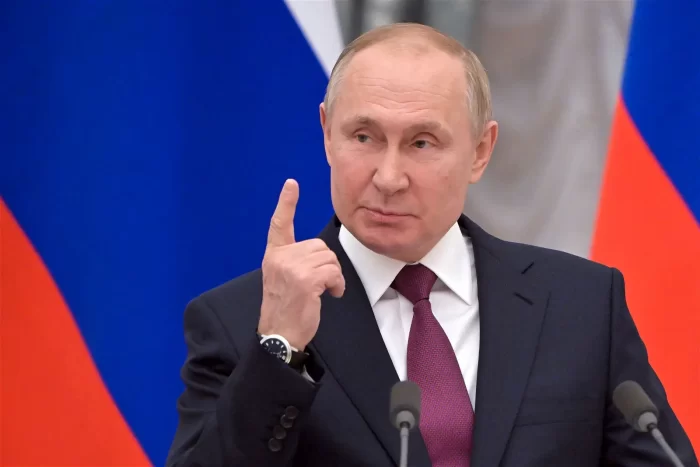
More than a quarter of a century has passed since the unexpected collapse of the Soviet Union with its centralised economy. And Russia has been experiencing a multitude of challenges, transiting to a liberalised system. While ultimately aiming at strengthening its economic sovereignty, it has adopted several steps that characterise largely the private participation in its economic system. Here are a few distinctive takeaways:
*Russia’s economy has shown unexpected resilience and growth since the 2022 Ukraine operation, focusing on domestic self-sufficiency, food security, commodity production, and price controls to mitigate sanctions impact.
*Key institutions like the Chamber of Commerce and Industry and the Russian Export Centre are actively supporting the economy through regional business support, international partnerships (especially with the Global South), and promoting non-resource exports (up 11% last year) and brands via the “Made in Russia” initiative.
*Russia views current global changes as opportunities rather than just challenges, aiming to build its own technological solutions, financial institutions, and platforms, while expanding partnerships and launching a new investment cycle to sustain growth and strengthen sovereignty in a multipolar world.
—
A cursory glimpse into the most extensive package of sanctions by United States and Europe has rather driven Russia’s economy, steadily transforming its agriculture and industry. Russia’s economy is growing at a rate unexpected during the period before the start of the ‘special military operation’ in neighboring Ukraine late February 2022. Since the start of the military crisis, Russia has, at the same time, adopted comprehensive measures guiding production of commodities, controlling domestic prices, and other steps, including the easing sanctions impact on the population. Ultimately, it headways to attain domestic self-sufficiency and maintain food security.
From the standpoint of the Kremlin, the guiding principle is to sustain the level of cautious optimism, and stay focused. That is the main significant factor as it moves on with its economic plan and to maintain internal security. While acknowledging the emerging challenges, Russian President Vladimir Putin, expressed the wish that within the state structure, institutions and organisations implement the economic objectives set out by the executive organ. The Chamber of Commerce and Industry system, for instance, has established branches in a number of municipalities across Russia’s regions, and today it operates in 350 locations throughout the country. It aims at ensuring active operations as close as possible with entrepreneurs.
Today, the entire system is working to support the special military operation. It involves in providing assistance to people from regions who are participating on the ground. They help organise convoys sent from Russia’s regions and work directly with local communities to address requests for specific equipment, uniforms and other supplies, according to Kremlin reports.
Over the past year – and perhaps for a longer period – efforts, support for children, have been focused primarily on providing assistance to the Kursk, Belgorod and Bryansk regions. The Yevgeny Primakov Foundation for Assistance to Children was established by Yevgeny Primakov, and has helped with funds, collected from companies, individual entrepreneurs, and other sources.
Taking into account the geopolitical challenges, the Chamber supports Russia’s economy through international collaboration and cooperation with countries in the Global South. It has established business councils with 76 countries. In particular, cooperation with countries of the Global South has intensified, intended to support economic activities and seek to make the fullest possible use of this network.
Targeting new heights
Perhaps, in a diverse economic dimension, there is also the Russian Export Centre (REC), playing admirable economic and trade roles, connecting entrepreneurship with friendly countries. In spite of the objective difficulties facing Russian exporters, REC’s estimated volume of non-resource non-energy exports increased by 9 percent in 2025, compared to 2024. That was a considerable amount.
Nevertheless, one fundamental way Russia’s image could be consolidated is to strategic promote its brands in foreign markets. It has to be admitted that in the first place, no country can be successful on the international stage without maintaining a strong position in the sphere of non-resource export. Today, we can see that a tough competition is unfolding for economic influence and leadership, and non-resource export is an instrument of international cooperation and a means of creating stable partnerships and alliances.
Second, export–both resource and non-resource, amid slowing economic growth is also a means of stabilising the situation and resuming economic growth, because this implies additional markets that bring revenues and tax deductions, prevent lay-offs and help preserve jobs and even create new ones.
As rivalry and competition intensifies, geopolitical opponents have been imposing sanctions against Russian exports since 2022, trying to push it from foreign markets as much as possible and hence weaken Russia’s position economically. But Russia has fundamentally achieved its key goal, which is to quickly shift its focus towards the friendly markets. In the end, it has thus maintained export volumes and reached a stage of sustainable growth. Last year, Russia’s non-resource exports increased by 11 percent, mechanical engineering exports by 28 percent, and the share of friendly countries in structure has reached 86 percent, according to reports from REC.
Worthy to note here that REC works within the development framework set by the government cabinet and the current priority is to attain national development goals, that is to increase exports by two-thirds by 2030, as compared to 2023.
The Russian Export Centre is consistently addressing the trade and related-economic challenges as a result of the rapidly changing global situation. Traditionally REC has to confront the systemic task which involves identifying the export potential, outline possible markets and and thereby expanding collaborating and cooperation. This is precisely the objective of “Made in Russia” programme: a comprehensive set of initiatives aimed at building a strong demand for Russian-made goods. Promoting Russian brands.
First, to establish a permanent presence for Russian products on foreign markets by promoting them through wholesale distribution channels, concluding export agreements with distributors, and developing a network of “Made in Russia” retail stores offering Russian products. This retail network is most extensively developed in China.
Second, to promote Russian products through e-commerce channels, including with the support of local bloggers. REC has launched 50 online stores of Russian products under the “Made in Russia” umbrella brand on 21 major international e-commerce platforms. Russia uses own online platforms, but in many markets consumers primarily shop through their established local e-commerce marketplaces. In order to promote Russian products effectively, it therefore places them on the virtual shelves of those international platforms. This allows local consumers to purchase Russian goods in online stores they are already used to and gradually develop the habit of choosing Russian products. REC supports enterprises to participate in international trade fairs and business missions, as these are highly effective tools for generating demand for Russian brands and for building long-term commercial partnerships. These initiatives speed up the establishment of bilateral business ties, in addition to promoting a favourable image of Russia through its culture, sports, and tourism.
Russia’s future economic forecast
The outlook is, therefore, positive. Despite a multitude of both internal and external challenges, Russia has experienced relatively modest economic growth, the economy remains stable and, overall, continues to develop. Beyond the existing obstacles, Russia is a recognisable major power at the centre of today’s geopolitics. And at the same, it wields power of connectivity, and has multi-dimensional geostrategic opportunity.
For decades, the global development model was built around a limited number of financial centres, technological solutions, insurance and logistics hubs, credit rating agencies, and reserve currencies. This construct was presented as universal and supposedly suitable for everyone. In reality, however, it was increasingly used as a tool to exert political pressure and promote unfair competition. In essence, it was a deliberately created system of dependency and resource extraction. But today, Russia focuses on new ‘models’ of investment plans and taking different business development steps to ensure self-sufficiency, attempting to escape the trap of dependency. Therefore, Russia begins to develop its own technological solutions, and building its own institutions, producing its commodities and services.
Today, Russian platform provides businesses with access to nearly half a billion potential customers worldwide, and that number continues to increase. In this way, platform solutions are becoming a genuine driver of economic growth and development for our partners. Apart from trade, the transition to a platform-based framework has been affecting the transport sector, finance, logistics, tourism, as well as healthcare, education, the media and other domains. Of course, this generates greater momentum to move towards a platform-based approach to developing various sectors by introducing artificial intelligence and autonomous systems.
As Russian President Vladimir Putin underlined, in his speech, at the St. Petersburg Economic Forum, in June 2026, Russia is experiencing new transformations firsthand, due to the changing global landscape. New partnerships are emerging, new financial and technological solutions are being developed, and access to promising markets is expanding. Against this backdrop, Russia views global change not only as a source of challenges but also as a tremendous opportunity. To make the most of these opportunities, it is necessary to act swiftly and pragmatically. Russia is shaping its own development paths, and building its own brands, standards, and capabilities. It is addressing its own financial institutions, educational systems, and scientific and technological centres.
In these tense and challenging conditions, Russia continues to strengthen its sovereignty–not by isolating itself, but by expanding its circle of partners. Russian government aims to maintain sustainable growth rates in the domestic economy. According to Putin, that can only be achieved under one condition: by increasing capital investment and launching a new investment cycle. Between 2021 and 2024, investment in Russia grew by nearly 38 percent in real terms, though last year, of course, it saw a decline.
It is no exaggeration to say that the race for sovereignty has begun–and it is gaining momentum. It is about the quality of the state, the economy, and society. Sovereignty means being stronger and, smarter–managing resources more precisely and investing more effectively, including in technological development. Therefore, Russia’s position in the global economic system and its claim to global leadership depend on its ability to ensure its own sovereignty.












You must be logged in to post a comment Login