
Forgotten Dairies
When the Camera Becomes a Threat: Why Nigeria’s Security Agencies Must Submit to the Rule of Law -By Daniel Nduka Okonkwo
Nigeria’s democracy will be measured not by the laws it writes but by how consistently those laws are applied to the powerful as well as the powerless. The Warri judgment has given citizens a weapon that no longer depends on the goodwill of any individual officer. Security agencies that obey the constitution they are sworn to defend, that submit to identification and accountability, and that respect the citizen’s right to document public conduct will find, in time, that they have gained rather than lost.

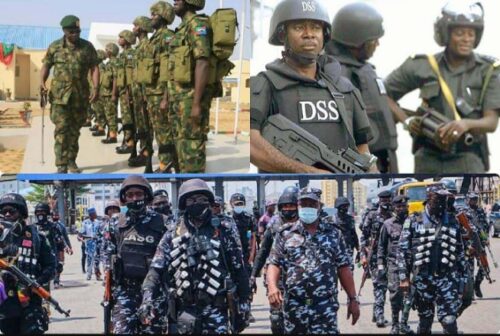
Across Nigeria, a recurring and troubling pattern has emerged at checkpoints, roadblocks, and public duty posts. A citizen raises a phone to record an encounter with a security operative, and almost instantly, the mood shifts. Officers who moments earlier were carrying out routine duties suddenly become defensive, hostile, or aggressive. Phones are seized. Footage is deleted. In some cases, citizens are threatened with arrest simply for exercising a right that Nigerian law, and now a Nigerian court, have decisively settled in their favour.
This reaction, so common that it has become almost expected, reveals a deeper institutional problem. It is not simply about individual officers having a bad day. It reflects a culture in parts of Nigeria’s security architecture that treats public scrutiny as a threat rather than as a legitimate feature of democratic accountability. That culture must change, and the law is now unambiguous about why.
Nigerians have a clear legal right to record law enforcement and public officials while those officials are performing their duties in public spaces. This is no longer a matter of interpretation or goodwill on the part of security agencies. It has been affirmed in a landmark judgment delivered on March 17, 2026, by Justice H. A. Nganjiwa of the Federal High Court sitting in Warri, Delta State, in Suit No. FHC/WR/CS/87/2025, Maxwell Nosakhare Uwaifo versus the Inspector General of Police and three others. The case arose after the applicant, a legal practitioner, was threatened and roughly handled by unidentified police officers at a checkpoint near Sapele Roundabout when he attempted to record their conduct. The court held that citizens are entitled under Section 39 of the 1999 Constitution to freely express themselves, a right that extends to documenting the conduct of law enforcement officers performing public duties. The suit itself was grounded in Sections 34, 35, 41 and 46 of the Constitution, covering the right to dignity of the human person, the right to personal liberty, the right to freedom of movement, and the right to acquire and own property, alongside Section 66(1) of the Nigeria Police Act 2020, which mandates that officers display name tags and identification numbers while on duty. The court awarded the applicant five million naira in damages for the violation of his fundamental rights and a further two million naira in litigation costs, a signal that these protections carry real financial consequences for agencies that violate them.
The same landmark ruling struck a decisive blow against what the court described as anonymous policing. Justice Nganjiwa declared it unconstitutional for officers performing public duties, such as stop and search operations, to operate without visible identification. Officers on such duty are now legally required to wear visible name tags and display their force numbers at all times. This single requirement, if properly enforced, could transform accountability in Nigeria’s security sector. An officer who knows he can be identified behaves differently from one who believes he can act with impunity behind a uniform and no name.
The reasoning behind these protections is straightforward and compelling. Law enforcement agents performing duties in a public space cannot legally shield their actions from public scrutiny. Public duty is, by definition, public. When a security agency demands the right to operate free from observation while exercising coercive power over ordinary citizens, it is effectively asking to be exempted from the very accountability that legitimizes its authority in the first place.
It is important to state plainly that this right is not limited to the police alone. Nigerians can lawfully record the Nigeria Police Force, the Federal Road Safety Corps, the Nigeria Security and Civil Defence Corps, the Economic and Financial Crimes Commission, the National Drug Law Enforcement Agency, the Nigeria Customs Service, and the Nigeria Immigration Service while they are on official duty. These agencies operate under civil law and are subject to civilian oversight, which is precisely why transparency in their operations is not optional. The Nigeria Police Force itself confirmed as far back as December 2023 that citizens are free to record officers on duty, well before the Warri judgment gave that position the added weight of a binding court ruling.
The picture changes, however, when it comes to the armed forces. The Nigerian Army, Navy, and Air Force may be deployed for internal security duties or joint checkpoints, but recording them carries far greater risk. The military operates under strict protocols tied to national security, and recording tactical deployments, troop movements, or classified equipment can lead to allegations of espionage or a breach of security. Recording military personnel, formations, or operations, particularly during internal security deployments or tactical exercises, can be treated as a severe security breach. Similarly, recording inside sensitive government installations or secure military checkpoints without authorization is generally illegal and constitutes a major security lapse. Citizens should exercise particular caution in these contexts, understanding that the protections affirmed for civil law enforcement do not automatically extend to armed forces operating under military doctrine.
There are other important boundaries as well, and a constructive argument for accountability must acknowledge them honestly rather than pretend that the right to record is limitless. Nigerian law does not permit citizens to record, photograph, or livestream courtroom proceedings without the explicit permission of the presiding judge. Nor does the right to record public officials extend to private individuals. Under Section 37 of the 1999 Constitution and the Nigeria Data Protection Act, ordinary citizens retain a right to privacy. The Nigeria Data Protection Commission has explicitly warned against filming unsuspecting members of the public for social media or entertainment purposes without their consent, and doing so can attract sanctions. Accountability journalism and civic documentation are not licenses for exploitation, and a rights-based argument loses its force the moment it is used to justify violations of the same principle it claims to defend.
Within these boundaries, the core principle now stands on firm legal ground. Officers are prohibited from harassing citizens, confiscating their phones, or deleting footage simply because it was recorded. Where a device is destroyed or seized without a lawful basis, the affected citizen can pursue legal action to seek damages, as the Warri judgment itself demonstrates. Security agents are legally barred from intimidating, arresting, or confiscating recording devices from individuals documenting their operations. Citizens who choose to record are, however, expected to remain respectful and keep a safe distance so as not to obstruct lawful duties, and should avoid arguments or aggressive confrontations. The right to record is not a right to interfere, and responsible exercise of the right protects both the citizen and the credibility of the accountability effort itself.
Why, then, does the gap between law and practice remain so wide? Part of the answer lies in institutional failure rather than individual malice alone. Many officers lack basic civic and legal education about the rights of the citizens they serve. Others are fully aware of the law but choose to ignore it to cover up misconduct, extortion, or brutality. Corrupt officers frequently view cameras as a direct threat to illicit activities, particularly the extortion that often accompanies unlawful stop and search operations, activities that the public increasingly films precisely to expose them. Inadequate remuneration, poor training, and a lack of modern equipment compound the problem, breeding frustration and eroding the professional discipline that should otherwise restrain such conduct.
None of these pressures, however, excuses the abandonment of constitutional obligation. The rule of law dictates that no individual, regardless of rank or position, stands above the law. Security institutions are the physical manifestation of the justice system. When agencies selectively enforce the law or violate it outright, they delegitimize the very legal order they exist to protect. This is not an abstract concern. Community cooperation is the foundation of effective policing anywhere in the world. When officers consistently respect legal procedure and individual rights, they build the trust that allows communities to work with, rather than against, the institutions meant to protect them. Abuses of power produce the opposite outcome, alienation, resentment, civil unrest, and a hostile relationship between citizens and the state.
Adherence to legal frameworks exists to protect citizens from unwarranted search, seizure, detention, and excessive force. International human rights standards, including the United Nations Code of Conduct for Law Enforcement Officials, exist precisely to guarantee that suspects and ordinary citizens alike are treated with dignity and fairness under constitutional guarantees. Nigerian legislation reinforces this by explicitly prohibiting the arrest of citizens for civil breaches such as debt, prohibiting arrest by proxy, and barring the use of excessive or lethal force except where strictly necessary for self-defense. Strict adherence to these internal laws and standard operating procedures is what prevents corruption, bias, and abuse from taking root, and what ensures that arrests, investigations, and operations are conducted based on objective evidence rather than political pressure, tribal sentiment, or personal prejudice.
Too often in Nigeria, officers bypass the judicial process altogether, acting as judge, jury, and enforcer in the field, detaining citizens unlawfully without ever bringing them before a court. This is precisely the kind of conduct that transparent recording, lawful oversight, and public documentation are designed to expose and deter.
Command structures within Nigeria’s security agencies bear direct responsibility for correcting this culture. Superior officers are legally and institutionally expected to enforce accountability by actively punishing and prosecuting personnel who harass citizens, confiscate phones unlawfully, or engage in anonymous policing. They are expected to train personnel thoroughly on the constitutional rights of civilians and the now-settled legality of public recording. They are expected to ensure that officers on public duty wear clear identification, name tags, and force numbers at all times, in line with the Warri court’s ruling against anonymous policing. These are not aspirational goals. They are legal and institutional obligations that flow directly from a judgment and statutes already in force.
Journalists occupy a particular position of responsibility in this landscape. The role of documenting and amplifying incidents of abuse and ensuring that the public understands both its rights and the realities on the ground is central to the profession. Retreating from that responsibility amounts to a betrayal of a sacred duty. When journalists witness intimidation or harassment of citizens by the Nigeria Security and Civil Defence Corps, the Federal Road Safety Corps, the Economic and Financial Crimes Commission, the National Drug Law Enforcement Agency, the Nigeria Customs Service, the Nigeria Immigration Service, or the Armed Forces at public checkpoints, they have a duty to document those incidents objectively and to help citizens understand the protections now available to them under the law.
For their own safety during encounters with law enforcement, citizens are advised to record openly rather than covertly, without interfering with lawful duties. Transparency, after all, is the very principle that the law now protects. A citizen recording openly is not an adversary of law enforcement. He or she is a participant in the accountability that ultimately strengthens legitimate policing and distinguishes it from the arbitrary exercise of power.
The path forward requires both citizens and security agencies to accept their respective obligations. Citizens must exercise their right to record responsibly, respecting the genuine boundaries the law sets around privacy, courtroom decorum, and sensitive military operations. Security agencies, for their part, must accept that operating in public means operating under public scrutiny, that identification requirements are not bureaucratic inconvenience but constitutional mandate, and that the confiscation or destruction of a citizen’s device is not a matter of officer discretion but a potential violation of law with real, and now judicially confirmed, legal consequences.
Nigeria’s democracy will be measured not by the laws it writes but by how consistently those laws are applied to the powerful as well as the powerless. The Warri judgment has given citizens a weapon that no longer depends on the goodwill of any individual officer. Security agencies that obey the constitution they are sworn to defend, that submit to identification and accountability, and that respect the citizen’s right to document public conduct will find, in time, that they have gained rather than lost. They will have gained the trust of the communities they serve, and with it, the cooperation that no amount of intimidation could ever compel.
Daniel Nduka Okonkwo is an investigative journalist, human rights advocate, and policy analyst based in Abuja, Nigeria. He is the publisher of Profiles International Human Rights Advocate, a platform focused on accountability journalism, governance reporting, and the documentation of human rights issues across Africa. His work examines the intersection of political power, institutional accountability, systemic failure, and the human impact of corruption, with particular focus on Nigeria and the wider African continent.
Okonkwo’s reporting and analysis have been published in Sahara Reporters, African Defence Forum, Daily Trust, Vanguard, Daily Intel, Opinion Nigeria, African Angle, Local Newsbreak, and other international media outlets. His work is driven by a commitment to transparency, democratic governance, and justice. He also collaborates with Daniels Entertainment on human rights initiatives, extending his advocacy beyond traditional journalism into broader public engagement.
He is based in Abuja, Nigeria, and can be reached at dan.okonkwo.73@gmail.com.
















You must be logged in to post a comment Login