
Forgotten Dairies
Can the World Embrace a New Geopolitical Shift? Energy, Power, and Containment Across Washington, Tehran, and Beijing: Implications for Nigeria and Africa -By Daniel Nduka Okonkwo
The overarching objective remains the preservation of American global leadership by constraining the foundational resource networks of its primary competitor. Whether this maximalist approach succeeds remains uncertain. It may pressure adversaries into recalibration, or it may accelerate realignment by pushing China and Russia into deeper cooperation while intensifying global polarization.

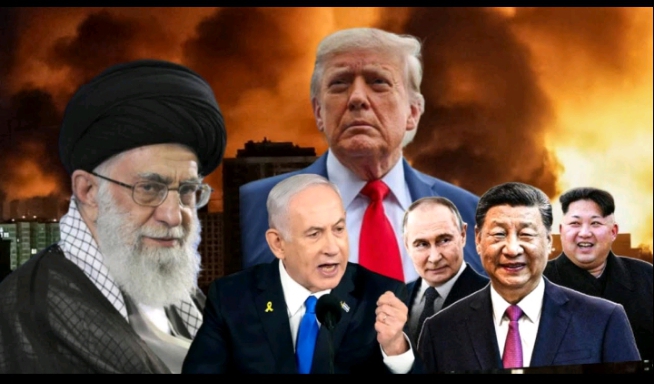
For more than a century, the United States has stood as the world’s leading power. Yet in the modern era, only one nation has emerged as a systemic challenger: China. The rivalry between Washington and Beijing increasingly defines the contours of global politics, trade, military posture, and most critically energy security.
In 2026, a series of interconnected developments from Latin America to the Middle East suggests the consolidation of a cohesive American grand strategy aimed at countering China’s rise not through direct symmetric confrontation, but by targeting the foundational resource that fuels industrial and military power: energy.
At the heart of this emerging doctrine lies a fundamental recognition that every industrial superpower is vulnerable to energy disruption. China, as the world’s largest energy importer and a manufacturing powerhouse, depends heavily on external oil flows to sustain economic growth and military readiness.
Unlike the Cold War era standoff between the United States and the Soviet Union, today’s contest does not primarily hinge on ideological blocs or massive standing armies facing off in Europe. Instead, it revolves around supply chains, maritime chokepoints, sanctions regimes, and control over resource nodes.
From this perspective, reported 2026 actions in Venezuela and escalating pressure on Iran appear less like isolated geopolitical maneuvers and more like components of a calculated containment through energy strategy.
Following a military-backed intervention in early 2026, Washington moved to assert control over Venezuelan oil production. Venezuela possesses the largest proven oil reserves in the world and, for years, supplied discounted shadow crude shipments to China, particularly benefiting Chinese independent refineries. By interrupting these flows, the administration directly disrupted a long-cultivated supply channel that Beijing had relied upon to secure cheaper fuel outside Western-dominated markets.
This approach is a modernized Monroe Doctrine 2.0, a reassertion of American dominance in the Western Hemisphere aimed at preventing extra-hemispheric rivals such as China and Russia from gaining strategic footholds. Securing leverage over Venezuelan exports enables Washington to influence who receives that oil and at what price, effectively forcing China to pay market rates or face tighter supply conditions. From an America First standpoint, the move aligns with a neo-mercantilist logic to control the resource nodes, shape the market, and weaken adversaries’ economic flexibility.
Simultaneously, pressure on Iran intensified in early 2026. The reported killing of Iranian Supreme Leader Ali Khamenei in a joint United States-Israeli strike, triggered profound geopolitical shockwaves across the Middle East.
Rather than producing an orderly transition, the sudden power vacuum heightened fears of unpredictable escalation. Iran, unable to match the conventional military strength of the United States-Israel alignment, has historically relied on asymmetric tools, including missile capabilities and regional proxies.
Tehran’s network, including Hezbollah in Lebanon, Hamas in Gaza, and the Houthis in Yemen, has long served as a means of raising the cost of United States and allied policies in the region. In response to the escalation, Iran reportedly launched missile strikes targeting United States military installations in Gulf states including Bahrain, Kuwait, Qatar, and the United Arab Emirates, countries that host American military assets.
From Tehran’s perspective, these states are not neutral observers but accomplices, providing logistical infrastructure for strikes against Iranian territory. By expanding the theater of risk, Iran seeks to pressure neighboring governments to push Washington toward de-escalation, arguing that continued confrontation threatens the entire region.
Beyond immediate regional dynamics, the confrontation carries broader geopolitical implications. Iran has long provided China with discounted oil supplies and strategic partnership channels that help Beijing diversify its energy sources away from maritime chokepoints influenced by the United States.
The deeper strategic objective attributed to Washington’s 2026 posture is to break the economic and geopolitical leverage that Iran offers to both China and Russia while simultaneously neutralizing Tehran’s nuclear ambitions and degrading its missile and proxy capabilities.
From this vantage point, the United States-Israel campaign is not solely about Iran’s nuclear program. It is about dismantling a network perceived in Washington as enabling rival great powers to challenge American influence in the Middle East. By targeting Iranian command and control systems, missile infrastructure, and allied militia networks, the strategy seeks to reduce Tehran’s capacity to project power and serve as an energy and geopolitical partner to Beijing.
The Middle East remains central to global energy flows. Control over key maritime routes, particularly those used to transport oil to Asia, provides leverage that extends far beyond regional politics. The United States Navy’s dominance in critical waterways ensures that in times of crisis, Washington retains influence over the arteries through which much of China’s imported oil travels. This maritime advantage forms a crucial pillar of containment through energy.
In any prolonged crisis, such as a potential conflict over Taiwan, China’s ability to sustain military operations would depend significantly on stable fuel supplies. Disruptions or price spikes could constrain Beijing’s war-fighting capacity and economic resilience. Thus, rather than engaging China in direct large-scale military confrontation, the strategy aims to limit Beijing’s strategic endurance by targeting its energy security.
However, this evolving energy confrontation does not stop at the boundaries of great power rivalry. Its ripple effects extend directly to Nigeria and the broader African continent.
As tensions push up Brent crude prices, surging past 80 dollars a barrel in some projections, Nigeria could see a significant windfall in oil revenue. Higher global prices would likely boost foreign exchange inflows and improve the country’s fiscal position, offering temporary relief to public finances and strengthening external reserves.
Yet the benefits are double-edged. While rising crude prices favor government revenue, they often translate into higher local petrol prices for consumers. Increased transportation costs and higher energy expenses raise the cost of goods and services, fueling inflation and eroding purchasing power. In a country where many households already face economic strain, this inflationary pressure can deepen social discontent.
If the conflict disrupts shipping routes or affects global demand, Nigeria’s ability to export its crude could be threatened. Maritime instability in the Gulf or broader supply chain disruptions could complicate logistics, insurance costs, and delivery schedules. Additionally, if the crisis triggers a long-term slowdown in global economic activity, demand for Nigerian oil could decline, offsetting the revenue gains from higher prices.
Currency markets may also react sharply. Heightened geopolitical instability often leads to fluctuations in the naira, increasing exchange rate volatility, and imported inflation. Such instability can reduce consumer purchasing power not only in Nigeria but across several African economies that depend heavily on energy imports or commodity exports.
For Africa more broadly, the energy confrontation among the United States, China, and Iran underscores the continent’s structural vulnerability to external shocks. Many African states rely on stable global demand and predictable shipping routes. Prolonged great power rivalry risks fragmenting trade patterns and forcing countries to navigate increasingly polarized economic blocs.
The emerging doctrine blending sanctions, naval supremacy, economic leverage, and targeted military operations represents what some analysts describe as a neo-mercantilist grand strategy. Rather than seeking territorial conquest, it seeks dominance through control of economic lifelines.
In this framework, Venezuela represents hemispheric consolidation. Iran represents Middle Eastern leverage. Maritime dominance ensures strategic chokepoint control. Sanctions and market mechanisms shape pricing power.
The overarching objective remains the preservation of American global leadership by constraining the foundational resource networks of its primary competitor. Whether this maximalist approach succeeds remains uncertain. It may pressure adversaries into recalibration, or it may accelerate realignment by pushing China and Russia into deeper cooperation while intensifying global polarization.
What is evident is that the struggle for the twenty-first century is increasingly defined not only by visible military confrontation, but by the silent contest over energy flows, supply chains, and economic endurance. In that contest, oil remains power, and control over its movement remains one of the most decisive instruments of statecraft, with consequences that now reach far beyond Washington, Tehran, and Beijing to Abuja and the wider African continent.
Daniel Nduka Okonkwo is a Nigerian investigative journalist, publisher of Profiles International Human Rights Advocate, and policy analyst whose work focuses on governance, institutional accountability, and political power. He is also a human rights activist, human rights advocate, and human rights journalist. His reporting and analysis have appeared in Sahara Reporters, African Defence Forum, Daily Intel Newspapers, Opinion Nigeria, African Angle, and other international media platforms. He writes from Nigeria and can be reached at dan.okonkwo.73@gmail.com.























You must be logged in to post a comment Login