
Forgotten Dairies
America’s Patients Were Never Meant to Be Cash Machines -By Fransiscus Nanga Roka
On the one hand, redesign on high-risk reimbursement around what would be defensible acquisition costs, clinical evidence and documented treatment needs. Stronger auditing, in isolation, only leaves the underlying temptation intact, and so payment rewards product volume.


A wound should trigger treatment. Using the plans laid out by federal prosecutors, it reportedly set off miles of fees, bloated bills and extravagant purchases. America’s 2026 health care fraud takedown has higher demands than applause for arrests It begs the question of how public insurance ended up being so easy to pick off in the first place.
The operation announced on June 23 resulted in charges against a total of 455 defendants, including 90 doctors and other licensed professionals. The cases involved more than $6.5 billion in allegedly false claims and included 56 federal districts and 45 states and territories. They’re not convictions, they’re accusations; amounts billed should never be mistaken for money paid.
But the wound-care charges reveal an especially unsettling incentive system. They describe allografts obtained from tissue banks, re-labeled and sold with a markup of 2.000% and itself. Kickbacks allegedly motivated launches to sufferers, fake suicides and a couple of dangerous infected ulcers over wound size One company alone was responsible for more than $4 billion in billings to Medicare and over $2 billion in payments to providers.
If true, this was medicine beneath commission. The patient was a commercial opportunity, and a professional credential offered the veneer of legitimacy.
The second uncomfortable question is institutional: how could billing incentives become so disconnected from clinical need? Arresting individuals addresses culpability. It is not a panacea that automatically repeals reimbursement rules, rebalances ownership opacity or cures fragmented oversight.
It breaks down 295 defendants and more than $518 million in allegedly false claims involving Medicaid. International collaboration also led to returning many defendants from abroad. CMS suspended 1,079 providers and terminated the billing privileges of 1,403.
Officials said the takedown led to over $182 million in asset seizures. That matters, but seizure is not a final forfeiture, restitution or confirmation that patients have been compensated.
And techno-optimism should not supplant criticism. Allograft Payment Spike Detected By Analytics, Says DOJ Identifying unusual purchase activity is beneficial, but demonstrating clinical need and evidence to support criminal activity requires more supporting proof.
An Outlier is recognized by an algorithm. By itself, it cannot tell a clever criminal from a physician dealing with especially complex patients. Automated suspicion should never become automated guilt or be used as an excuse to deny appropriate care.
Five reforms should follow.
On the one hand, redesign on high-risk reimbursement around what would be defensible acquisition costs, clinical evidence and documented treatment needs. Stronger auditing, in isolation, only leaves the underlying temptation intact, and so payment rewards product volume.
Second, relate assertions to validated ownership evidence, referral connections and monetary transactions. Concealment of the ultimate controlling person, or entities benefiting from a provider’s billing is not a valid use of shell companies.
Third, technology-enabled preauthorization, including fast-track clinical review and real options for appeal. The need for continuity and protection of public funds must be taken into consideration particularly where care is delivered by suspended practitioners.
Fourth, follow responsibility upward. Investigations should probe executives, distributors, marketers and financiers wherever the evidence warrants. Prosecuting the clinician, while allowing the commercial architect to slip through the cracks, would permit their business model to be freely reused.
Fifth, Require habitual international cooperation and account for results honestly: block money from exiting, empty assets recovered with a trace, safe injuries compensated and legitimate services preserved. Shield whistleblowers who can articulate the nuances that data suspicious omits.
These recommendations extend beyond America. If a health system is expanding digital claims, accountability must be built into the payment infrastructure before fraud has a chance at scaling with it.
Success is not a number of luxury cars photographed post-arrest. It means that the next vulnerable patient must get proper care without becoming a revenue opportunity for someone else. A takedown should start that reckoning rather than substitute for it.
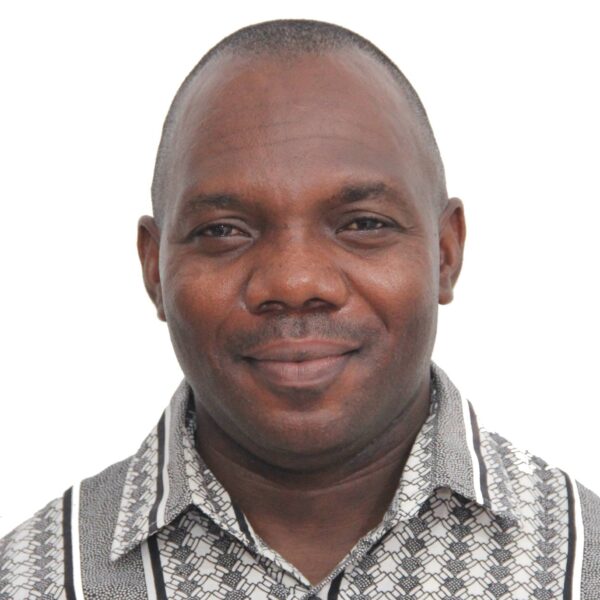
Fransiscus Nanga Roka
Faculty of Law University 17 August 1945 Surabaya and Managing Partner Law Firm Victorious Indonesia


























You must be logged in to post a comment Login