
Global Issues
Talc, Cancer, and Corporate Power: Why the Johnson & Johnson Litigation Exposes a Crisis of Global Justice -By Fransiscus Nanga Roka
The outcome is a perverted travesty of justice. The voices declaring life changing damage are compelled to retell their suffering, record the state of their bodies, prove they have standing and wait. The corporation, as you know it at this time in the US and UK is an immortal machine. Its executives rotate. Its filings evolve. Its exposure is modeled. Its language is sanitized. Its identity with the law stretches until it takes a hit without taking on stigma.

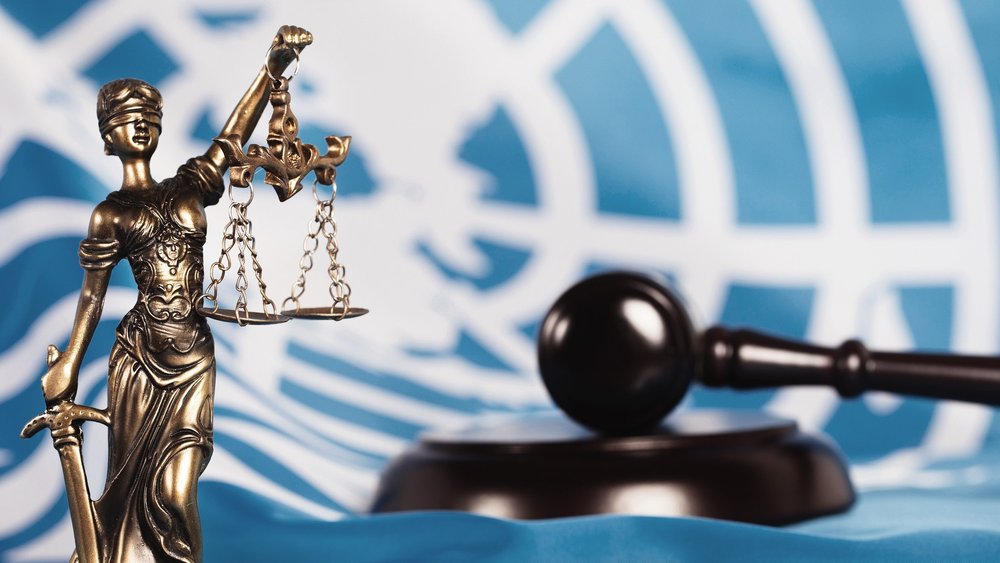
There are corporate scandals and there are humanitarian horrors. The Johnson & Johnson talcum powder lawsuits fall into that second bucket. What started as a piece of consumer safety controversy has turned from such trival evidence into something far more frightening: an international parable on how gilded exploitation, legal gymnastics and institutional foot-dragging can wear out victims, minimize responsibility stealing accountability thunder and criminalize justice while casting it off like peacekeepers with spare funds penalised.
Women claimed for years that talc products sold by one of the world’s best known healthcare brands caused life-threatening diseases including cancer. Not just the scale of the allegations, but also unbearable symbolism of product itself has been at center stage. Baby powder marketed with words like pure, gentle and trusting. It was stitched into our rituals of care, intimacy, motherhood and everyday life. And yet, for countless claimants that same emblem of purity became one of deep disquiet, mourning and rage.
That’s exactly why the litigation hurts even more deeply than an ordinary mass tort struggle. This is not simply a matter of science, causation and damages. It is about power. It is about what happens when regular folks go up against a company with more money, attorneys and process-related alternatives than it can shake its little finger at; turning the court-room into some sort of labyrinth. In theory, justice is blind. In practice, it is justice by the hour billed.
Johnson & Johnson has repeatedly denied its talc products caused cancer, and it used the full power of elite corporate litigation strategy to defend itself. That is its legal right. But this brings us to perhaps the deeper public question: Has modern corporate defense architecture, which has become so aggressive and so technical ironically more like the very company it defends lost its moral compass completely, such that legal process can be wielded by those whom it ought serve? When a company threatened by floods of cancer cases looks better able to face liability than it does human suffering, we have entered a very disturbed world.
This case transitions from American only to global. Globally, many import markets gain profit making through borderless brands and regulatory fragmentation that pacifies protectionisms in each segment. However, when accusations of etc emerge who accountability becomes protracted, insular, diffuse and procedurally strenuous. Once again, profits globalise with singular ease whilst tort victims are told to localize their pain one lawsuit at a time.
The real scandal is that asymmetry. For example, in a fairer world the bigger you are as a corporation, the more responsibly it needs to be transparent and cautious while expanding your TCO. That insulation of scale is something you often see in the real world. Brand prestige buys patience. Legal complexity buys time. Moreover, in any mass injury litigation that would caption this case, time is never neutral. The well-healed institution benefits from time; the dying patient gets fewer tomorrows.
Yet the Johnson & Johnson talc saga also reveals a more unsettling fact about modern capitalism: companies do not have to be proven pure, moral victors in order to win. They simply have to delay, limit, repackage the liability of Republic Services LLC through appeals and selective settlements while outlasting public outrage. This is not accountability. That is attrition pretending to be due process.
Fans of the firm will counter that complicated claims need harsh proof and dangers must not be dictated to by public vitriol however judged in a courtroom. Of course they must. Verdicts that are so blatantly driven by emotion alone should not be desired or acceptable to any serious observer. Yet, this well-known defense can exist as a cover for ethical nihilism. A corporation might meet the legal thresholds and come up short in a conscience test. It might follow procedure while eviscerating the public’s trust in justice. It might speak in the tongue of empathy but act with grammar plucked from containment.
Which is why this case resonates so broadly. It is not only about talc. It relates to what citizens now suspect from scandals too numerous: the modern corporation is a skillful juggler not only of being publicly human but also, in private as near solid granite. It understands how to commoditize care, reputation management, liability segmentation and outrage survival. It knows how to fetishize suffering in your base-appropriating back rooms; and ring up the consultants, chaiwalla insurers, bankruptcy brawlers, it bros in laws and one lining publicists. It knows, more than anything else, how to make accountability prohibitively costly.
The outcome is a perverted travesty of justice. The voices declaring life changing damage are compelled to retell their suffering, record the state of their bodies, prove they have standing and wait. The corporation, as you know it at this time in the US and UK is an immortal machine. Its executives rotate. Its filings evolve. Its exposure is modeled. Its language is sanitized. Its identity with the law stretches until it takes a hit without taking on stigma.
That is why the talc litigation should give pause to anyone concerned with global justice. What hope is left for victims harmed by less visible corporations in weaker legal systems if even a household name in health care can face years of claims related to cancer and this avenue toward remedy remains so fraught, so protracted, and more structurally unequal? If justice is so difficult to obtain when the defendant is a celebrity, and allegations constitute international headlines, and plaintiffs have some of America’s largest law firms seated at their tables; what about the total silence that surrounds everyone else?
What makes this saga all the more damning is not just that allegation of harm. This is the proposition that contemporary legal systems are learning how to manage mass suffering better than they can prevent it, how to value injury instead of respecting human dignity more effectively and settling corporations with a firm hand rather than representing victims. That is not a technical flaw. This is a moral rot concealed within procedural sophistication.
These cases tend to be seen by legal and financial elites as not warnings, but disputes in need of management. However, the meaning of this kind of litigation disappears from vision at significant risk to societies. When products tied to care become somehow connected, rightly or wrongly, with the betrayal of trust; when survivors toil for years in procedural trenches before they catch any answers at all; and if corporations seem able to manage accountability as a mere cost problem rather than an enduring public duty—public confidence doesn? It curdles.
Read More: The Johnson & Johnson Litigation Is Both a Courtroom and Political Battle That Tests the Meaning of Global Justice in an Age When Corporations Are Now Able to Overmatch Some Millions of Individual People If mass allegations of severe injury lead to more manoeuvring, temporary closure and victim burn out then the public will reach a horrible conclusion: this is no accident, the system works just fine. It is performing exactly the way that power would like it to perform.
And that is the real danger. For once people cease believing that justice can touch the mighty, they do not become more patient. They become more cynical, they are divided and it gives them the impression that law is nothing but a theatre. There, every postponed cure is a civic affliction and each corporate malfeasance an added knockdown that human dignity can be bought.
Johnson & Johnson is being tried and convicted in more than just a courtroom. It is on trial in the court of democratic legitimacy. As are the legal systems which have made this saga into an endurance test, not a model of justice. If word leaders, regulators and courts cannot prove that human health is worth more than the procedural gamesmanship of international institutions then one message will ring loud to the world: The moment a corporation becomes big enough accountability penance can be avoided.
And if this is how justice looks during one of the most high-profile corporate health litigations in the world, global justice may be far worse off than many institutions would like to acknowledge. Now, the talc cases raise issues not just about one company’s behavior. They reveal a terrifying prospect: that today, the law may still be fluent in equality but power is writing the last chapter.
Fransiscus Nanga Roka
Faculty of Law University 17 August 1945 Surabaya Indonesia

























You must be logged in to post a comment Login