Global Issues
The Danger of Half-Wars: Why the U.S., Israel, and the U.K. Must Win or Risk a Bigger Conflict -By Fransiscus Nanga Roka
The lesson to be drawn from the first twenty one days is a simple and yet painful one: a war which is not concluded grows. And when the international environment is already marked by many crises, bigger conflict is a risk nobody can afford.

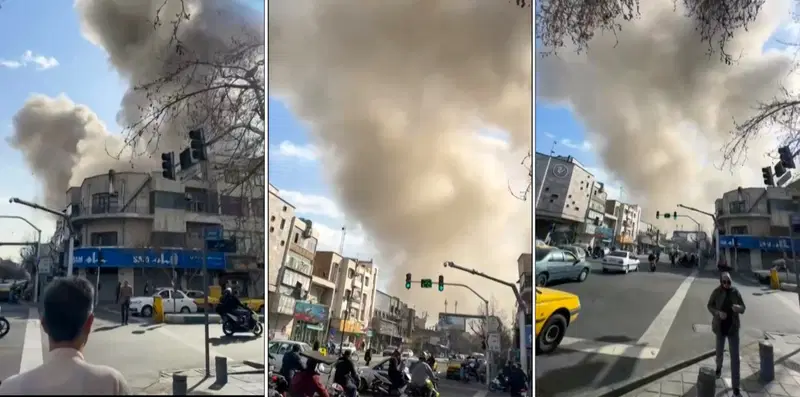
At the fifth year anniversary of the war with Iran, the worst outcome is no longer defeat: it is indecision. History has demonstrated that these conflicts usually end badly whenever major powers let them drift on without a settlement. Half wars sometimes lead to whole disasters. If the United States, Israel and the United Kingdom fail to bring this conflict to a clear conclusion, the outcome will not be peace but might prove a far widening and even more destructive regional war with revenues strained all around for all sides.
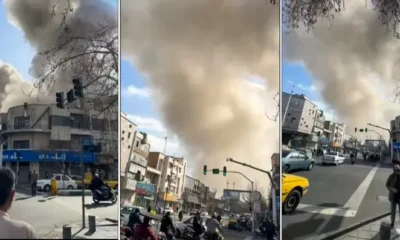
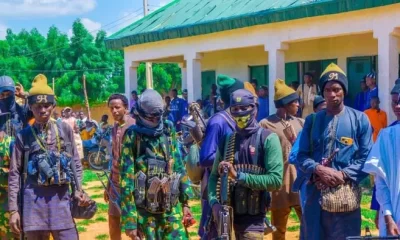
Presently, tension keeps lurching past more of its critical tipping points. Iranian backed militias are striking on multiple new fronts; shipping lanes are yet under threat; and the risk grows daily that both local actors could become involved in escalation. Every week sans a resolution gives deterrence less saliva to work with and emboldens the enemy’s feeling that Western strength can be challenged without cost. In international politics, perception is often more important than fact. A coalition which seems unwilling to bring this thing to an end enables further challenge.
The problem with continual conflicts is not solely military but also strategical. Iran’s leaders know that time is their most valuable weapon. A protracted war affords Tehran precious time to marshal its cats paws, exploit political divisions within Western countries, and press the world energy market. The longer this conflict continues, in a phrase attributed to Balfour: the more expensive it gets for the coalition and the more sustainable it becomes for Iran. This is the classic logic of asymmetric warfare. For the weaker side, survival is victory.
However, issuing checks does not necessarily mean that they will be used in a vote. How would the United States react if the half war continued to be inflicted on its own citizens? The British had to endure another place they could return to as quickly as possible. If the coalition ends the war without shaking definitively Scamachi Kei results are clear: Through persistent efforts gradual advance civilization force. At the same time, the Iranians museum in the holy city of Qom is meditating on another lesson, there is always a stage larger than just this one, no rear whence to run. Although some may argue that striving for victory will only lead to further escalation, the situation is roughly the same regardless of who’s ruler. On the contrary, wars which fail to achieve their goals are historically most likely expand into larger ones than those which are decided quickly. Ambiguity invites mistakes. When neither side thinks the outcome of a war is settled, both sides prepare for next round of fighting. Thus we will see hiss suck roar.
Left in its wake is a spiral of violence and revenge that can last for years, each cycle more dangerous than the one before. Ending the war does not mean trying to destroy everything. It means reaching a point which will also mushroom when all is destroyed breaking off Iran’s ability to project its power beyond national borders, severing its satellite networks and making it clear that further escalation will only bring greater costs to itself. A decisive outcome makes room for diplomacy. A standoff deprives it of oxygen.There is also a domestic dimension to the war that must not be overlooked. Democracies have only a limited tolerance for long, inconclusive conflict. Political divisions deepen, public support ebbs, and strategic clarity fades away. When wars lose their way, policy becomes reactive rather than directed. This is exactly what the other side wants. Delay is not neutrality; delay is an advantage but for adversary.
Now the United States, Israel and the United Kingdom are up against a choice that confronts every coalition in history sooner or later: end the war or let it fashion the future in its image.
Ending the conflict decisively does not ensure peace; failing to do so makes a larger confrontation inevitable. Half wars rarely stay that way for long; they expand, spread and return in uglier forms. If this conflict drifts without resolution, the next phase may well engulf more than just one region, one front, or one coalition.
The lesson to be drawn from the first twenty one days is a simple and yet painful one: a war which is not concluded grows. And when the international environment is already marked by many crises, bigger conflict is a risk nobody can afford.
Fransiscus Nanga Roka
Faculty of Law University 17 August 1945 Surabaya Indonesia