Opinion
THE GOD WHO LEFT THE BUILDING: A Rebuking, Reviving, Yet Hopeful Call to the Church -By Leonard Karshima Shilgba
The book of Acts contains no record of apostolic anxiety over cathedral projects. Yet it overflows with prayer, persecution, evangelism, generosity, discipleship, missions, and the power of the Holy Spirit.

There is a quiet but devastating irony in modern Christianity: the Church that began in homes now struggles to function without cathedrals; the faith whose Founder “had nowhere to lay His head” now measures spiritual success by the acreage of its auditoriums; and the movement whose earliest missionaries turned the world upside down without owning property now borrows billions to construct “worship centres” while many worshippers cannot pay school fees.
Somewhere along the journey from Jerusalem to our modern cities, we appear to have mistaken architecture for spirituality.
The early Church carried fire. The modern Church often carries cement.
We have become experts in launching building projects and novices in raising disciples.
One cannot help but wonder what heaven thinks when a congregation announces a ten-billion-naira sanctuary expansion while widows among them quietly skip meals.
Indeed, if the apostles Peter and Paul returned today, they might first ask for directions to the church. Not because the buildings are too small—but because they are too large.
The tragedy is not that churches build structures. Structures may serve useful purposes. The tragedy is that many churches now seem to exist primarily to sustain structures rather than souls.
In Scripture, God progressively revealed a profound truth about His dwelling place.
In Eden, God walked with man.
In the wilderness, He dwelt among Israel in tabernacles and clouds.
At Sinai, He revealed Himself in thick darkness—not because God is darkness, but because infinite glory had to be veiled from sinful humanity.
When Solomon dedicated the first temple in Jerusalem, which he had finished building around 959 BC, he made this statement: “But will God in very deed dwell with men on the earth? Behold, heaven and the heaven of heavens cannot contain thee; how much less this house which I have built!”
Then came the incarnation: God veiled His glory in human flesh. “The Word became flesh and dwelt among us.”
Finally, through Christ’s redemption and the Holy Spirit, God moved from dwelling among men to dwelling in men.
This is the climax of redemptive revelation:
“Know ye not that ye are the temple of God?”
“I will dwell in them and walk in them.”
Yet modern Christianity appears determined to reverse this revelation. God moved from buildings to people, while we are moving from people back to buildings.
We proudly dedicate gigantic “houses of God” while neglecting the broken lives for whom Christ died.
We construct “prayer mountains” but ignore mission fields.
We air-condition auditoriums while missionaries roast under hostile suns without support.
We import chandeliers but export no evangelists.
We raise millions for roofing projects but cannot raise young people from poverty.
Some churches now announce fundraising targets with greater urgency than calls to repentance.
A believer may be unable to afford medication, but the church must complete the Italian marble before convention.
What a strange generation we have become!
One almost expects to hear:
“Silver and gold have we lavishly spent on the cathedral—but spiritual power we have none.”
Even more troubling is our unspoken architectural competition:
Who owns the largest auditorium?
Who builds the tallest tower?
Who has the fanciest headquarters?
Who installs the largest LED screen behind the pulpit?
The apostles “competed” in holiness, sacrifice, doctrine, and evangelism.
We compete in square meters.
Meanwhile, entire communities remain unevangelized, or worse still merchandised by us.
Many young people in our congregations are drowning in unemployment, confusion, addiction, depression, and hopelessness. But instead of equipping saints for kingdom impact, we often recruit them into endless fundraising committees. And even when we do charity, it is to a select few and under camera lights for public relations purposes.
Surely, heaven must be asking:
“When did My Church become a real-estate empire?”
Let it be said clearly: there is nothing inherently wrong with church buildings. The issue is priority.
Jesus never commanded His disciples:
“Go ye into all the world and build magnificent structures.”
But He did command:
“Go ye into all the world and preach the gospel.”
The book of Acts contains no record of apostolic anxiety over cathedral projects. Yet it overflows with prayer, persecution, evangelism, generosity, discipleship, missions, and the power of the Holy Spirit.
The early believers understood something we seem to have forgotten: the Kingdom of God advances primarily through transformed people, not transformed skylines.
A spiritually dead cathedral remains spiritually dead regardless of how beautiful its architecture may be.
God does not need bigger buildings to reveal His glory. He needs yielded vessels.
The true evidence of revival is not the size of the sanctuary but the depth of repentance.
Not the magnificence of the altar, but the holiness of the worshippers.
Not the grandeur of the conference hall, but the burden for souls.
The Church must repent.
We must repent of substituting spectacle for spirituality.
We must repent of turning ministry into architectural ambition.
We must repent of celebrating construction while neglecting compassion.
We must repent of spending more energy raising buildings than raising laborers.
The cry of this generation should not merely be:
“Lord, enlarge our auditorium.”
But:
“Lord, enlarge our hearts.”
Not:
“Lord, give us more property.”
But:
“Lord, give us more power, purity, compassion, and burden for souls.”
For the harvest is still plentiful.
Villages remain unreached.
Cities remain wounded.
Young people remain confused.
Nations remain broken.
And Christ still says:
“The harvest truly is plenteous, but the labourers are few; pray ye therefore the Lord of the harvest, that he will send forth labourers into his harvest.”
May God raise again a Church that values people above projects.
A Church where missionaries matter as much as microphones.
A Church where discipleship matters more than decoration.
A Church where holiness is pursued more passionately than publicity.
A Church where the poor are not ignored while the pulpit glitters.
A Church where believers understand that they—not concrete walls—are the temples of the Holy Spirit.
And may the Lord once again walk among His people—not merely visit our buildings.
Oh Lord, revive Thy Church.
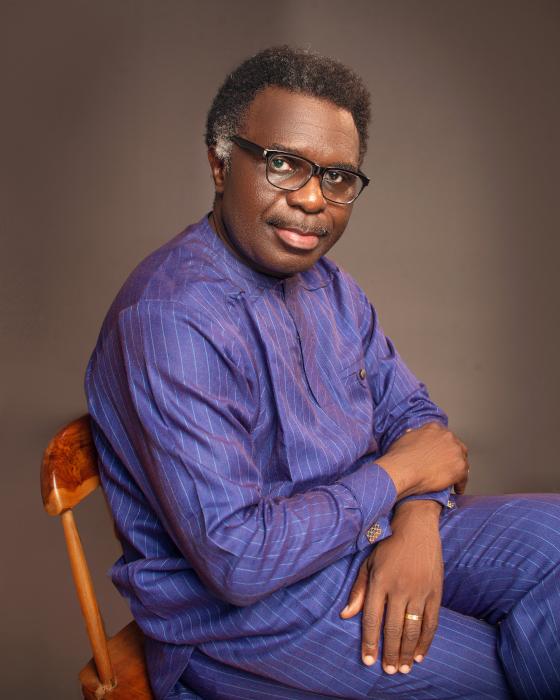
Professor Leonard Karshima Shilgba is a Campus Church Leader and Founder of the Bible Clinic Ministry.