Forgotten Dairies
The Hidden Chessboard: Venezuela, Taiwan, and Nigeria in a Quiet War for Global Supremacy -By Daniel Nduka Okonkwo
This global contest now extends decisively into Africa. In Nigeria, over 80% of lithium mining projects are financed by Chinese investors. Between late 2023 and late 2025, Chinese firms invested approximately $1.3 billion in lithium processing alone, gaining majority ownership in critical segments of the value chain.

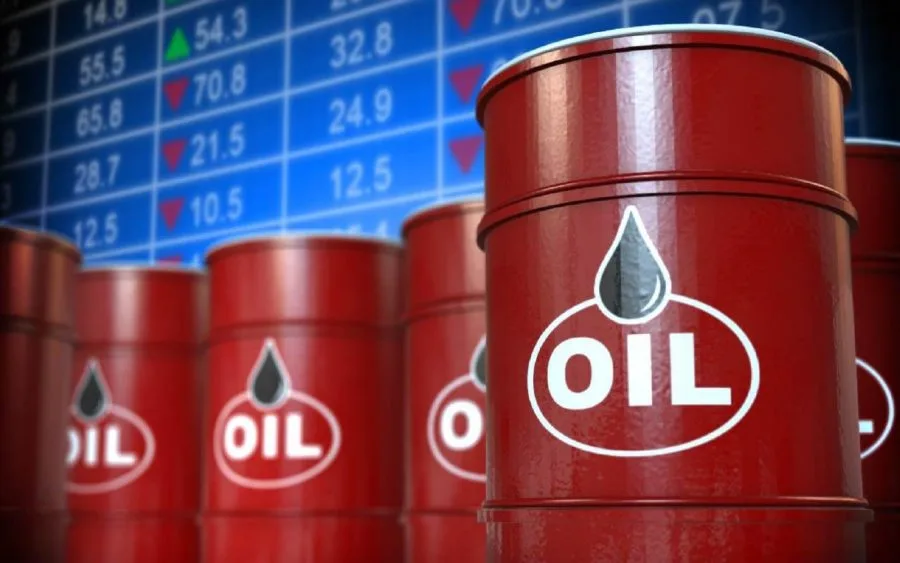
Venezuela does not matter to the United States because America “needs” Venezuelan oil for survival. That narrative is outdated. The real issue is who controls the oil, and where the proceeds go
This is not a conspiracy theory. It is an unfolding reality of 21st-century geopolitics, one that plays out quietly through oil cargoes, semiconductor fabs, debt ledgers, and supply chains rather than open battlefields. The world’s most consequential conflict today is not fought with missiles alone, but with technology, finance, and strategic leverage.
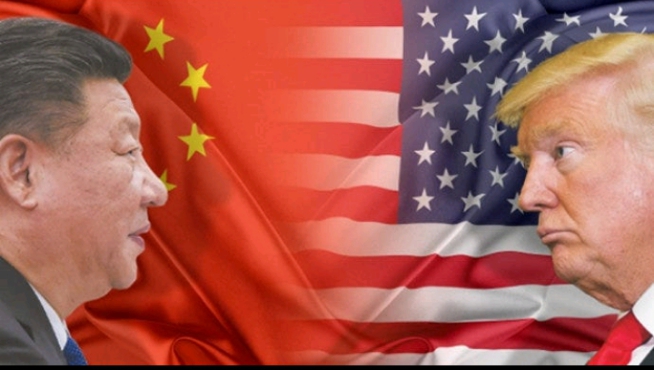
At the heart of this contest are two pressure points are Taiwan and Venezuela. In the grand chessboard of global power, Taiwan functions as the queen, technologically decisive and irreplaceable, while Venezuela resembles the rook, powerful but geographically and economically constrained. The United States, under President Donald Trump’s renewed assertiveness, appears determined to control both squares.
More than 237,000 U.S. companies maintain direct or indirect relationships with Taiwanese suppliers. This is not accidental. Taiwan is the beating heart of the global semiconductor ecosystem. Experts warn that a conflict would be economically catastrophic and that, while China is increasing its capabilities, an invasion would carry enormous risks, including potential social instability within China itself.
Taiwan Semiconductor Manufacturing Company (TSMC) produces over 44% of the world’s most advanced logic chip components essential for artificial intelligence defense systems, smartphones, electric vehicles, and advanced industrial automation. Without Taiwan, the modern digital economy stalls.
Recognizing this vulnerability, the United States has moved decisively. Recent agreements aim to relocate up to 40% of advanced chip production to U.S. soil, backed by:
$250 billion in Taiwanese manufacturing investments, and an additional $250 billion in U.S. credit guarantees. This is not merely industrial policy it is strategic fortification.
Washington increasingly defines China as an authoritarian challenger posing a “grave threat” to democratic values and international norms, a view echoed by U.S. intelligence and law enforcement agencies, including the FBI. Beijing, for its part, characterizes U.S. actions as economic bullying designed to stifle China’s rightful rise.
China’s response has been calculated and non-kinetic. Economic pressure strategic propaganda cyber operations supply-chain leverage
All designed to weaken U.S. influence without triggering a direct military confrontation the flashpoint remains Taiwan. Beijing considers the island part of its sovereign territory; the United States provides military, economic, and diplomatic support to Taipei. This unresolved status represents the single most dangerous trigger for a future great-power war.
Public attention often focuses on tariffs. Since 2018, and accelerating toward 2025, the U.S. and China have imposed reciprocal trade restrictions, targeting everything from consumer goods to critical minerals.
But tariffs are merely the surface. The real battle is a technology war over
Semiconductor Artificial Intelligence
5G infrastructure
Quantum computing
The United States accuses China of forced technology transfers and cyber espionage to accelerate its military and industrial capabilities. In response, Washington has restricted China’s access to advanced chips and AI technologies, explicitly aiming to slow Beijing’s military modernization.
China’s “dual circulation” strategy, emphasizing domestic consumption and indigenous innovation, is an attempt to reduce dependence on U.S. markets and technology. This reflects a world where decoupling is no longer theoretical, but operational.
If Taiwan is the queen, Venezuela is the rook, a blunt but powerful asset whose oil flows shape geopolitical outcomes.
Between 2000 and 2018, Chinese state lenders, primarily the China Development Bank, extended an estimated $106 billion in loan commitments to Venezuela, largely through oil-backed arrangements. By 2017, approximately $44 billion remained outstanding.
Société Générale places outstanding debt at roughly $10 billion
JP Morgan estimates $13–15 billion
After U.S. sanctions in 2017 triggered Venezuela’s sovereign default, China granted grace periods on principal repayments. Debt servicing continued largely through crude oil shipments, with proceeds often routed through Beijing-controlled accounts, even as other creditors went unpaid.
Internal PDVSA documents indicate Venezuela exported about 642,000 barrels per day of crude and fuel oil to China, with a portion allocated to debt repayment.
Following U.S. sanctions, Washington asserted control over Venezuelan oil sales, proposing that proceeds be placed into a Qatar-based escrow account under U.S. supervision. From there, funds could theoretically be remitted to China for debt servicing.
Under President Trump, expectations that Venezuelan oil might become a “secret weapon” against China remain overstated. The Trump administration has signaled caution rather than confrontation on this front.
China’s state oil giant CNPC maintains producing assets in Venezuela. Its joint venture, Sinovensa, pumps roughly 110,000 barrels per day. China is unlikely to contest the auction of Citgo, Venezuela’s most valuable foreign asset, due to its U.S. location.
The war, therefore, is unresolved, managed rather than concluded.
This global contest now extends decisively into Africa. In Nigeria, over 80% of lithium mining projects are financed by Chinese investors. Between late 2023 and late 2025, Chinese firms invested approximately $1.3 billion in lithium processing alone, gaining majority ownership in critical segments of the value chain.
Lithium is not oil. It is the backbone of electric vehicles and renewable energy storage
Advanced electronics
Control over lithium today mirrors control over oil in the 20th century.
The implications are clear, and the arithmetic does not need to be explained.
What we are witnessing is a structural, long-term struggle to define the rules of the 21st-century international order. Oil, chips, debt, and minerals have replaced battle tanks as instruments of power.
President Donald Trump may indeed be playing hard chess, but the board is crowded, the pieces are global, and the endgame is far from settled.
This war is not over.
It has barely entered its decisive phase, and Nigeria is in the middle of it.
Daniel Nduka Okonkwo is a seasoned writer, human rights advocate, and public affairs analyst renowned for his incisive commentary on governance, justice, and social equity. Through Profiles International Human Rights Advocate, he champions accountability, transparency, and institutional reform in Nigeria and beyond. With over 1,000 published articles indexed on Google, his work has appeared on Sahara Reporters and other leading international media platforms.
He is also an accomplished transcriptionist, petition writer, ghostwriter, and freelance journalist, widely recognized for his precision, persuasive communication, and unwavering commitment to human rights.
Contact: dan.okonkwo.73@gmail.com
Daniel Nduka Okonkwo.