Africa
The High Cost of Change: Nigeria’s Fuel Subsidy Removal and Its Human-Fallout -By Falmata Baba Mele
Nigeria’s fuel subsidy removal marks a bold departure from decades of policy status-quo, and it may indeed be economically necessary. But the speed and scale of the shift have imposed heavy burdens on many Nigerians — and unless the promised gains begin to materialise in their daily lives, the political and social costs could mount. The reform is at a crossroads: it either becomes a catalyst for long-awaited structural change, or a source of bitter grievance over unmet expectations and continued hardship.

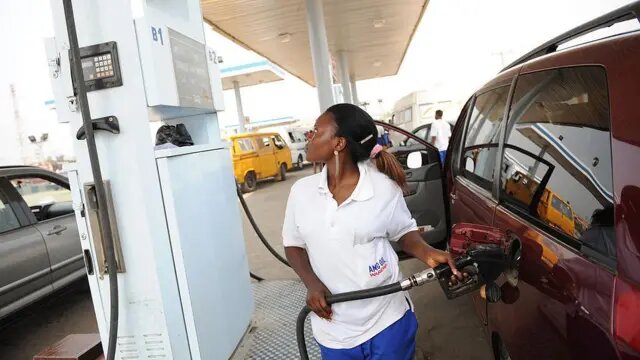
In May 2023, the administration of Bola Tinubu announced the full removal of the long-standing petrol (fuel) subsidy in Nigeria — a decision heralded by the government as an essential step toward fiscal prudence, institutional reform and economic revival. The decision was rooted in decades of mounting subsidy-costs, corruption allegations and distortions in the downstream petroleum sector.
For many Nigerians, the actual effects of the reform have been felt swiftly and painfully. Fuel prices rose dramatically, transport costs followed, and the ripple effects hit households, small businesses and informal sector workers. According to one academic study, subsidy removal led to a sharp rise in petrol prices, feeding inflation and reducing disposable income among vulnerable groups. The informal sector, where many Nigerians earn daily wages, has been especially stressed — unable to absorb higher input costs or pass them fully to a consumer base already stretched thin.
Despite the severity of the impact, the government has held firm on its policy: the Nigerian National Petroleum Company Limited (NNPCL) declared there would be “no return” to the subsidy regime, citing unsustainable fiscal burdens and lack of cash-backing for the previous subsidy allocations. Meanwhile, opponents and civil-society organisations argue that the transition lacked adequate palliative measures and stakeholder engagement — that the rollback of a subsidy so deeply embedded in everyday life required more gradual design and cushioning.
Fuel scarcity and long queues at petrol stations continue to plague many parts of the country, even 11 months after the subsidy removal, undermining some of the government’s promises of immediate relief and smoother supply dynamics. The phenomenon speaks not only to price shocks, but also to persistent structural and logistic weaknesses in the downstream petroleum sector.
That said, part of the policy’s rationale remains compelling: the subsidy regime had grown into a major drain on government finances, with billions of dollars spent over many years, often with opaque accounting and allegations of subsidy-fraud. By eliminating the subsidy, the government hopes to free up resources for infrastructure, health, education and to enable a market-driven fuel pricing regime.
Yet the question now: has the sacrifice demanded of Nigerians yielded corresponding benefits? So far, critics say that the social returns are unclear. A recent statement by ActionAid Nigeria raised alarm that only about half of the expected revenue gains from subsidy removal have been remitted to the Federation Account and that many Nigerians are still living under deep hardship. The gap between reform intent and lived experience is generating frustration and raising political risks.
Navigating forward requires a multi-pronged response. First, transparency in how the “savings” from subsidy removal are being deployed is essential — citizens must see tangible benefits such as roads, electricity, healthcare, or jobs. Second, social protection measures should be scaled up to soften the blow on lowest-income Nigerians, whose budgets have little room to absorb large fuel-price increases. Third, structural reforms to domestic refining, logistics, and fuel import/ distribution must accelerate so that the intended benefits of deregulation flow through. Fourth, communication and stakeholder engagement must improve — abrupt changes without broad consultation create legitimacy and trust deficits.
In sum, Nigeria’s fuel subsidy removal marks a bold departure from decades of policy status-quo, and it may indeed be economically necessary. But the speed and scale of the shift have imposed heavy burdens on many Nigerians — and unless the promised gains begin to materialise in their daily lives, the political and social costs could mount. The reform is at a crossroads: it either becomes a catalyst for long-awaited structural change, or a source of bitter grievance over unmet expectations and continued hardship.
Falmata Baba Mele student of mass communication Kashim Ibrahim University, Maiduguri.